
Pokémon as an investment: how good are Pokémon cards as a store of value?
 Thomas KovacsLast updated: 14 September 2026 approx. 11 min read
Pokémon cards have long been more than just toys. Rare cards and sealed displays now fetch prices you would otherwise associate with art or watches. No wonder that many people ask themselves: is it worth investing in Pokémon cards?
At the AMAZINGTOYS® Store in Zurich we see both sides every week: collections that have gained value over the years, and hype purchases that are worth less today. In this guide we show you honestly which Pokémon products qualify as an investment, which risks and costs go with them and what you need to watch out for in Switzerland.
The most important points first:
- Pokémon cards can rise in value, but they are a speculative physical asset without a guarantee and without ongoing income.
- What works as an investment is above all graded cards in top condition, sought-after vintage cards and sealed products in their original packaging.
- The biggest risks are hype, reprints, counterfeits, damage to the condition and a difficult resale.
- Reckon with real costs: grading, storage, shipping, insurance and the difference between buying and selling price.
- Only put in money that you will not need for a long time, and collect what gives you pleasure even without a rise in value.
Collecting or investing? Why Pokémon cards are in demand as an investment
Pokémon celebrates its 30th anniversary in 2026. The generation that grew up with the first cards has purchasing power today, and new fans join with every game and every series. Nostalgia meets worldwide demand, and that drives the prices of rare cards.
Record sales in particular make the headlines: in February 2026 the only Pikachu Illustrator in PSA 10 was auctioned at Goldin Auctions for 16,492,000 US dollars. According to Guinness World Records it is thus the most expensive Pokémon card ever auctioned (Antique Trader). Prices like these are the absolute exception, though. Which cards are otherwise among the most expensive is shown in What is the most expensive Pokémon card in the world?
The difference between collecting and investing matters. Anyone who collects buys for pleasure and accepts price swings. Anyone who invests expects a return. Pokémon cards, however, pay neither interest nor a dividend: you only earn money if you later sell at a higher price than you paid.
Which Pokémon products qualify as an investment?
Not every Pokémon card is suitable as an investment. Most cards from a booster are printed in huge quantities and stay cheap. Three groups are interesting, and they differ clearly in entry price, risk and effort.
Single cards (raw)
Collectors use “raw” for cards without grading, that is without the assessment and the protective case of a grading company. The entry price is low and the choice is enormous. In return, the value depends heavily on the condition, and everyone judges that a little differently. Even a small scratch or a white edge pushes the price down. How to determine the value of a card is explained in What is my Pokémon card worth?
Graded cards: PSA and CGC
With grading, an independent company such as PSA or CGC checks the authenticity and the condition of a card, awards a grade from 1 to 10 and seals it in a hard plastic case, the so-called slab. A card in PSA 10 often achieves a multiple of the same card in PSA 8. For investors this has two advantages: the condition is documented, and the card is better protected against damage and counterfeits.

Grading does cost time and money, though. Through AMAZINGTOYS® PSA grading currently costs CHF 125 per card, plus any surcharges from PSA, and PSA needs at least 120 to 180 working days (as of September 2026, PSA Grading at AMAZINGTOYS®). It is therefore worthwhile above all for cards that are worth considerably more in top condition.
Sealed products: displays, Elite Trainer Boxes and special boxes
Sealed means in its original packaging, so never opened. This includes booster displays, Elite Trainer Boxes and special collections. As long as a set is on sale, there is enough supply. Once it is no longer produced and collectors open their boxes, supply falls. One example is the Call of Legends Booster Display from 2011, which today is among the most expensive sealed products.
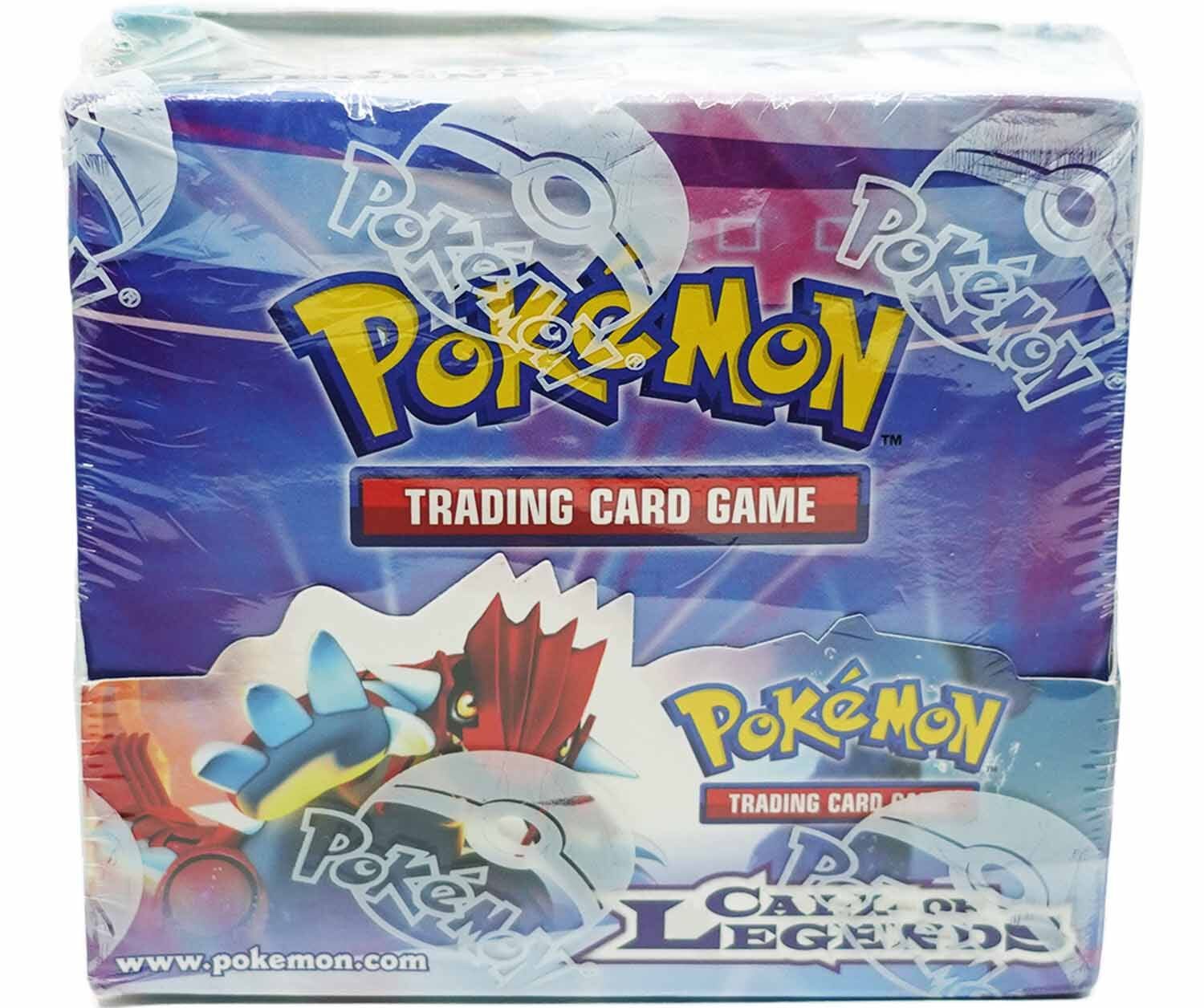
Sealed is easy to understand, but it takes space and the right storage. Damaged film or dented corners reduce the value. On top of that, authenticity is harder to check, because there are boxes that have been closed again afterwards, so-called resealed products.
The three product types compared:
| Product type | Strengths | Risks |
|---|---|---|
| Single card (Raw) | Strengthsaffordable entry, huge choice, little space needed | Riskscondition hard to assess, counterfeits |
| Graded card | Strengthscondition documented, well protected, easier to sell | Risksgrading costs and waiting time, the grade determines the price |
| Sealed product | Strengthseasy to understand, supply falls once production ends | Risksspace needed, damage to the packaging, resealed boxes |
PSA Grading Switzerland: service for Pokémon and other cards
- Globally recognised grading to determine the value of your cards
- Safe and personal at the AMAZINGTOYS® Store in Zurich
- CHF 125.00 per TCG card (plus any upcharges from PSA)
Vintage, modern, Japanese or English: which sets and cards are in demand?
There is no reliable list of which cards will rise in value. Anyone who promises you one usually wants to sell you something. There are, however, features that cards and products in demand have in common:
- Popular Pokémon: Charizard, Pikachu, Rayquaza, Mew and the Eevee evolutions have been particularly sought after for years.
- Small print run: Promo cards, tournament prizes and old sets were printed far more rarely than today's expansions.
- No reprints: If a set is reprinted, supply grows and prices can fall.
- Special artwork: Illustration Rares, Alternate Arts and Gold Stars are especially popular with collectors.
- Top condition: The higher the grading score, the rarer and more expensive the same card becomes.
Vintage cards
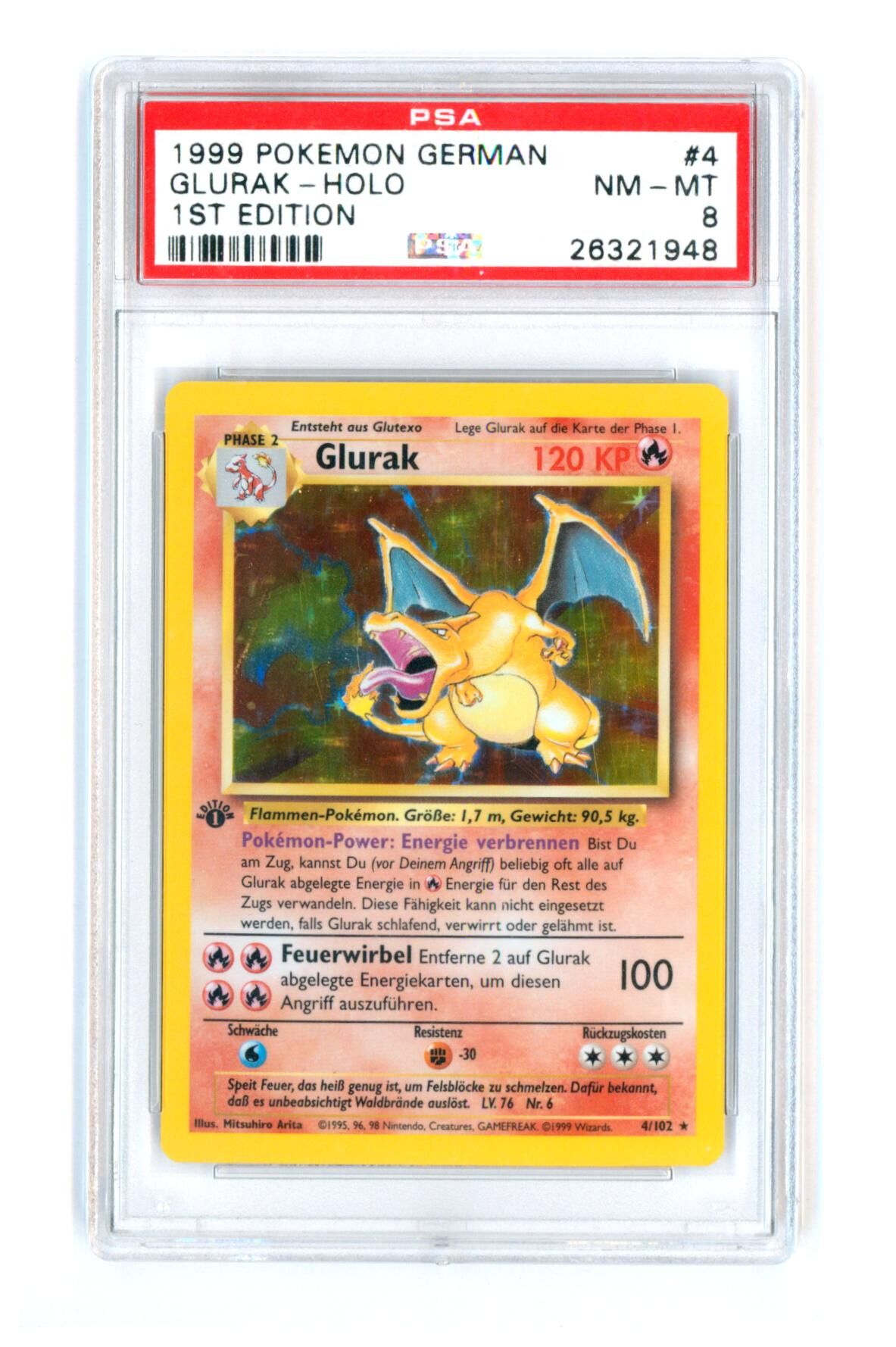
Cards from the first years, for example from the Base Set of 1999 or the Team Rocket and Neo sets, are the classics among collector's items. The 1st Edition, recognisable by a small stamp on the card, is particularly sought after. Because many of these cards were played back then and not protected, well-preserved copies are rare.
Modern cards and sets
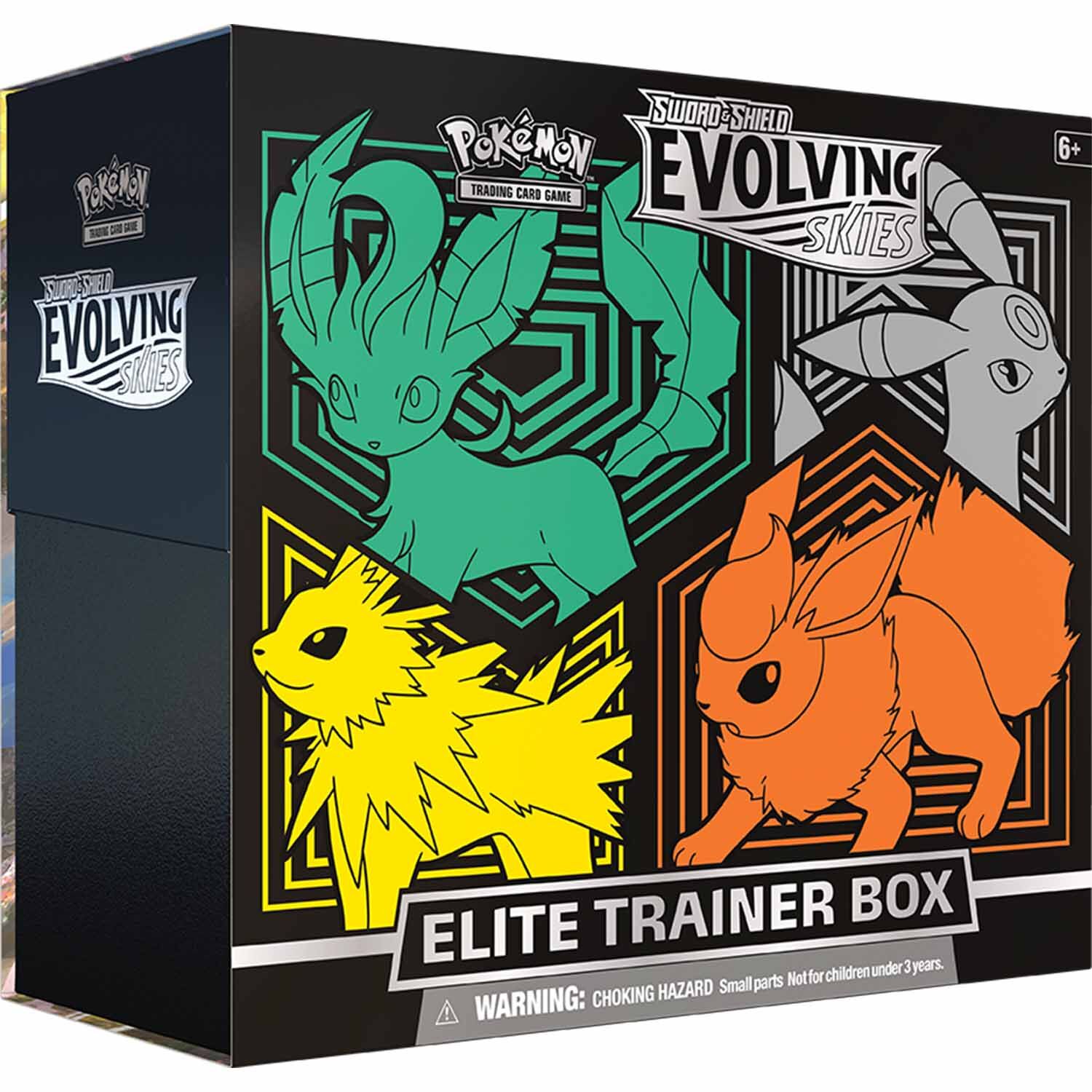
Every year new sets bring out popular cards. Some of them rise sharply after release, others fall again as soon as demand eases or the set is reprinted. One example of a modern set with high demand is Evolving Skies from 2021 with the coveted Eevee evolutions.
Japanese or English?
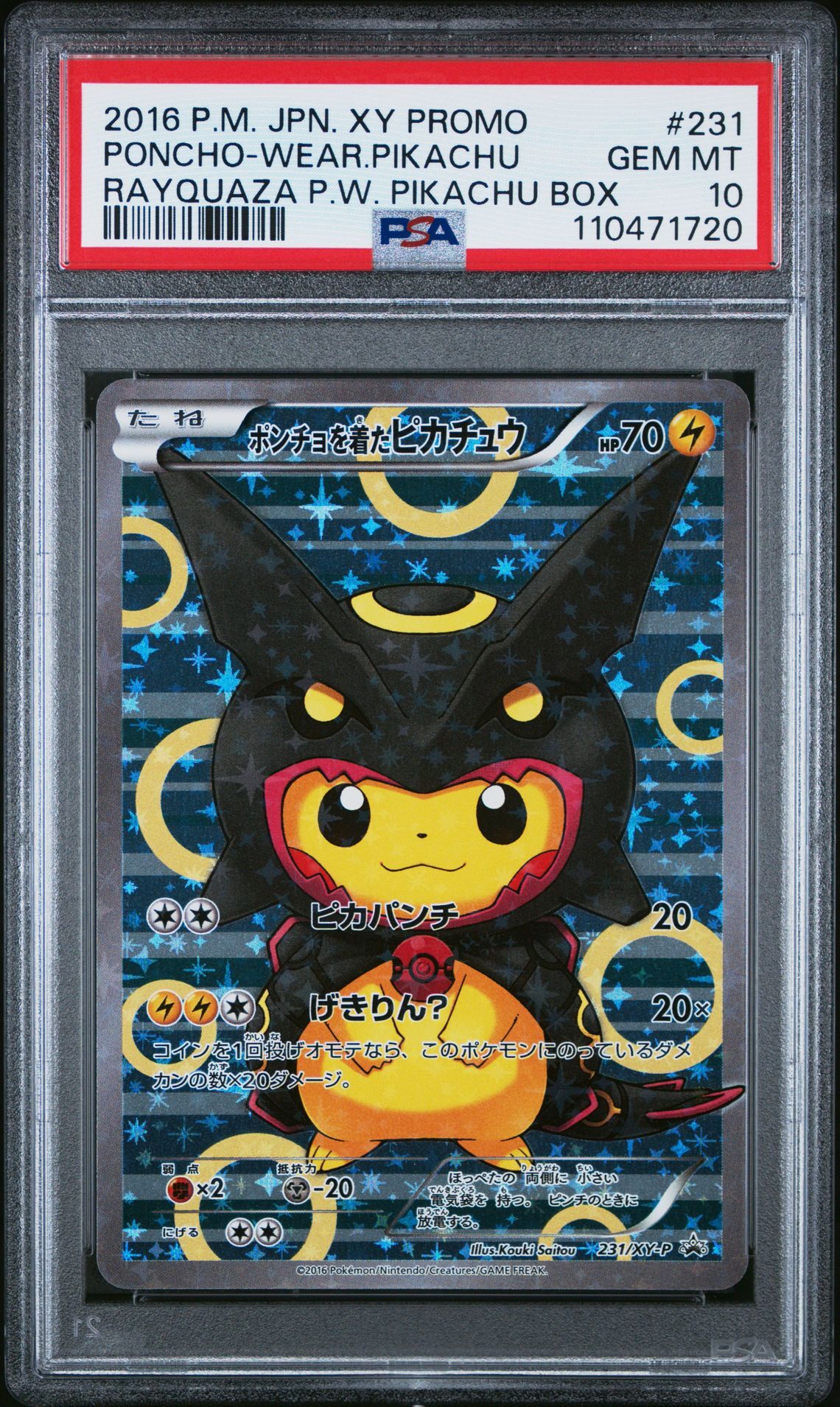
Japanese cards are released earlier, are often considered particularly cleanly produced and have their own promos that do not exist in English. English cards, on the other hand, have the bigger market, because they are collected and played worldwide. Both languages can be in demand; what matters is the individual card and its rarity. Sought-after Japanese promos are, for example, the Poncho-Wearing Pikachu cards from the Japanese Pokémon Centers.
Valuable and popular pieces from our range. The prices are variable and can change at any time:
| Item | Type | Price |
|---|---|---|
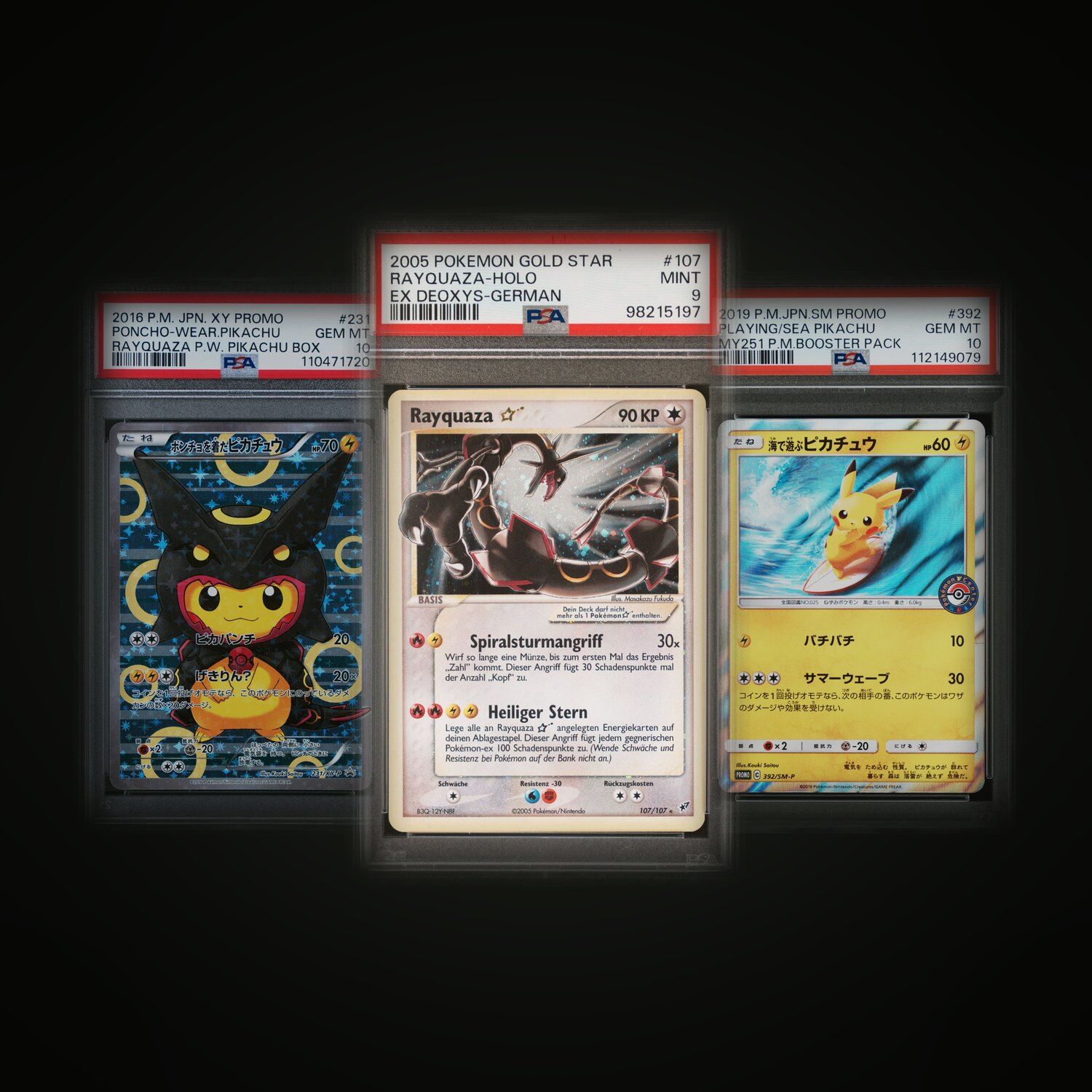
| Rayquaza Gold Star 107/107 from EX Deoxys, PSA 9 | Graded, vintage | CHF 80,000 |
| Call of Legends Booster Display, English | Sealed | CHF 65,000 |
| Poncho-Wearing Pikachu Shiny Rayquaza 231/XY-P, PSA 10 | Graded, Japanese promo | CHF 20,000 |
| Sun & Moon Cosmic Eclipse Booster Display, English | Sealed | CHF 5,000 |
| Charizard 4/102 from the Base Set, 1st Edition, PSA 8 | Graded, vintage | CHF 2,900 |
| Elite Trainer Box Evolving Skies (Umbreon), English | Sealed | CHF 900 |
You will find more on rare cards in Rare Pokémon cards and in our overview of the Pokémon rarity levels.
The photo is an actual photo of the item – you will receive exactly this PSA card shown in the photo. Pokémon, Yu-Gi-Oh!, Magic: The Gathering and other trading cards can be a very valuable investment. PSA graded cards are especially sought after by collectors. The grade Gem Mint 10 is the highest grade a card can receive. The higher the grade, the more valuable the card. PSA is an independent company that grades sports cards, trading cards and collectibles based on their condition and quality, then encases them in hard plastic.
Pokémon Call of Legends Booster Display Language: English The display is delivered securely with a high-quality acrylic protective case. This is an original Pokémon Call of Legends Booster Display (sealed in original packaging and shrink-wrapped) in English. An iconic Pokémon set that made its debut in 2011, Pokémon Call of Legends is one of the rarest Pokémon sets ever released. The display is in good condition and, of course, unopened! This is an extremely rare collector's item — there are only a few original shrink-wrapped Pokémon Call of Legends Booster Displays left. One display contains 36 boosters with 10 cards each. By appointment, vintage displays can be viewed in person at our AMAZINGTOYS® Store in Zurich before purchase. (This is a consignment sale, so returns are excluded). Insured and tracked shipping, carefully packed to be waterproof and shock-resistant. Contents of one display: One display contains 36 boosters One booster contains 10 cards
The photo is an actual photo of the item – you will receive exactly this PSA card shown in the photo. Pokémon, Yu-Gi-Oh!, Magic: The Gathering and other trading cards can be a very valuable investment. PSA graded cards are especially sought after by collectors. The grade Gem Mint 10 is the highest grade a card can receive. The higher the grade, the more valuable the card. PSA is an independent company that grades sports cards, trading cards and collectibles based on their condition and quality, then encases them in hard plastic.
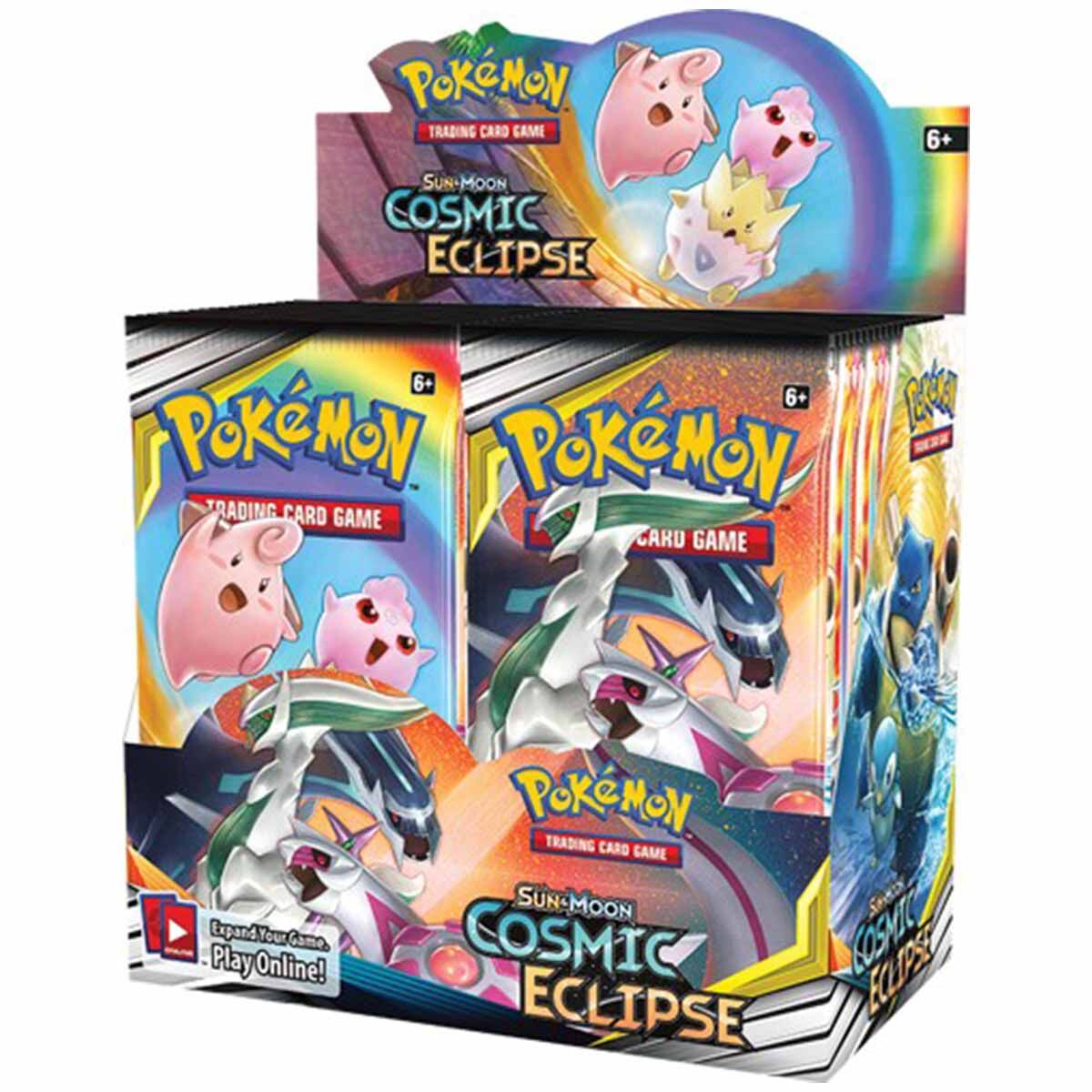
Pokémon Sun & Moon Cosmic Eclipse Booster Display Language: English Contents of a Display: One Display contains 36 Boosters One Booster contains 10 cards
Glurak 4/102 - 1st Edition Base Set - Holo - PSA 8 NM-MT Language: German The photo is an actual photo of the item; you will receive exactly this PSA card as shown in the picture. Pokémon cards can also be a highly valuable investment; PSA-graded cards are especially interesting for collectors. The Gem Mint 10 grade is the best a card can receive. The higher the grade, the more valuable the corresponding cards. PSA is an independent company that grades sports cards, trading cards and other collectibles according to their condition and quality and then seals them in hard plastic.
Pokémon Elite Trainer Box Sword & Shield Evolving Skies (Umbreon) Language: English Box contents: 8 Pokémon TCG Sword & Shield Evolving Skies booster packs Energy cards 6 dice Card sleeves Deck divider
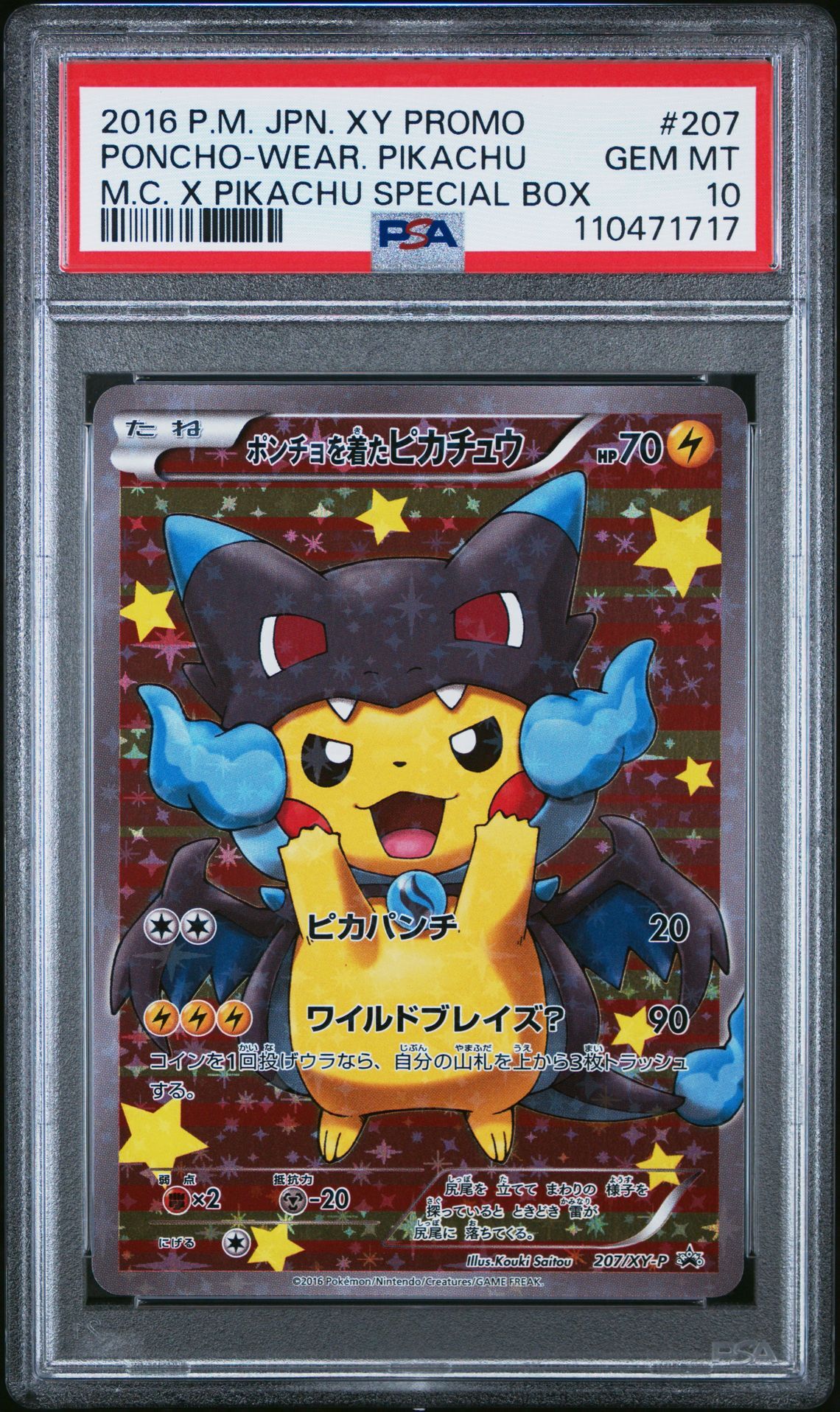
The photo is an actual photo of the item – you will receive exactly this PSA card shown in the photo. Pokémon, Yu-Gi-Oh!, Magic: The Gathering and other trading cards can be a very valuable investment. PSA graded cards are especially sought after by collectors. The grade Gem Mint 10 is the highest grade a card can receive. The higher the grade, the more valuable the card. PSA is an independent company that grades sports cards, trading cards and collectibles based on their condition and quality, then encases them in hard plastic.
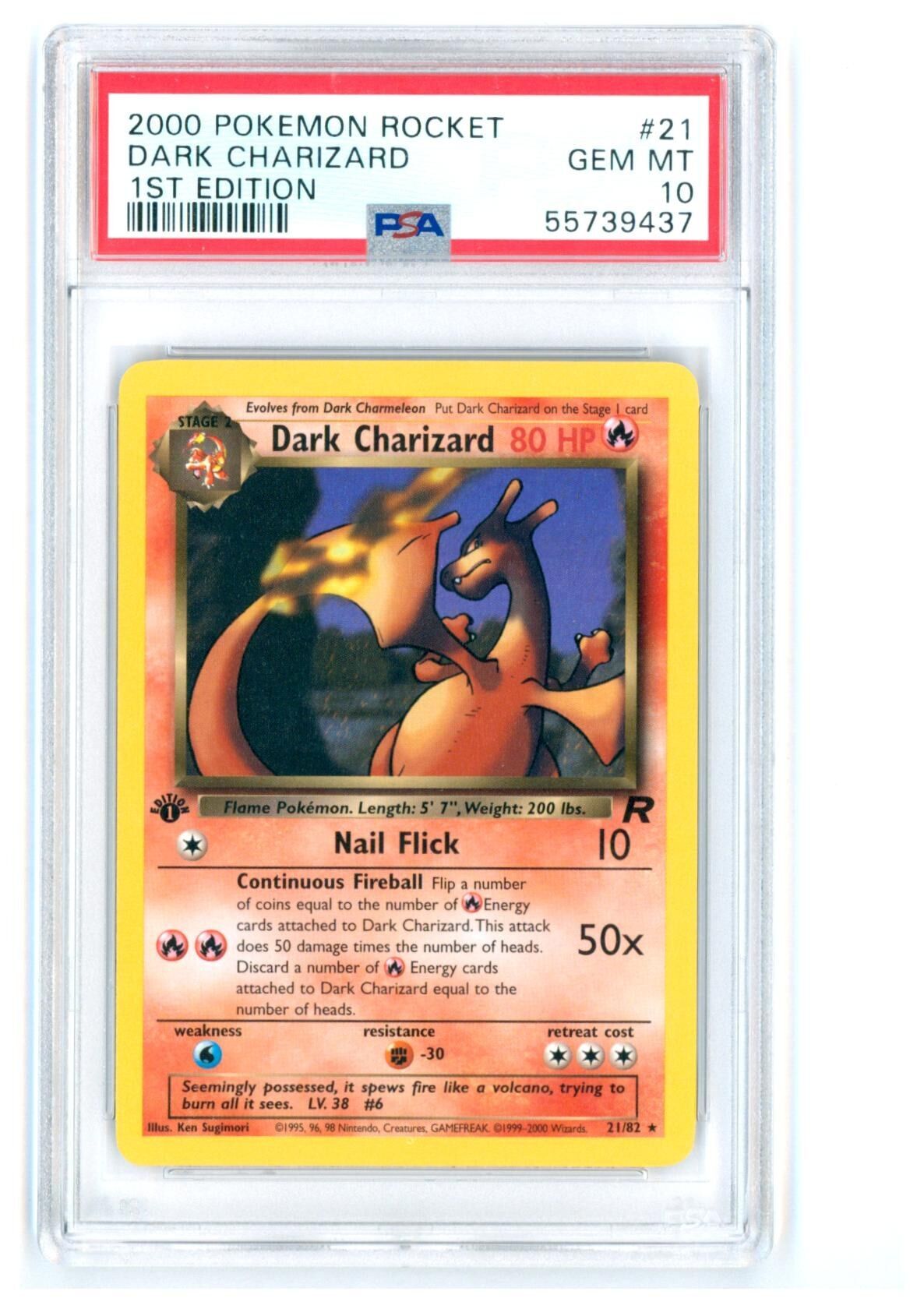
The photo is an actual photo of the item – you will receive exactly this PSA card as shown in the photo.Pokémon, One Piece, Yu-Gi-Oh!, Magic: The Gathering and other trading cards can be a very valuable investment. PSA graded cards are especially sought after by collectors. Gem Mint 10 is the highest grade a card can receive. The higher the grade, the more valuable the card. PSA is an independent company that evaluates sports cards, trading cards and collectibles based on their condition and quality, then encases them in hard plastic.
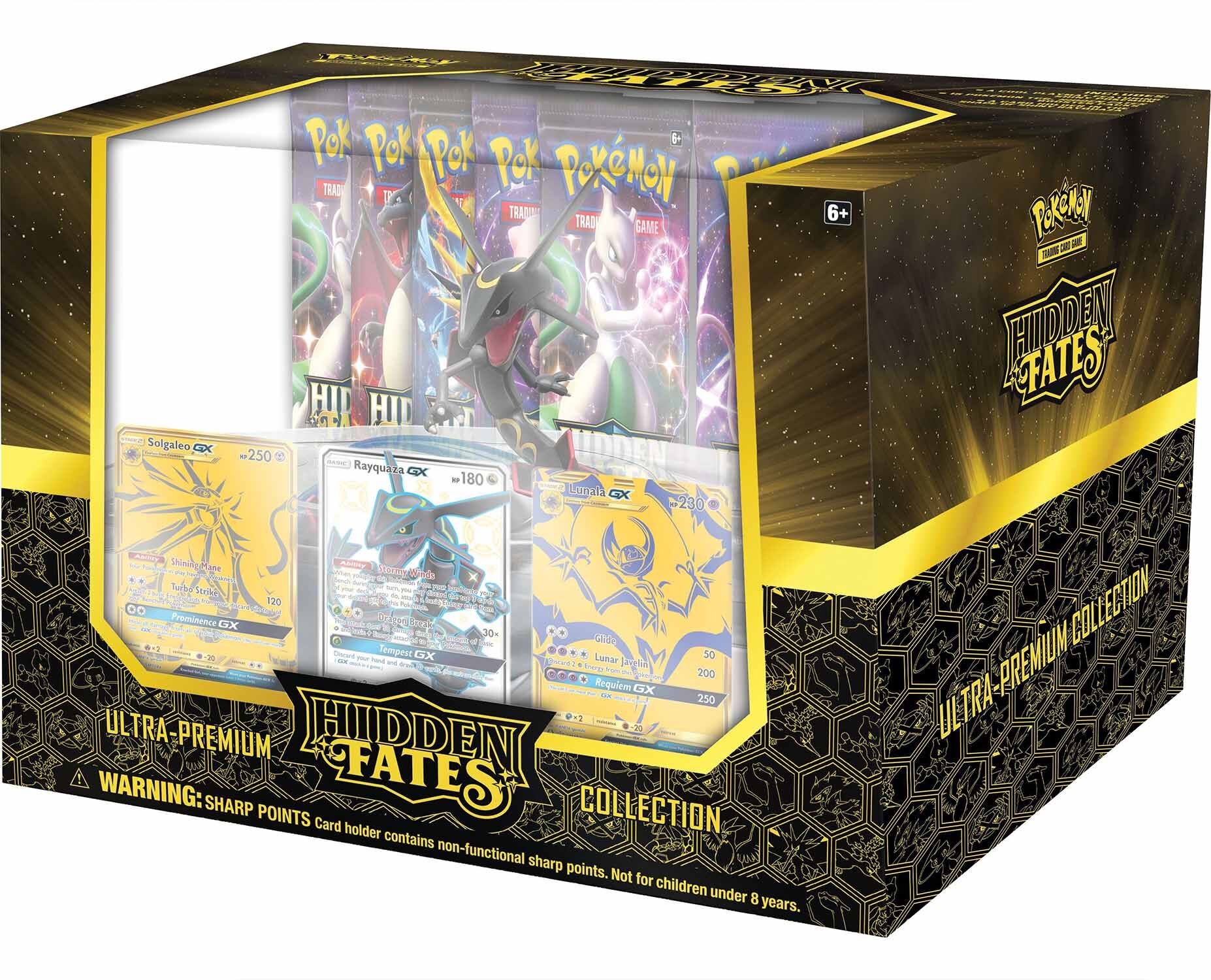
Pokémon Hidden Fates Ultra Premium Collection Box Language: Englisch We of course have this RARITY in stock and ready for collection as of today! This item SHOULD be collected in person, if you want to keep it as a display piece and sealed. Shipping at your own risk (the boosters, figures and contents may shift.) Box contents: 1 Shiny Rayquaza-GX full-art promo card 1 Gold Solgaleo-GX full-art promo card 1 Gold Lunala-GX full-art promo card 1 Shiny Rayquaza statue 1 full-size rubber Pokémon playmat 15 Pokémon TCG: Hidden Fates booster packs 1 Pokémon Online code card
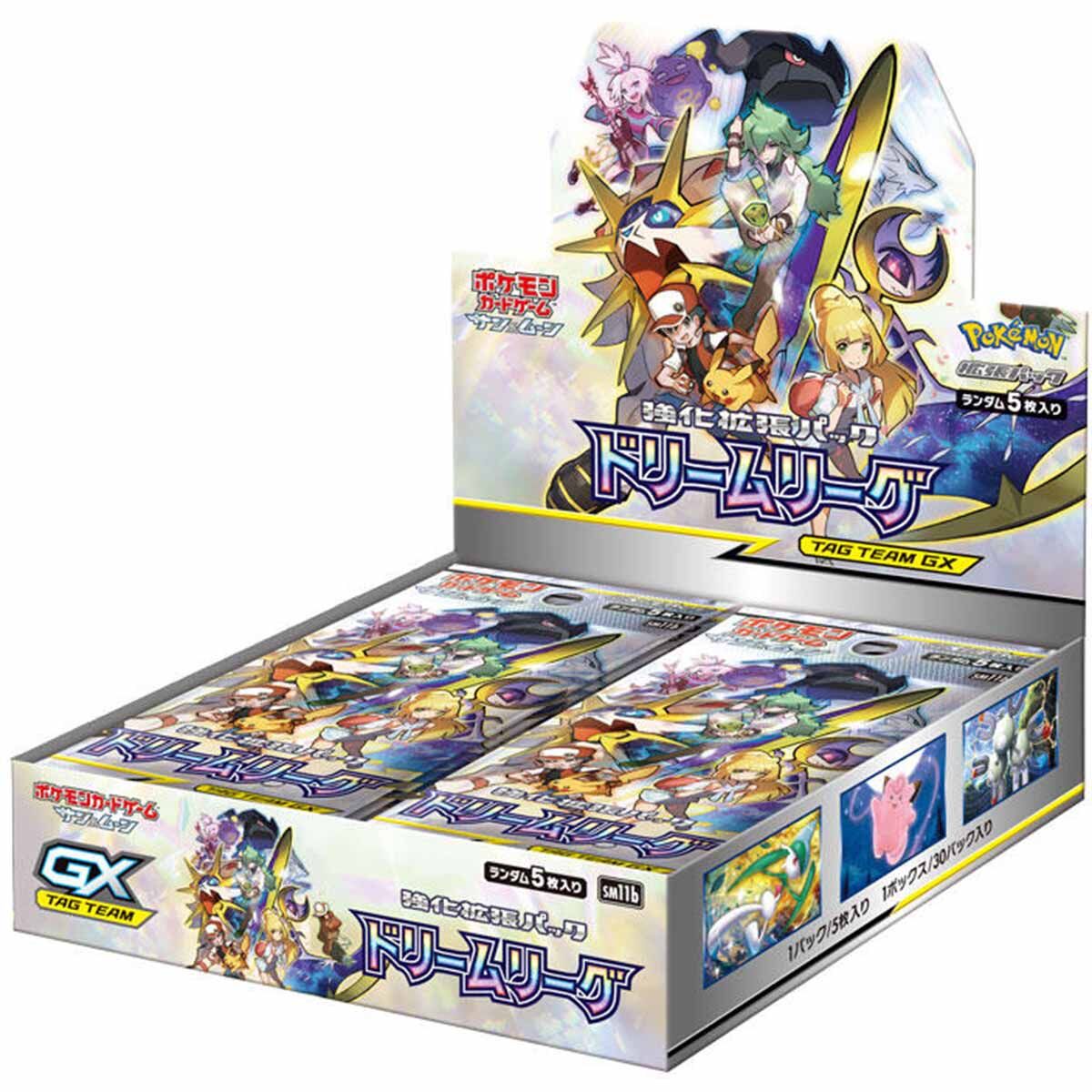
Pokémon Dream League (sm11b) Booster Display Language: Japanese The 強化拡張パック「ドリームリーグ」 Kyōka Kakuchō Pack Dream League is a subset from the SM cycle. Strength Expansion Pack: Dream League is a subset of 75 cards, released in Japan on 2 August 2019. The set includes Full Art collector cards of Pokémon with a Trainer. Dream League (Japanese: Strength Expansion Pack Dream League) is the name of the eighteenth Japanese subset released during the Sun & Moon era of the Pokémon Trading Card Game, considered an enhancement to the eleventh main expansion, Miracle Twin, carrying the collection symbol "SM11b". The subset adds more of the newly introduced Tag Team Pokémon-GX cards to the TCG and offers new variants of Pokémon already featured in the eleventh expansion. Cycle: Sun & Moon Contents of a display: A display contains 30 boosters A booster contains 5 cards
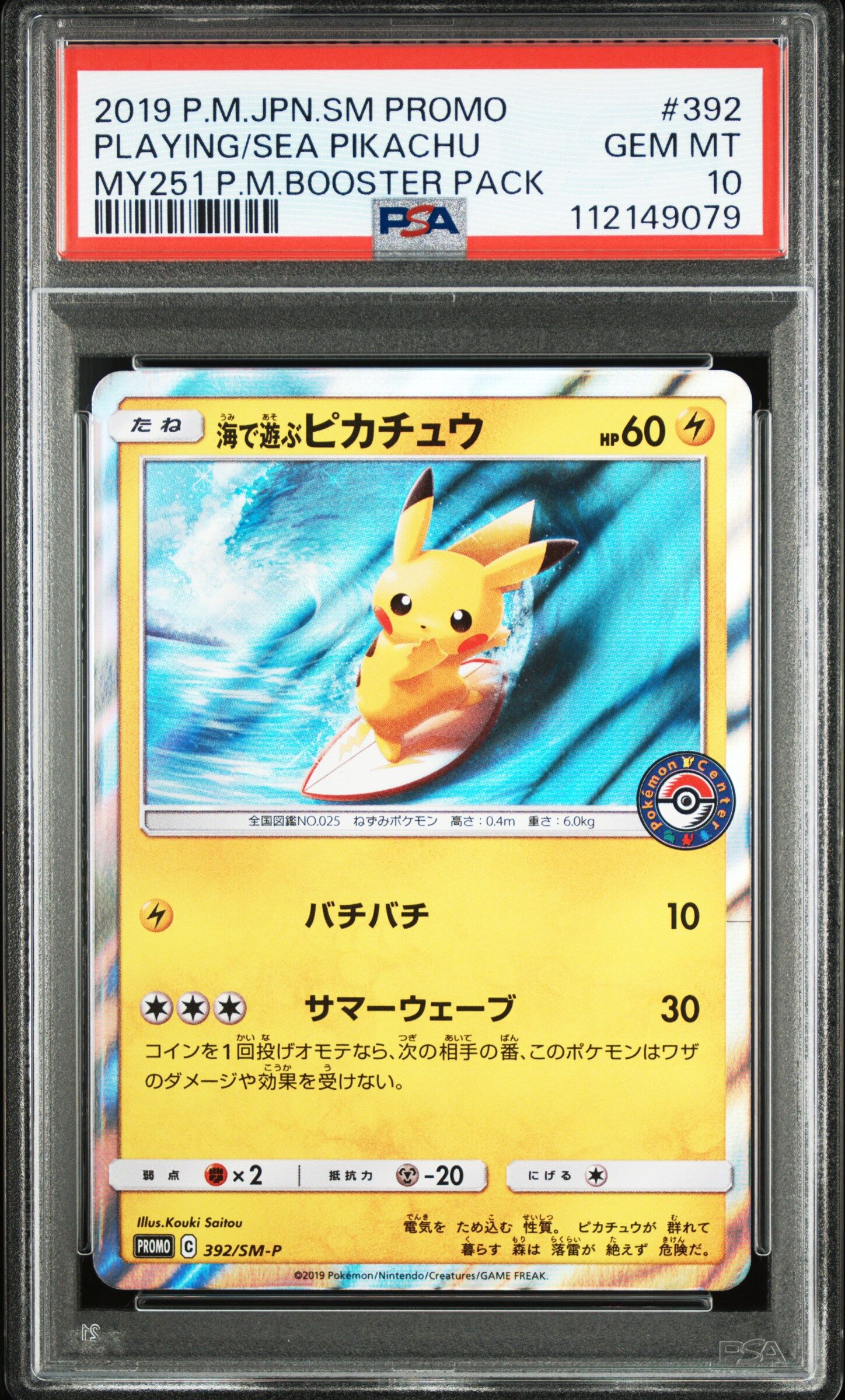
The photo is an actual photo of the item – you will receive exactly this PSA card shown in the photo. Pokémon, Yu-Gi-Oh!, Magic: The Gathering and other trading cards can be a very valuable investment. PSA graded cards are especially sought after by collectors. The grade Gem Mint 10 is the highest grade a card can receive. The higher the grade, the more valuable the card. PSA is an independent company that grades sports cards, trading cards and collectibles based on their condition and quality, then encases them in hard plastic.
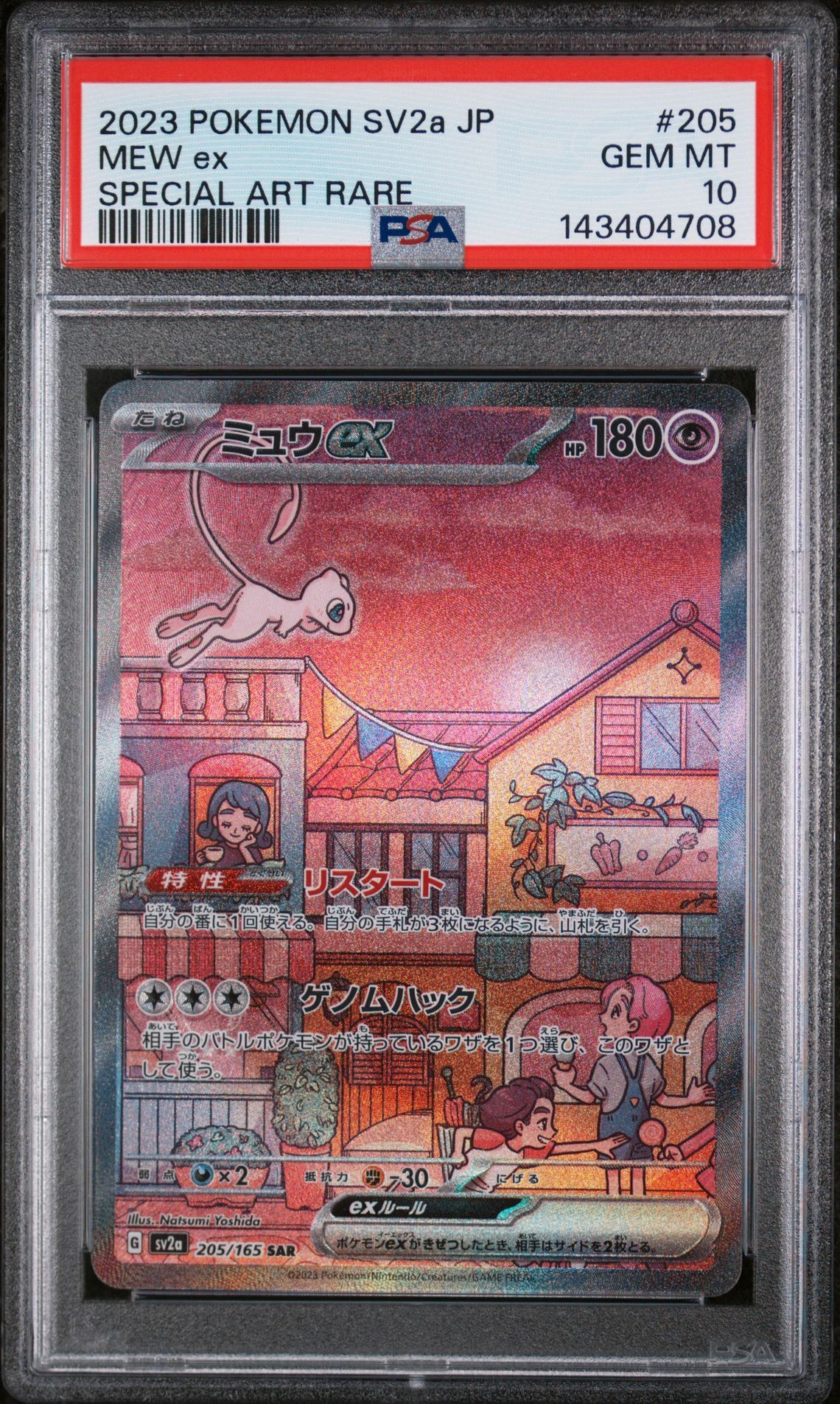
The photo is an actual photo of the item – you will receive exactly this PSA card as shown in the photo.Pokémon, One Piece, Yu-Gi-Oh!, Magic: The Gathering and other trading cards can be a very valuable investment. PSA graded cards are especially sought after by collectors. Gem Mint 10 is the highest grade a card can receive. The higher the grade, the more valuable the card. PSA is an independent company that evaluates sports cards, trading cards and collectibles based on their condition and quality, then encases them in hard plastic.
Opportunities: what speaks for Pokémon cards as an investment
- Large, worldwide demand: Pokémon is one of the most successful brands in the world, and new generations grow up with the cards.
- Scarcity of old and rare cards: vintage cards and promos in good condition cannot be reproduced.
- Tangible value: you own a real object that you can look at, show and enjoy.
- Enjoying the hobby: even if the value does not rise, you are left with a collection that means something to you.
Risks: what you should know before buying
Where high profits are possible, there are also high risks. You should know these before you put larger amounts into Pokémon cards.
Hype, bubbles and reprints
During the pandemic, trading cards saw a boom. In March 2021 so many cards were submitted to PSA that the company temporarily stopped several service levels (Sports Collectors Digest). In 2026 too, demand is so high that PSA has paused the cheaper value levels. After phases like these many prices fall again, especially for modern products.
On top of that come reprints: in January 2025 The Pokémon Company announced that it would print more products of the much sought-after set Prismatic Evolutions as quickly as possible (PokéBeach). More supply is good for collectors, but for investors it often means lower prices.
Condition, storage and counterfeits
The condition determines the price. Moisture, light, pressure and unsuitable sleeves can damage cards and packaging, which is why proper storage is part of the investment (Storing Pokémon cards properly). The more expensive a product is, the more likely it is to be counterfeited. Buy valuable cards only from trustworthy dealers or graded, and get to know the typical signs of counterfeits: How to spot fake Pokémon cards.
Liquidity and selling costs
You sell a share with one click at the current price. A trading card first has to be offered to the right buyers, and with expensive pieces there are only a few interested parties. Anyone who has to sell quickly often sells below market value. Dealers pay less on buyback than the selling price in the shop, because they carry the risk, the stock and the effort, and marketplaces and auction houses charge fees.
No income, no guarantee
Pokémon cards generate no ongoing income. The only profit arises on sale, and nobody can guarantee that demand will still be as high in ten years. Past rises in value are no guarantee for the future.
What does the investment really cost?
Many people only reckon with the purchase price. An honest calculation includes these costs as well:
- Difference between buying and selling price: You buy at the retail price and later usually sell lower to a dealer, or with fees through a marketplace.
- Grading: through AMAZINGTOYS® currently CHF 125 per card plus any surcharges from PSA, with a waiting time of at least 120 to 180 working days.
- Accessories and storage: Sleeves, Toploaders, protective boxes and a dry, dark place.
- Shipping and insurance: Expensive items should only be sent insured.
- Import: Buying abroad adds VAT, customs duty and fees (more on this further down).
You only earn money once the value exceeds all of these costs. With inexpensive cards that is often not the case.
How to go about it: 7 rules for collectors with an eye on investment
- 1. Only use spare money: Invest only amounts that you will not need for many years and could lose in the worst case.
- 2. Collect what you like: If the market falls, you are still left with a collection that gives you pleasure.
- 3. Quality before quantity: A sought-after card in top condition is often the better choice than many average cards.
- 4. Check real selling prices: Compare prices actually achieved instead of asking prices, for example with the tools from our guide Determining the value of Pokémon cards.
- 5. Keep your receipts: Purchase receipts, grading certificates and photos help with resale and with insurance.
- 6. Store them properly: Protect cards and boxes from light, moisture and pressure.
- 7. Plan your exit: Think about how and where you would sell later while you are still buying.
Tip
Do not buy in the first hype after a release. Prices are often at their highest then and fall as soon as more stock is available.
Selling on: the routes and what they cost
Sooner or later you may want to sell. The most important routes at a glance:
- Buyback at a dealer: fast and safe, but below the shop price. At the AMAZINGTOYS® Store in Zurich, Thomas values collections and expensive single cards in person on selected Saturdays and pays cash or trades them against products (Buyback at AMAZINGTOYS®).
- Marketplaces such as Cardmarket: often higher prices, but with fees, the effort of photos and shipping and the risk of complaints.
- Auctions: for particularly rare pieces, with fees for sellers and often for buyers too.
- Collectors' fairs and swapping: personal and without shipping, but with limited reach.
Do the AMAZINGTOYS® Trade-In
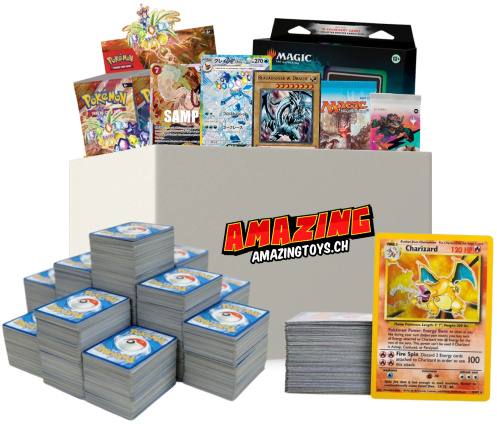
- Sell or trade in Pokémon, Magic, One Piece and Yu-Gi-Oh! cards
- Valued by a professional, guaranteed fair price
- Bulk, sealed, single cards and whole collections
Switzerland: taxes, customs and insurance
There are a few particularities for collectors in Switzerland. The following points are general information and not tax or legal advice.
Taxes
Capital gains from the sale of private assets are in principle tax-free in Switzerland; for federal tax this is set out in Art. 16 Abs. 3 DBG. Anyone who buys and sells systematically and on a large scale, however, can count as a professional dealer, and then the profits are taxable as income. Valuable collections may also have to be declared as assets. With larger holdings it is worth asking a tax specialist for advice.
Customs and VAT when buying abroad
If you order cards or boxes abroad, import VAT of 8.1% is due. Tax amounts up to CHF 5 are not levied, which corresponds to a taxable base of CHF 62. On top of that come customs duties by weight and the fees charged by the post office or the courier service for customs clearance (BAZG). Include these costs when you compare prices.
Insurance
A valuable collection is often only covered up to a certain sum by household contents insurance. Ask your insurer whether additional cover for valuables makes sense, and document your collection with photos and receipts.
Conclusion: a hobby with value potential, not a replacement for a savings plan
Pokémon cards can be an exciting addition, especially graded top cards, sought-after vintage pieces and sealed products in their original packaging. But they remain a speculative physical asset without ongoing income, and with costs and risks. Anyone who collects with pleasure, gets well informed and only uses spare money has the best chance that the collection will also pay off financially. Cards do not replace a broadly diversified savings plan, though.
Note
This article serves as general information. It is not an investment recommendation and not investment, tax or legal advice. The products mentioned are toys, collectible cards and trading cards, not financial products. Prices are variable and can rise or fall at any time; past prices are no guarantee of future value development. AMAZINGTOYS® sells and buys the products mentioned here.
Frequently asked questions
They can be, but they are speculative. Well-preserved, rare and sought-after cards as well as sealed products have in some cases gained considerably in value in the past. There is, however, no guarantee and no ongoing return, and costs arise on resale. Only put in money that you will not need for a long time.
Nobody can predict that with certainty. Popular Pokémon such as Charizard, Pikachu or the Eevee evolutions are often in demand, as are cards with a small print run such as promos and old sets, special artwork and cards in top condition. Reprints, on the other hand, can push down the prices of modern sets.
Sealed displays can become scarcer and more expensive once production ends, because many of them are opened. That often takes years, though, and requires space and dry, secure storage. With heavily reprinted sets the effect is smaller.
Graded cards have a documented condition and are better protected, which makes them more trustworthy for buyers. Grading costs money and time, though, and is worth it above all for cards that are worth considerably more with a high grade.
The quickest route is the buyback with a dealer. You often achieve the highest price via marketplaces or auctions, but with fees and effort. At the AMAZINGTOYS® Store in Zurich we assess collections and expensive single cards in person on selected Saturdays.
Private capital gains are in principle tax-free in Switzerland. Anyone who trades in cards commercially, however, has to pay tax on profits as income, and valuable collections may have to be declared as assets. For larger holdings a tax specialist can help.
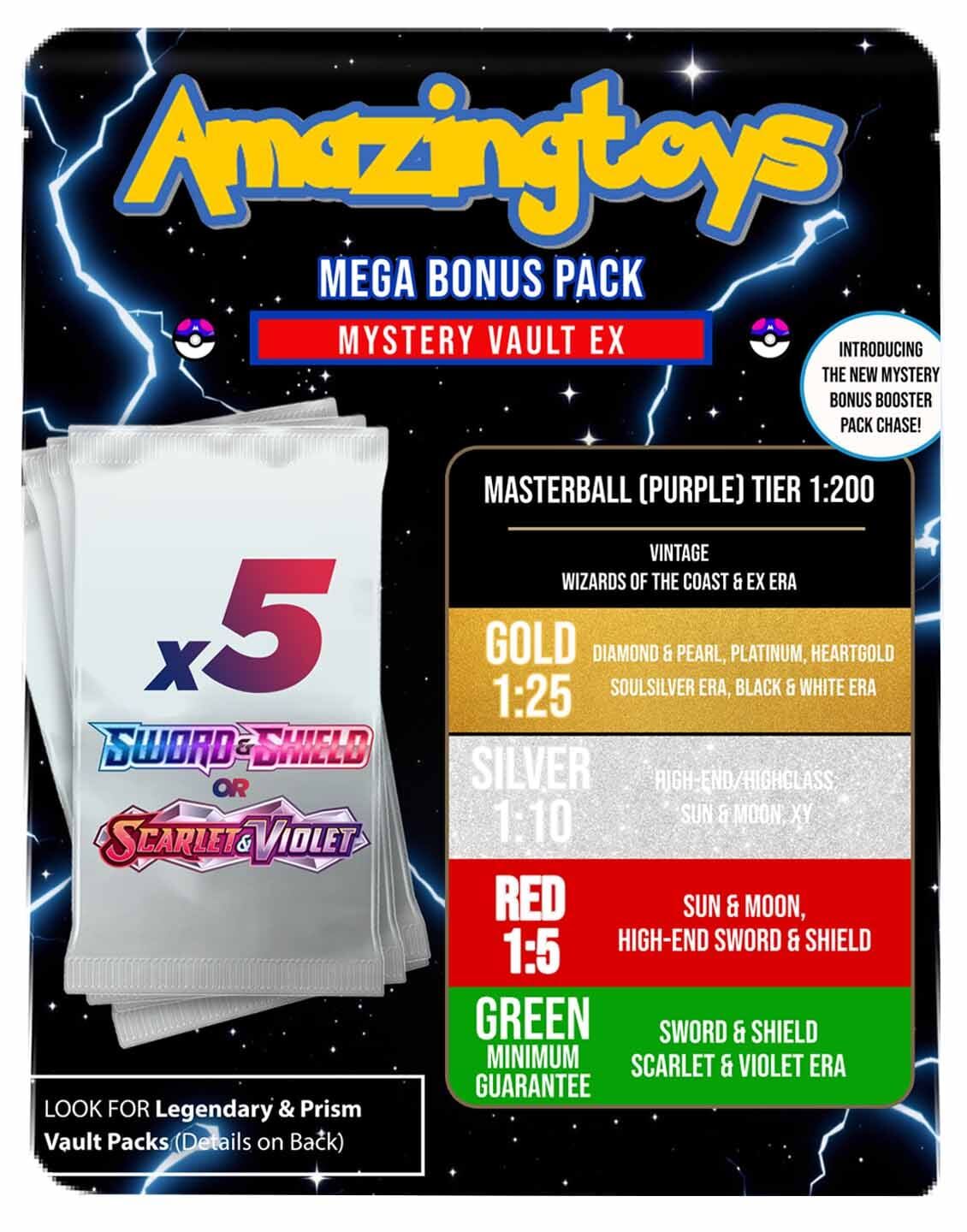
Pokémon AMAZINGTOYS® Ultimate Mystery Vault EX Booster Pack - Wave 3 With the Pokémon AMAZINGTOYS® Ultimate Mystery Pack – Wave 3, collectors and players get to experience a very special surprise highlight: lovingly hand-assembled by our family business, only 1,000 of these exclusive packs are put together and made ready to ship worldwide. Each of these limited Mystery Vault EX Booster Packs contains a total of six boosters – five regular boosters from the Sword & Shield or Scarlet & Violet era, plus one spectacular Amazing MEGA BONUS Mystery Booster. The included boosters are in English and Japanese and offer, alongside guaranteed classics, the chance of high-quality vintage or EX-era packs. Language: English/Japanese Contents of an Ultimate Mystery Vault EX Booster Pack 1x Amazing Mystery Booster contains 6 boosters, of which: 5 guaranteed booster packs from the Sword & Shield and Scarlet & Violet era 1 Amazing MEGA BONUS Mystery Booster GREEN: guaranteed booster from the Sword & Shield and Scarlet & Violet era RED: 1:5 booster from the Sun & Moon era or high-end Sword & Shield eraSILVER: 1:10 a high-class booster pack, XY era or high-end Sun & Moon era GOLD: 1:25 a booster from the Diamond & Pearl, Platinum, HeartGold & SoulSilver or Black & White era MASTERBALL (PURPLE): 1:200 a booster from the Vintage Wizards of the Cost or EX eraExclusively, the following chase packs are now also available:PRISM VAULT PACK 1:100 contains2 guaranteed booster packs from the Sword & Shield and Scarlet & Violet era1 GREEN: guaranteed booster from the Sword & Shield and Scarlet & Violet era1 RED: booster from the Sun & Moon era or high-end Sword & Shield era1 SILVER: a high-class booster pack, XY era or high-end Sun & Moon era1 GOLD: a booster from the Diamond & Pearl, Platinum, HeartGold & SoulSilver or Black & White era LEGENDARY HIGHCLASS CHASE 1:505 guaranteed high-class booster packs from the Sun & Moon, Sword & Shield or Scarlet & Violet era1 Amazing MEGA BONUS Mystery BoosterGREEN: guaranteed booster from the Sword & Shield and Scarlet & Violet eraRED: 1:5 booster from the Sun & Moon era or high-end Sword & Shield eraSILVER: 1:10 a high-class booster pack, XY era or high-end Sun & Moon eraGOLD: 1:25 a booster from the Diamond & Pearl, Platinum, HeartGold & SoulSilver or Black & White era MASTERBALL (PURPLE): 1:200 a booster from the Vintage Wizards of the Cost or EX era
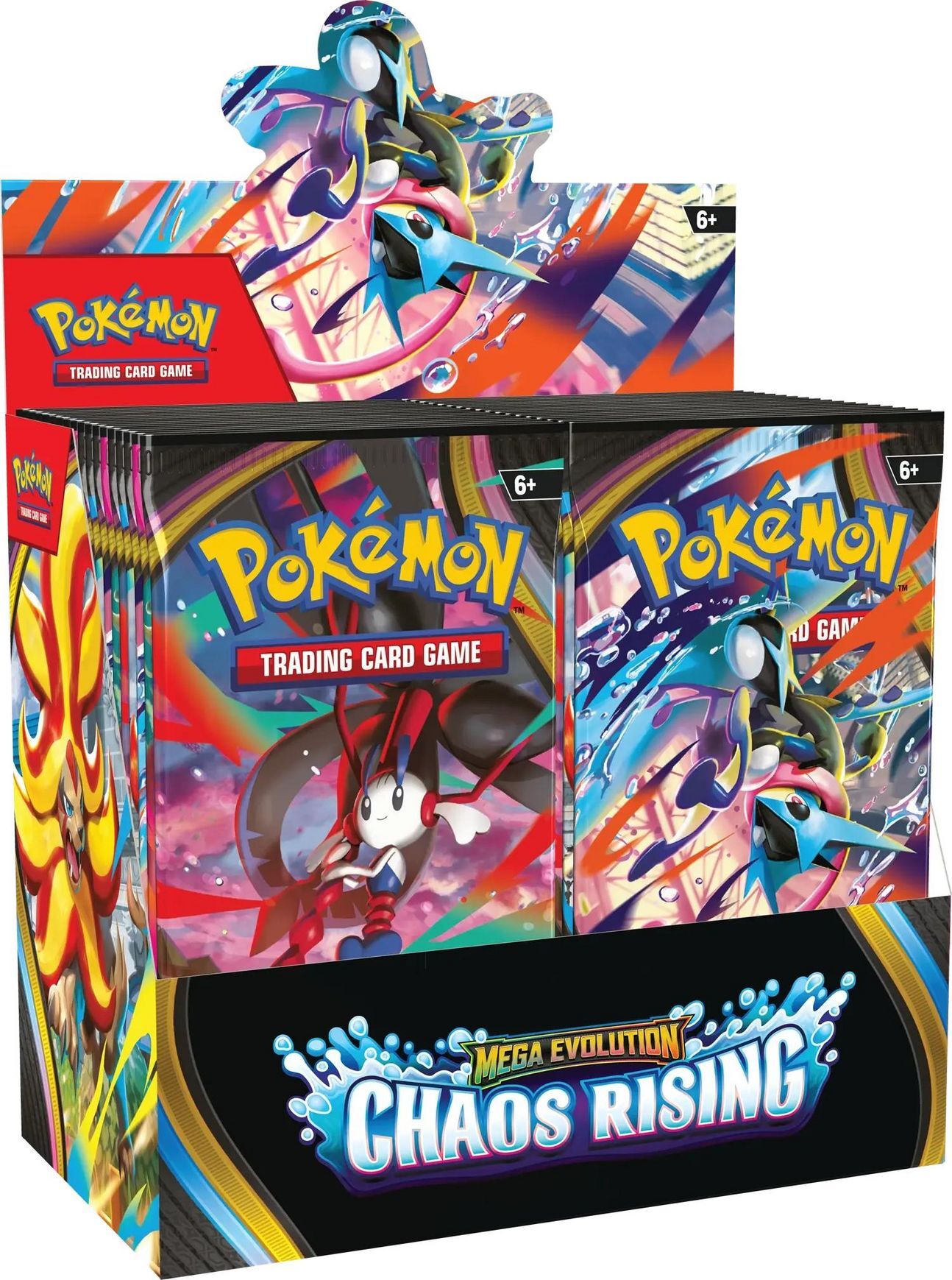
Take On the Challenge of an Eternity!The hustle and bustle of the city turns into havoc as Mega Floette ex brings turmoil to the streets! Filled with courage and determination, Mega Greninja ex gathers other powerful Mega Evolution Pokémon ex, including Mega Pyroar ex and Mega Dragalge ex, to ward off this growing threat. As night falls, danger blossoms in the Pokémon TCG: Mega Evolution—Chaos Rising expansion!
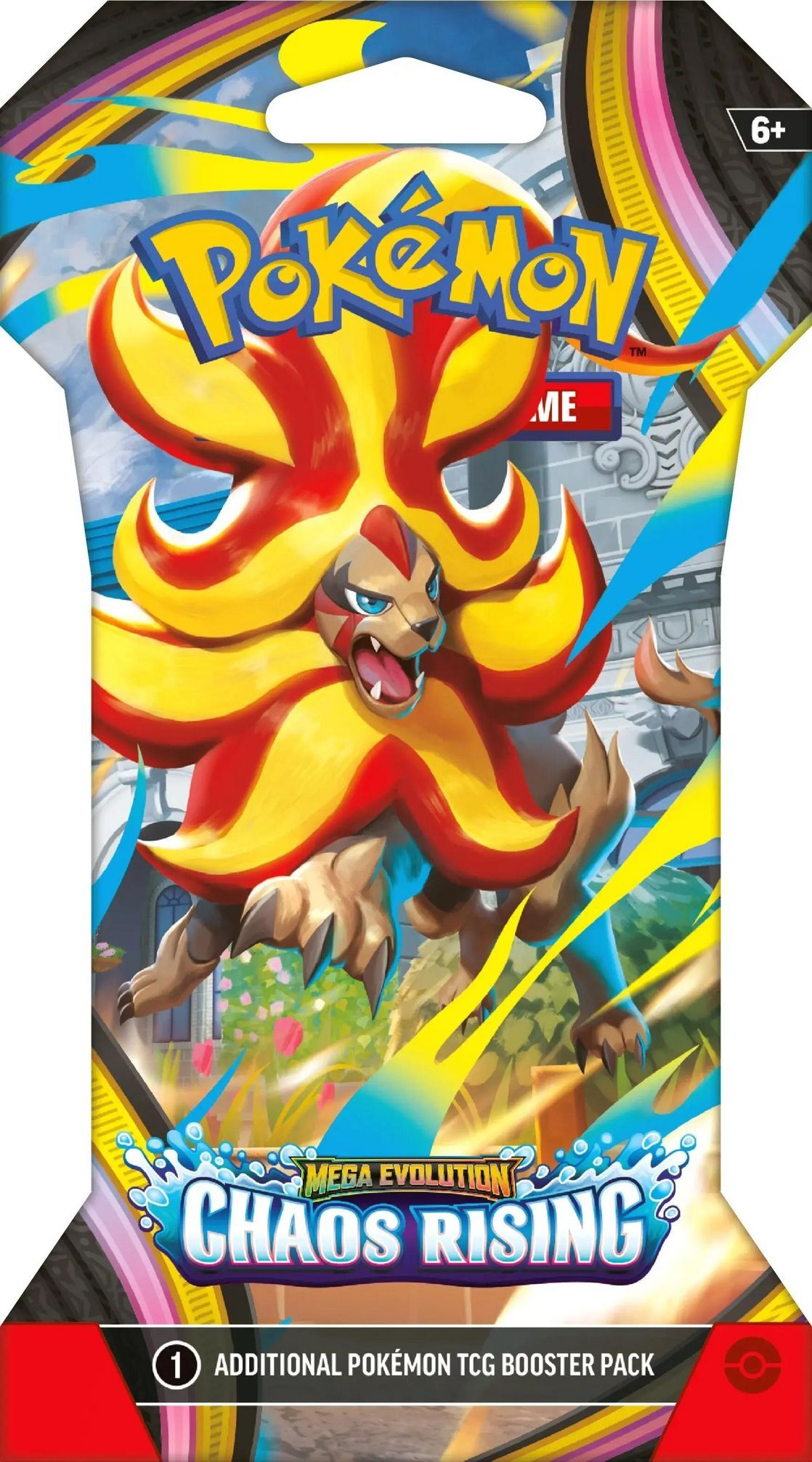
Take On the Challenge of an Eternity!The hustle and bustle of the city turns into havoc as Mega Floette ex brings turmoil to the streets! Filled with courage and determination, Mega Greninja ex gathers other powerful Mega Evolution Pokémon ex, including Mega Pyroar ex and Mega Dragalge ex, to ward off this growing threat. As night falls, danger blossoms in the Pokémon TCG: Mega Evolution—Chaos Rising expansion!Contents:10 cards per pack
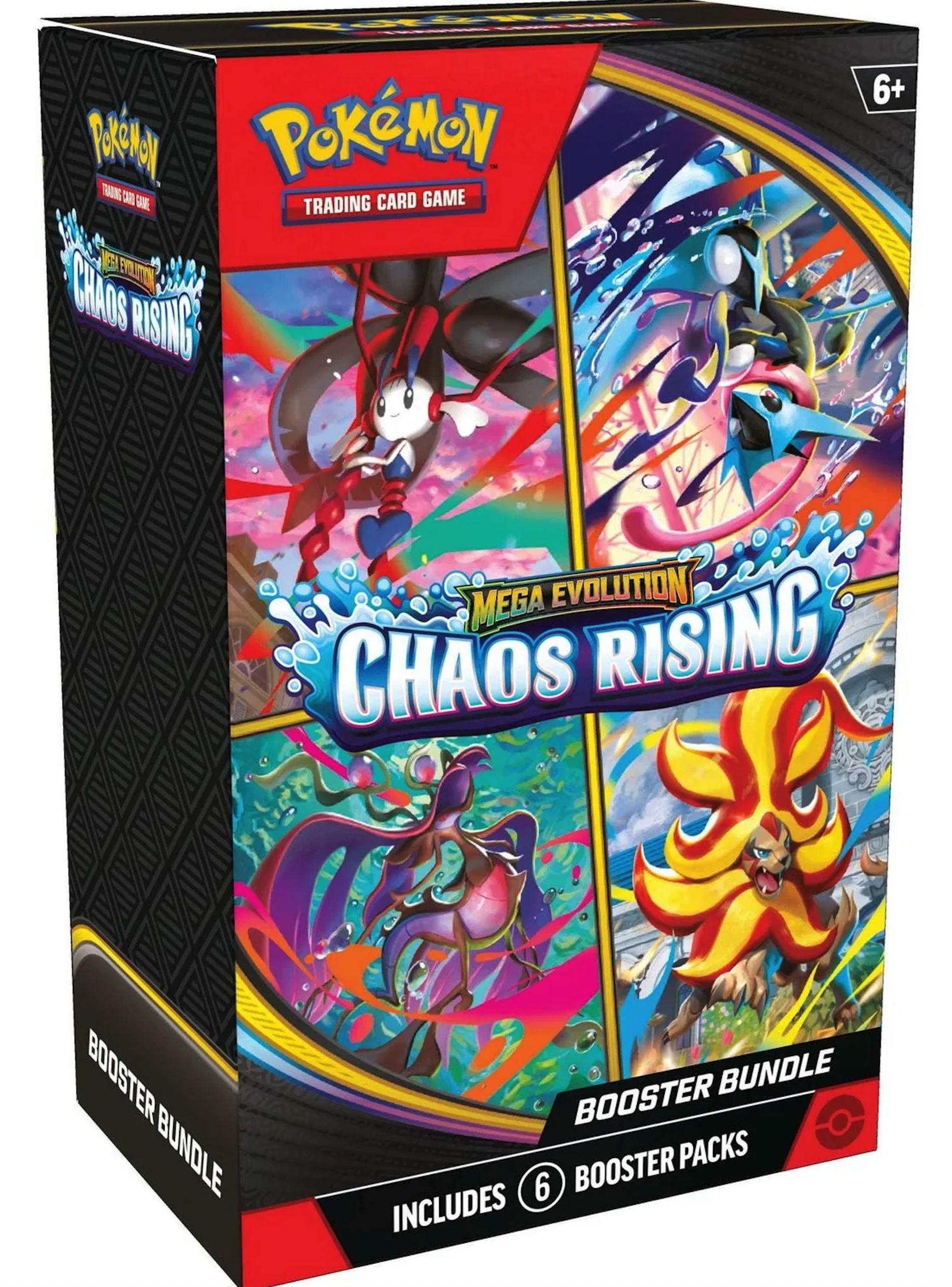
The hustle and bustle of the city turns into havoc as Mega Floette ex brings turmoil to the streets! Filled with courage and determination, Mega Greninja ex gathers other powerful Mega Evolution Pokémon ex, including Mega Pyroar ex and Mega Dragalge ex, to ward off this growing threat. As night falls, danger blossoms in the Pokémon TCG: Mega Evolution—Chaos Rising expansion! Take on the challenge of an eternity! Contains 6 booster packs from Pokémon TCG: Mega Evolution—Chaos Rising. (Each booster pack contains 10 game cards, 1 Basic Energy, and 1 Pokémon TCG Live code card. Cards vary by pack.) The hustle and bustle of the city turns into havoc as Mega Floette ex brings turmoil to the streets! Filled with courage and determination, Mega Greninja ex gathers other powerful Mega Evolution Pokémon ex, including Mega Pyroar ex and Mega Dragalge ex, to ward off this growing threat. Give your collection a boost with 6 booster packs from the Mega Evolution—Chaos Rising expansion.
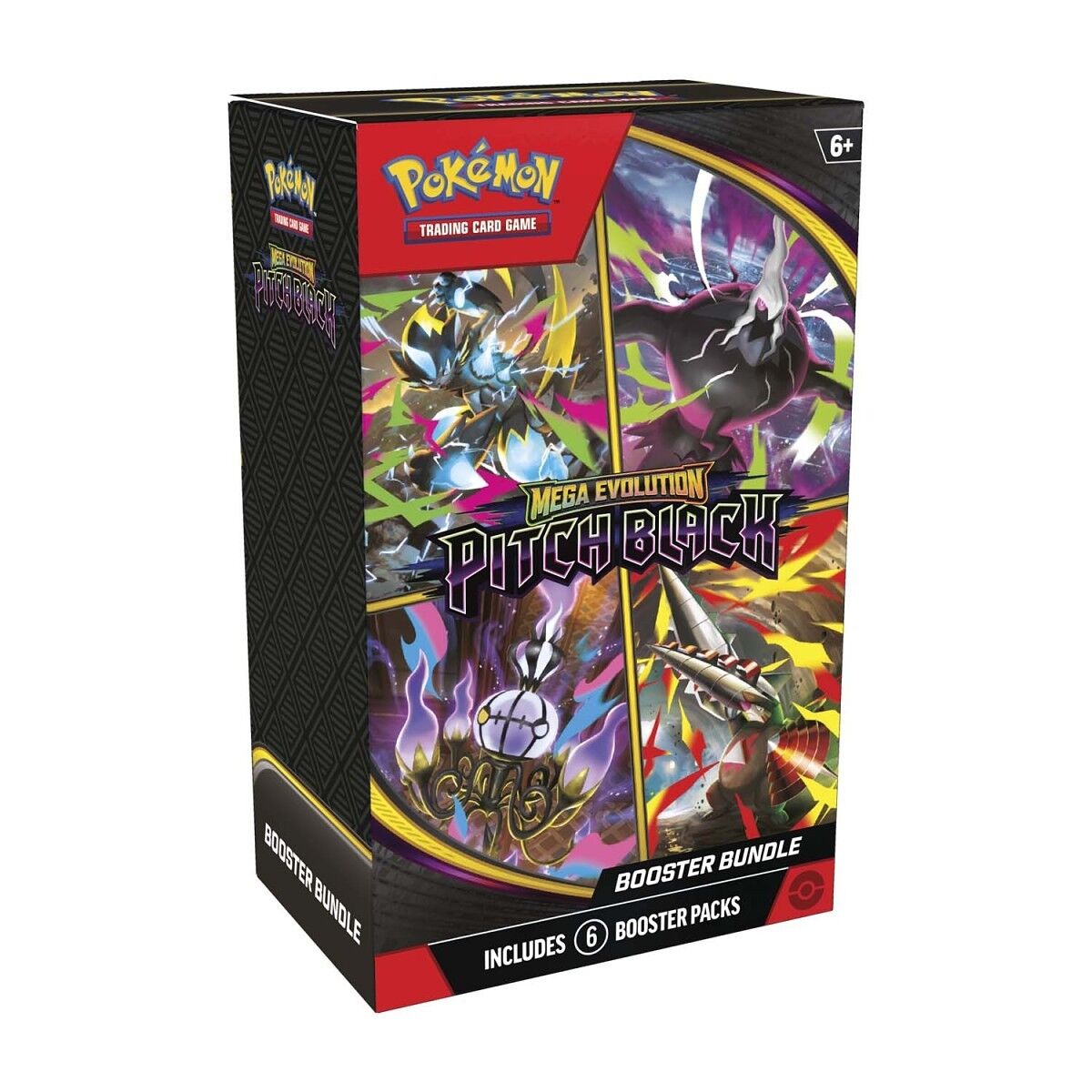
Delve into Darkness Beyond Limits!Twinkling city lights and a starry sky become obscured in darkness as Mega Darkrai ex arrives with mystery and malice! But Mega Zeraora ex fights back with thunderous strikes of lightning, leading the way for Mega Chandelure ex, Mega Excadrill ex, and more to join the fray. Shadows deepen and nightmares become reality in the Pokémon TCG: Mega Evolution—Pitch Black expansion!Includes six booster packs from the Pokémon TCG: Mega Evolution—Pitch Black expansionEach booster pack contains 10 cards, 1 Basic Energy, and 1 Pokémon TCG Live code card. Cards vary by pack.
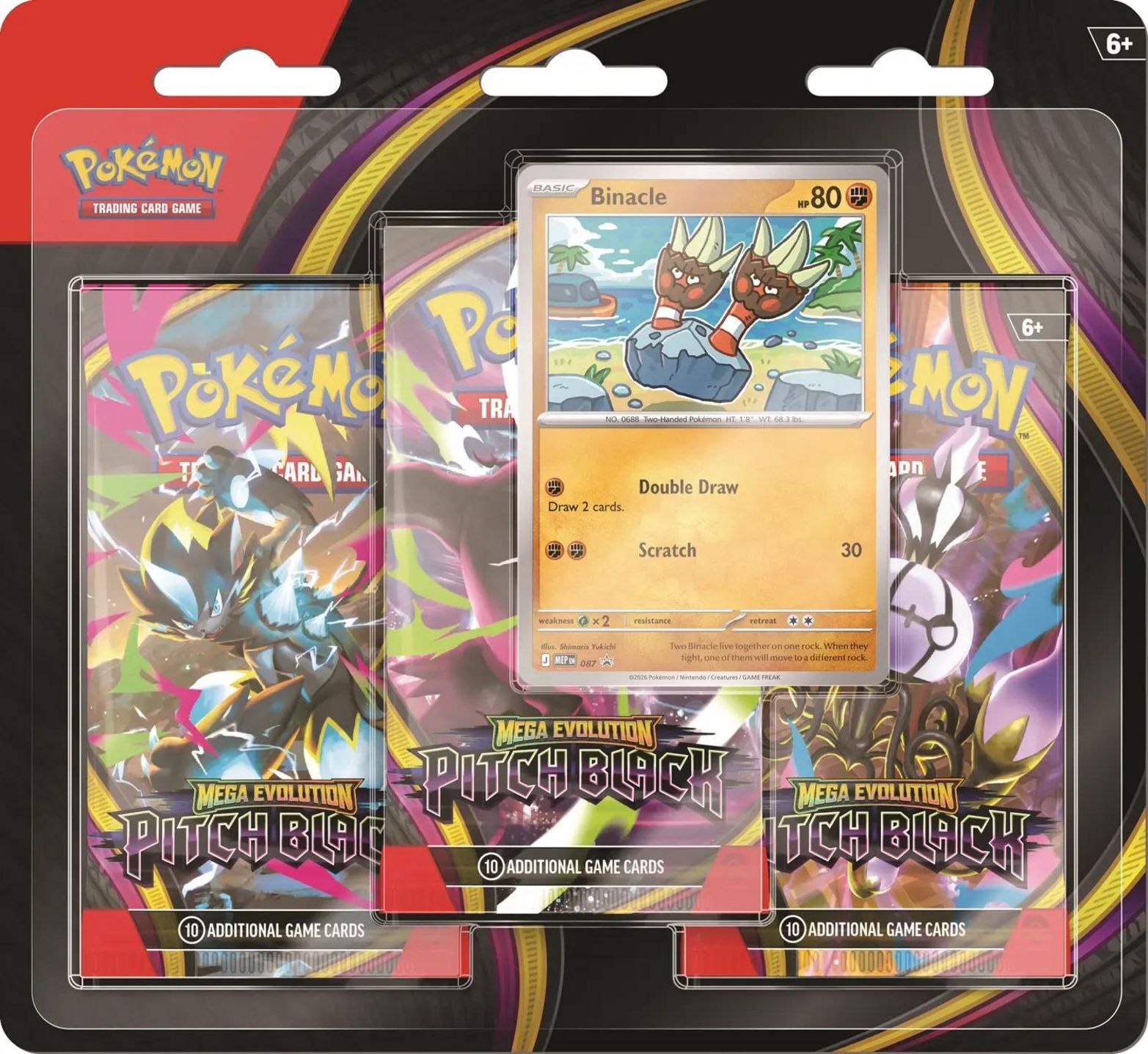
Delve into Darkness Beyond Limits! Twinkling city lights and a starry sky become obscured in darkness as Mega Darkrai ex arrives with mystery and malice! But Mega Zeraora ex fights back with thunderous strikes of lightning, leading the way for Mega Chandelure ex, Mega Excadrill ex, and more to join the fray. Shadows deepen and nightmares become reality in the Pokémon TCG: Mega Evolution—Pitch Black expansion!
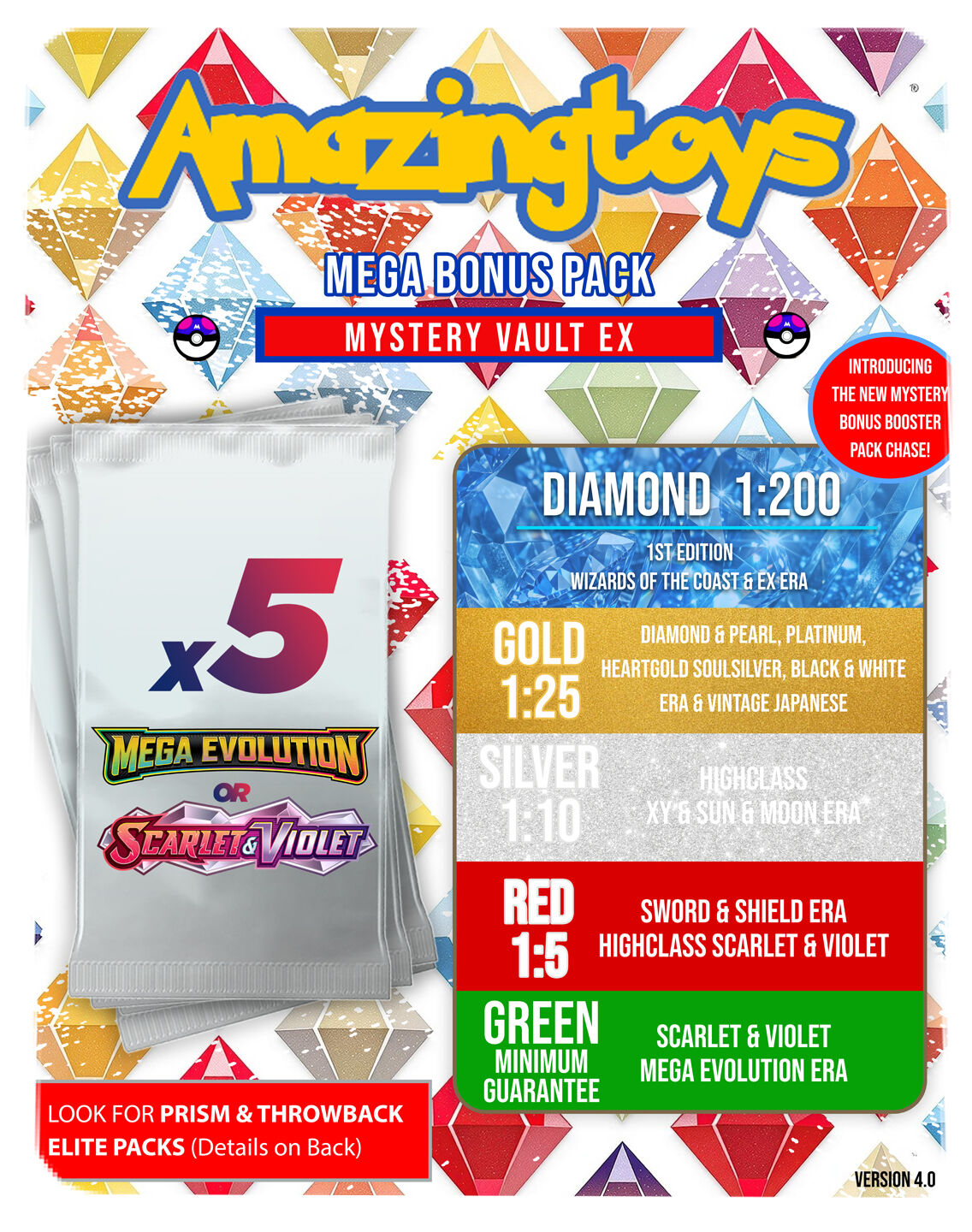
Pokémon AMAZINGTOYS® Ultimate Mystery Vault EX Booster Pack - Wave 4 With the Pokémon AMAZINGTOYS® Ultimate Mystery Pack – Wave 4, collectors and players experience a very special surprise highlight: in loving handwork by our family business, only 2'500 of these exclusive packs are put together and made ready to ship worldwide. Each of these limited Mystery Vault EX Booster Packs contains a total of six boosters – five regular boosters from the Scarlet& & Violet or Mega Evolution era, plus one spectacular Amazing MEGA BONUS Mystery Booster. The included boosters come in English and Japanese and offer, alongside guaranteed classics, a chance at high-value Vintage, 1st Edition or EX-era packs. Language: English/Japanese Contents of an Ultimate Mystery Vault EX Booster Pack 1x Amazing Mystery Booster contains 6 boosters, of which: 5 guaranteed booster packs from the Scarlet& & Violet and Mega Evolution era 1 Amazing MEGA BONUS Mystery Booster GREEN: Guaranteed booster from the Scarlet& & Violet and Mega Evolution era RED: 1:5 booster from the Sword& & Shield eraSILVER: 1:10 a Highclass Booster Pack, XY era or Sun& & Moon era GOLD: 1:25 a booster from Diamond& & Pearl, Platinum, HeartGold& & SoulSilver or Black& & White era DIAMOND: 1:200 a booster from Vintage1st Edition Wizards of the Cost or EX eraAlso available exclusively now are the following Chase Packs:PRISM VAULT PACK 1:100 contains2 guaranteed booster packs from the Scarlet& & Violet and Mega Evolution eraGREEN: Guaranteed booster from the Scarlet& & Violet and Mega Evolution eraRED: 1:5 booster from the Sword& & Shield eraSILVER: 1:10 a Highclass Booster Pack, XY era or Sun& & Moon eraGOLD: 1:25 a booster from Diamond& & Pearl, Platinum, HeartGold& & SoulSilver or Black& & White era THROWBACK ELITE CHASE 1:50 contains5 guaranteed booster packs from the XY or Sun& & Moon era1 Amazing MEGA BONUS Mystery BoosterGREEN: Guaranteed booster from the Scarlet& & Violet and Mega Evolution eraRED: 1:5 booster from the Sword& & Shield eraSILVER: 1:10 a Highclass Booster Pack, XY era or Sun& & Moon eraGOLD: 1:25 a booster from Diamond& & Pearl, Platinum, HeartGold& & SoulSilver or Black& & White era DIAMOND: 1:200 a booster from Vintage 1st Edition Wizards of the Cost or EX era