
Spotting fake Pokémon cards: how to protect your collection
 Thomas KovacsLast updated: 30 August 2026 approx. 11 min read
Pokémon trading cards are among the most popular collectibles worldwide. Many of the cards change hands for several hundred, if not several thousand francs. It is therefore hardly surprising that the number of counterfeit cards has risen sharply in recent years.
Whether you order cards online, trade them with your friends or snap them up at your local store, you should always know how to spot and avoid fake Pokémon cards.
In this article we show you the most common features of counterfeit cards. But because fakes keep getting better, you will also get tips for identifying the very best counterfeits. That way you protect the value of your collection and make sure the game stays fun for you.
The most important points first:
- Counterfeit Pokémon cards are often sold through online marketplaces as well as unverified websites.
- Cards are mostly counterfeited in English, so collectors are considerably safer with German cards.
- The front and the back in particular give many clues as to whether a card is a counterfeit or the original one.
- When buying Pokémon cards, collectors should always rely on verified dealers with several years of experience.
- A PSA Grading is one of the most trustworthy marks of authenticity for Pokémon cards.
Spotting fake Pokémon cards: the reason for the rising number of counterfeits
No matter whether it is about expensive branded goods such as clothing or electronics or about popular trading card games: as soon as something makes the hearts of millions of people beat faster, fraudsters do not wait long to make a profit from it.
The Pokémon Trading Card Game has gained a great deal of popularity in recent years in particular. Many sets are sold out within a very short time and especially rare cards are increasingly gaining in value. Hardly surprising, then, that manufacturers of fake cards want a piece of the cake.
These manufacturers often sell their counterfeits through:
- Online marketplaces
- Sellers on social media (e.g. Facebook Marketplace)
- Unverified websites
- Discount stores
- Street vendors and flea markets
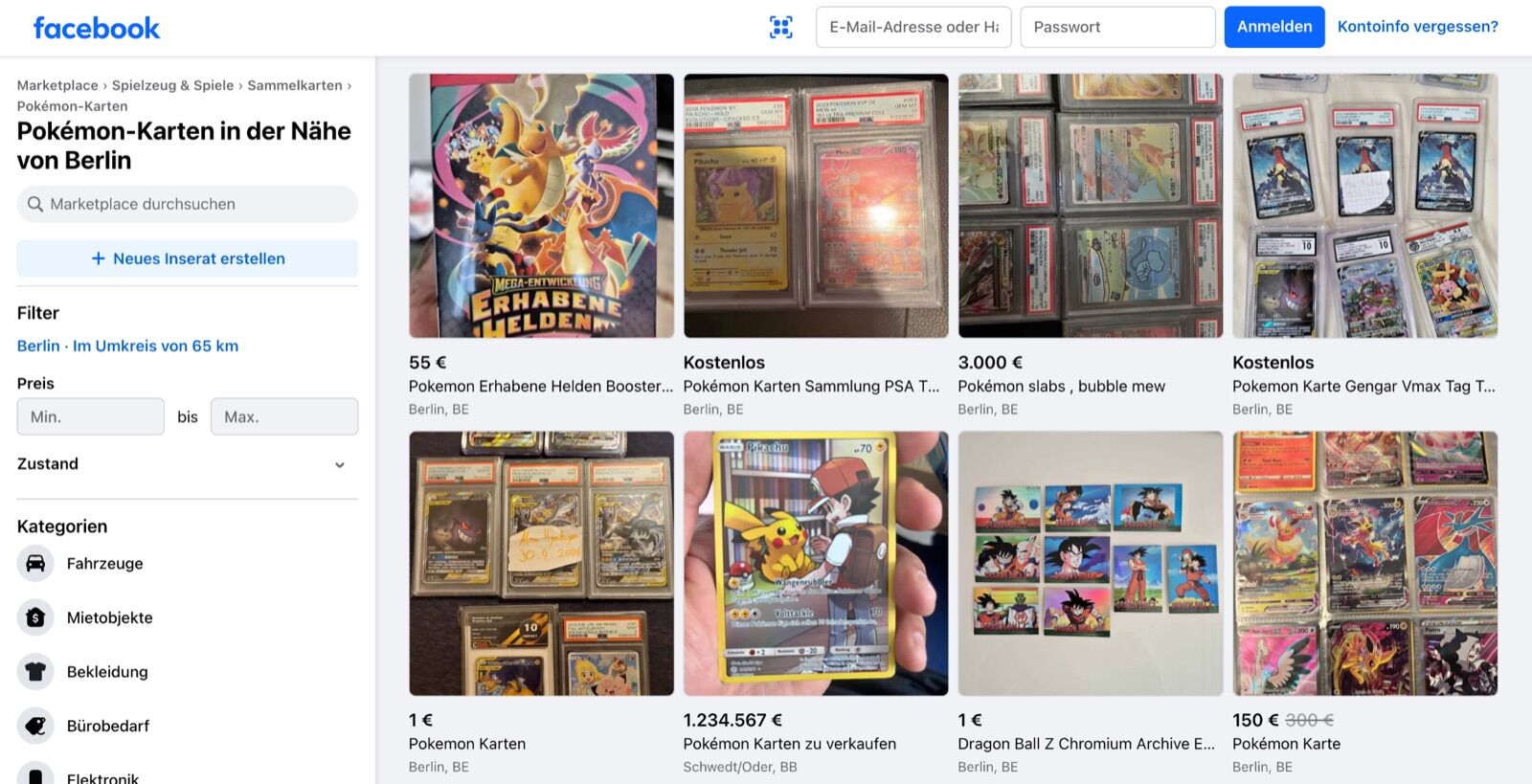
Counterfeits turn up particularly often on marketplaces and social networks.
But who actually produces these fakes? Well, since the market for Pokémon cards is enormous, a veritable industry has grown up around the production of fake cards.
The factories of these manufacturers are mostly located in China, while the originals are produced in their country of origin Japan, in the USA or in Europe.
Let us now look at how you can tell fakes from the original in just a few steps. So that you do not, like many before you, spend large sums on cards that turn out to be completely worthless at the end of the day.
How to spot fake Pokémon cards: the most common features
As the number of counterfeits grows, it is becoming harder and harder even for experienced collectors to tell original cards from fakes.
Many of the once obvious clues have been reworked over time by the counterfeiters and adapted so closely to the original that there is barely any difference left to see.
For collectors it is therefore crucial to know the various features they can use to check their cards, because the more you know, the smaller the chance that you fall for a counterfeit.
In the following sections you will learn how to spot and avoid fake Pokémon cards.

Ultra Pro Toploader 3" x 4" Clear Regular (25 per pack) 25 Pieces – (63.5 x 88.9 mm) Toploader / Standard size trading cards (Magic, Pokémon, Yu-Gi-Oh!, Digimon TCG, WoW TCG)
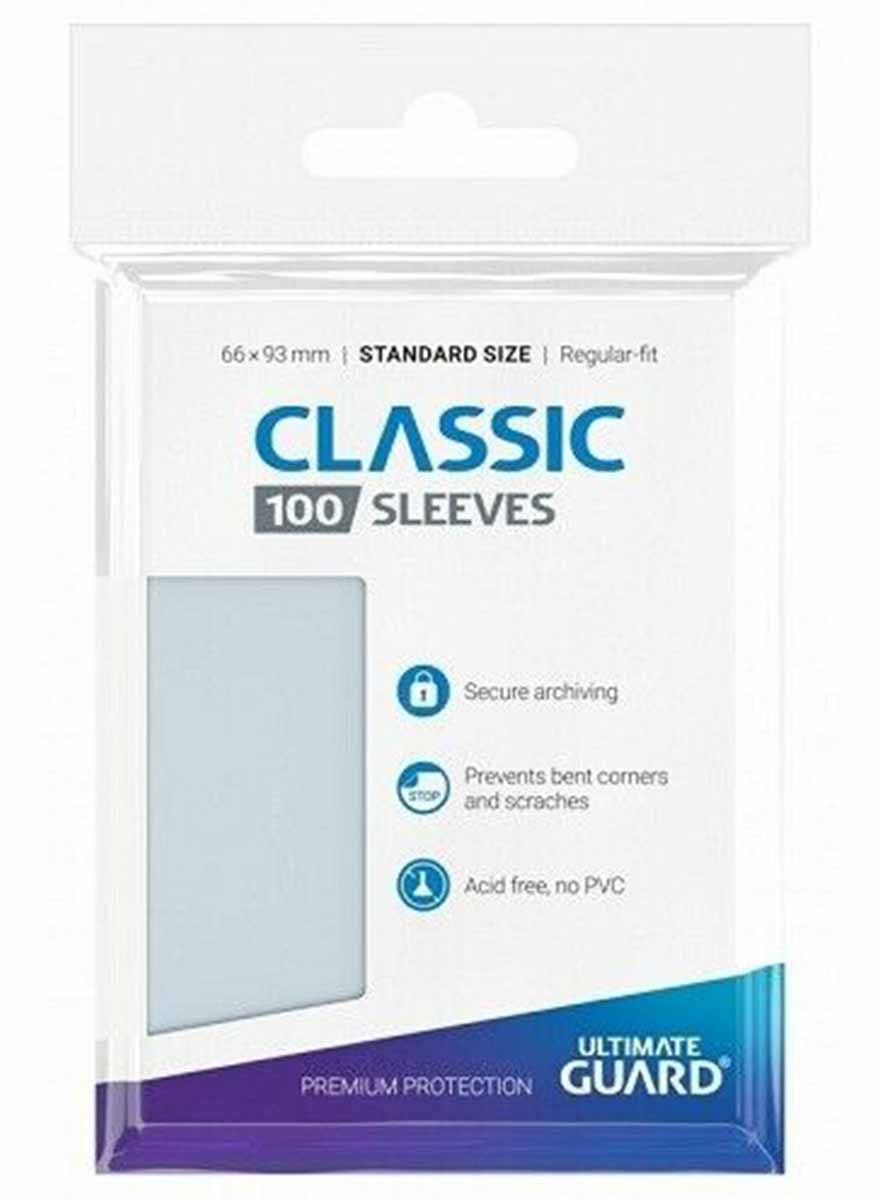
Ultimate Guard Classic Card Deck Protectors Sleeves (100 per pack) 100 Ultimate Guard Classic Card Deck Protectors Sleeves. - Suitable for Pokémon, Magic and Yu-Gi-Oh! cards.
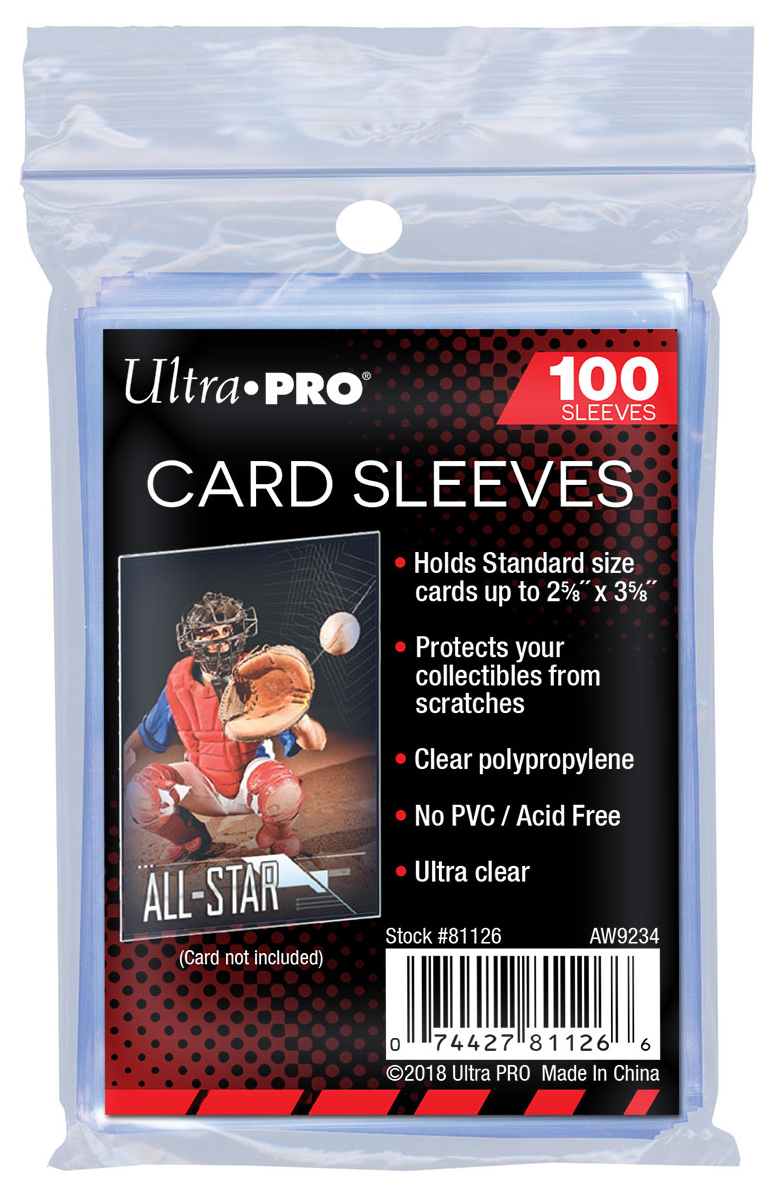
Ultra PRO - Regular Soft Card Deck Protectors (100 pro pack) 100 Card Sleeves (100 pro pack). - Suitable for Pokémon, Magic and Yu-Gi-Oh! cards. Archival-grade, acid-free and non-PVC premium card sleeves designed to hold standard 2-1/2" X 3-1/2" cards. Made from heavy-gauge clear polypropylene for improved protection. Ideal for use with toploaders. Made in the U.S.A. 100 count per pack. Holds standard size cards 2-1/2" X 3-1/2"ultra clear polypropylene Consistent sizing Fits inside Toploaders No PVC / Acid Free
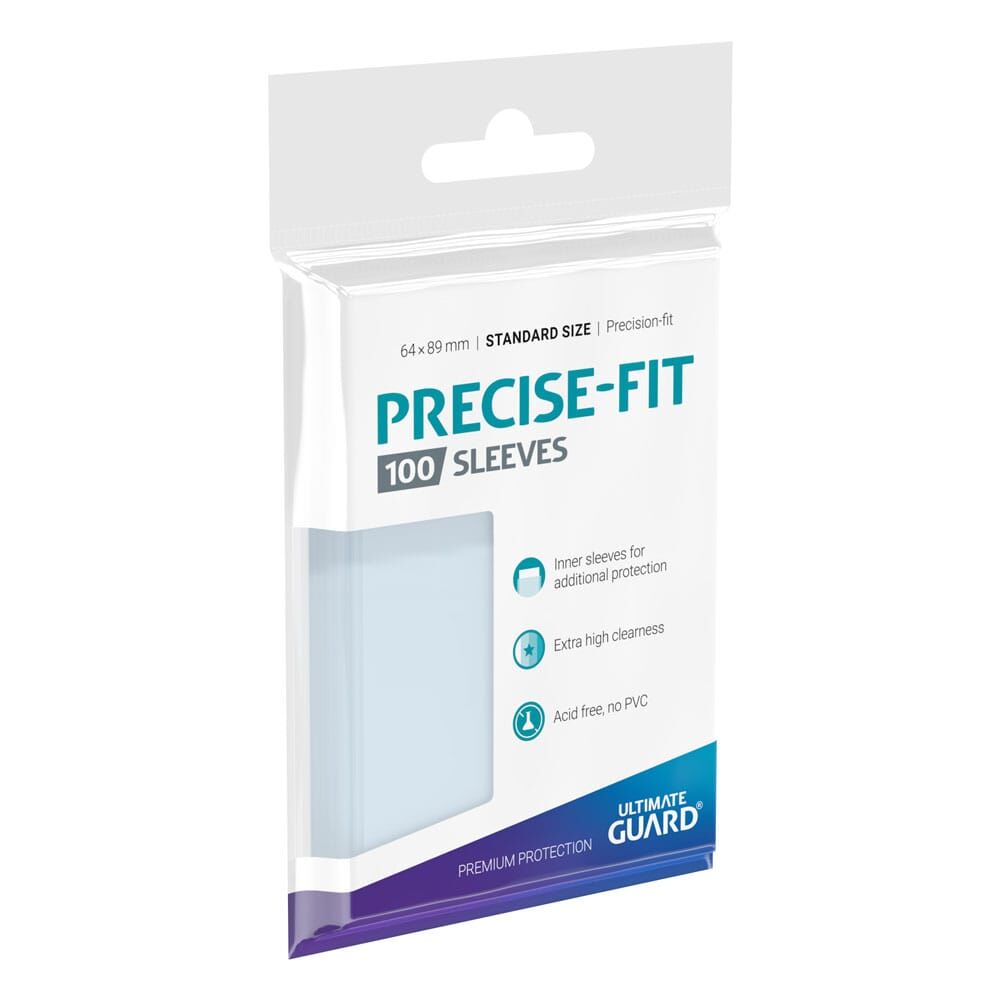
Ultimate Guard - Precise-Fit Sleeves Standard Size Transparent (100) Card sleeves (standard size) Ultimate Guard The pack contains 100 inner card sleeves for extra protection of standard-size trading cards (e.g. Magic the Gathering™, Pokemon™, etc.). - Fits perfectly inside standard-size ULTIMATE GUARD Sleeves (sleeve in sleeve) - Precise fit - Consistently high accuracy of fit - Extra-clear polypropylene - High transparency - Acid-free – No PVC - Sleeve size: 64 x 89 mm
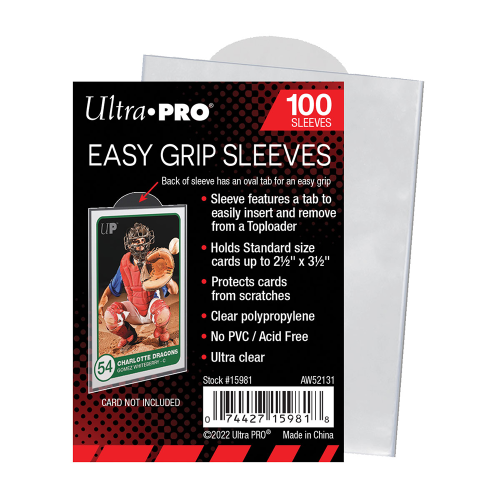
Archival-grade, acid-free and non-PVC card sleeves designed to hold standard 2-1/2" X 3-1/2" cards. The sleeve has an oval tab on the back material to assist with insertion of cards and prevent card corner damage. Tab is also designed to be able to easily grip it and remove a card and sleeve from a Toploader. 100 count per pack.Sleeve features a tab to easily insert and remove from a ToploaderHolds standard size cards 2-1/2" X 3-1/2"Protects your collectibles from scratchesNo PVC / Acid FreeUltra clear polypropylene
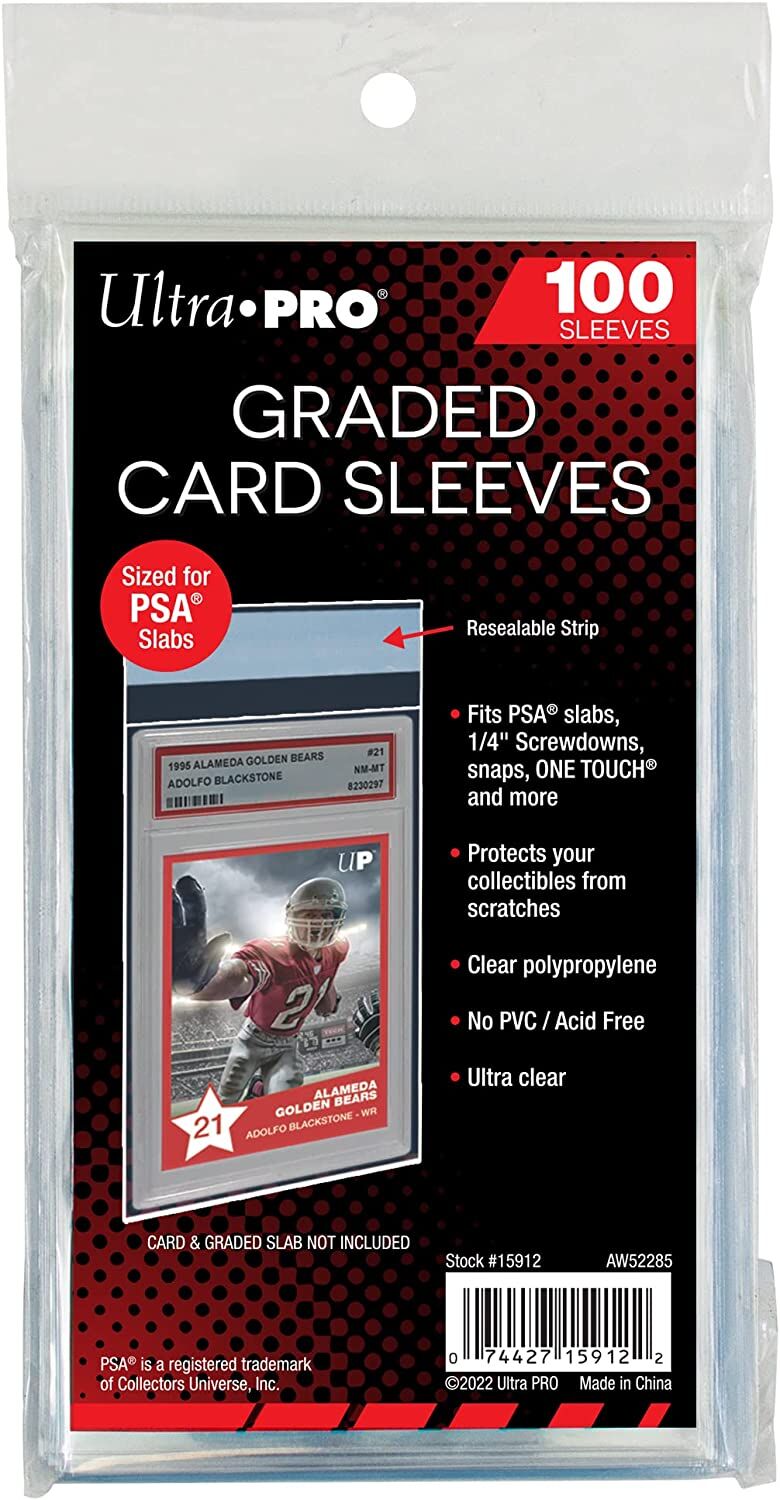
PSA Graded Card Slab Realable Sleeves - Ultra Pro Resealable sleeves for PSA-certified card slabs, offering the best fit Also suitable for 6.35 mm (1/4 inch) clamps, snap buttons, one-touch and more Protects your collectibles from scratches Includes PSA Graded Card Slab Realable Sleeves (other pictured items not included)

Card Holder Stand Ultra PRO #81256 1x Card Holder Stand Ultra PRO #81256 (Without Card Saver – example only) These card stands are perfect for displaying trading cards and collectible cards. Compatible with Top Loaders, Card Savers and Card Holders.

Ultra PRO – Toploader 3" x 4" Clear Regular (1 Piece) 1 piece – (63.5 x 88.9 mm) Toploader / Standard size trading cards (Magic, Pokémon, Yu-Gi-Oh!, Digimon TCG, WoW TCG)
Feature 1: The material
If you have been collecting or playing for a while, you have already developed a good feel for how real Pokémon cards feel, without even knowing it. The thickness of the card, its texture, the quality.
But when you hold a counterfeit card in your hand, it may look perfectly fine at first glance, and yet your collector's instinct tells you that something does not feel 100 % right.
Many fake cards are made of a cheap material in order to save costs. As a result they are either:
- too thin
- too thick
- too glossy, like photo paper
- or plastic-like
This makes counterfeit cards often unusually flexible or exceptionally sturdy, or they tear far more easily than originals.
Tip: shine a (mobile phone) torch onto the front of the card. If the back is barely visible or not visible at all, it is probably an original. If the back shows through strongly, however, you are probably holding a counterfeit in your hand.
Feature 2: The weight
The lower-grade material that is frequently used for counterfeits also leads to deviations in weight. Fake cards usually weigh less than the original.
A kitchen scale can help here, because the deviations are often very small and therefore hard to detect by hand.
It depends on the type of card, because genuine Pokémon cards also come in different weight classes:
- Regular playing card: 1.7-1.8 g
- Holo Rare Cards: 1.9-2.0 g
For packs the usual weight is as follows:
- Vintage packs without a Holo Card: 20.5-20.9 g
- Vintage packs with a Holo Card: 21.0-21.6 g
- Modern packs: 22.4 g
(Packs with particularly rare cards can be marginally heavier)
Attention: modern boosters are now deliberately protected against “weighing”, that is against being weighed. For this reason the weight should never be used as the only indicator.
Feature 3: The size
The size of the card is another important clue as to whether you are dealing with an original or a counterfeit.
And the correct size is much easier to establish than the weight, because all you have to do is place the card in question on top of an original.
Classic Pokémon cards all have a uniform size of 63.5 x 88.5 mm. Only promo jumbo cards are sometimes larger, but otherwise these measurements are regarded as universal. In other words: if the card you are holding is off by even a millimetre, it is probably a counterfeit.
Tip: Always take an original card with you when you go to buy cards. That way you can check on the spot whether the measurements are right.
Feature 4: Edges and Black Layer
Once you have checked the card for material, weight and size, it is worth taking a look at its side profile.
To do so, look closely at all the edges of the card. Are the edges themselves frayed, or does the artwork run towards the edges of the card at irregular distances? If so, it can either be a production error on an original or a counterfeit.
You should also always keep an eye out for the Black Layer. You can recognise it as a thin black or dark blue line between the layers of the original card. On counterfeits this line is often not visible and the edge is therefore white all the way through. But even when the Black Layer is present, that is still no guarantee of authenticity.
Feature 5: The front
On the front, probably the most important part of the card, there are several places where you can spot a fake Pokémon card.
- The font: counterfeits often use the wrong typeface. Look out for letters that appear too bold or text that looks too thin. Sometimes there are also overly large gaps between words that should not be there.
- The spelling: Pokémon is always written with an accent. The name is legally protected. On counterfeits it can happen that the accent has been left out. But you should also pay attention to the correct spelling of the Pokémon names themselves.
- The language: because English cards are traded worldwide and have the largest market, they are faked particularly often. However, counterfeits of German, French, Spanish and Japanese cards exist as well.
- The print quality: when original Pokémon cards are produced, absolutely high-grade printing is always used. The resolution of the artwork should therefore be flawless and show no blurred edges, pixelation or bleeding ink.
- The symbols: on fake cards the energy symbols are often placed incorrectly, are the wrong size or are missing entirely. They are therefore an important indicator by which collectors frequently recognise counterfeit Pokémon cards.
- The card number: if you want to be completely sure, verify the set symbol and the card number. The best way is to look them up online: if the card number does not exist or belongs to a different Pokémon, you can assume that it is a counterfeit.
- Date & illustrator name: both of these details should also be on your Pokémon card. Counterfeits sometimes overlook this small but important detail.
Feature 6: The back
The back is an extremely important feature, because it offers many clues by which you can recognise a counterfeit Pokémon card.
The colour:
- On counterfeit cards the colour tone often deviates
- The colours are either too intense or washed out
- The shade of blue is either too dark or already tends towards purple
- The shade of blue does not run evenly across the card
The Pokéball:
- The original Pokéball has sharp edges, balanced colours and the right shading
- On some counterfeits the Pokéball is also upside down (the red side must always face upwards).
The layout:
- Counterfeits sometimes show large deviations in the alignment of the artwork
- The Pokéball should sit centred on the back of the card
- Original cards can deviate in the layout too, but on counterfeits these deviations are usually much larger
Feature 7: The holo effect
Counterfeit holo cards unfortunately occur more frequently, but they can be spotted quickly. Genuine holo effects are designed very carefully and deliberately, whereas with fakes the opposite is often the case.
This is how you recognise a fake holo effect:
- Vertical rainbow lines
- A glitter effect that looks random
- A holographic effect across the entire card
- Wrongly placed or unsuitable holography
In addition, especially rare cards such as Full-Art Ultra Rares have a texture that you clearly feel when running your finger over the card. Fakes, on the other hand, are often smooth.
If you have doubts about whether a holo effect is genuine or counterfeit, we always advise you to compare it with images from verified dealers.
Feature 8: PSA Grading
A PSA Grading is one of the most reliable ways to have the authenticity of a Pokémon card confirmed. Because before a card is graded, it first goes through an authenticity check. Only once the card has been classified as genuine does it also receive its grade on the 1-10 grading scale.
But be careful: PSA-graded cards do offer a high level of security, but by now not only the cards themselves are being counterfeited, the PSA cases and labels are too. Collectors should therefore always also compare the certification number stated with the official PSA website.
If the card type, image and certification number do not match, or if the case shows visible signs of tampering, you should become cautious.
Nevertheless, PSA Grading is one of the most reliable methods for recognising genuine Pokémon cards. Especially with high-priced vintage cards or rare modern chase cards, buying a PSA-graded card can definitely be worthwhile.
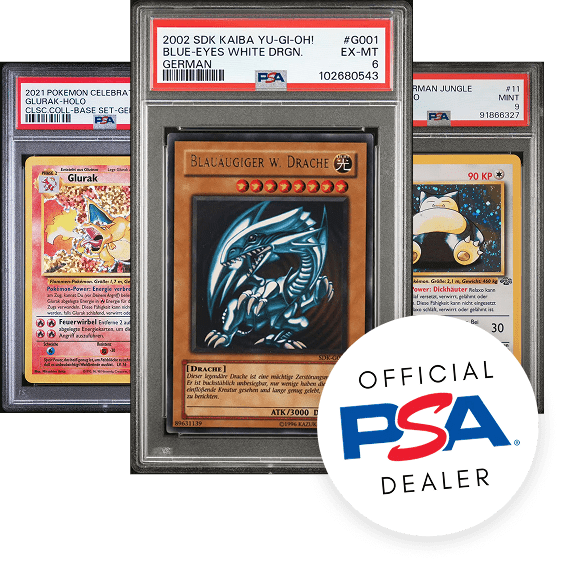
As an official PSA dealer, AMAZINGTOYS® has been sending your trading cards directly to the new PSA headquarters in Frankfurt for grading since 1 July. There your cards are first checked for authenticity and then assessed according to the official PSA standard.
PSA Grading Switzerland: service for Pokémon and other cards
- Globally recognised grading to determine the value of your cards
- Safe and personal at the AMAZINGTOYS® Store in Zurich
- CHF 125.00 per TCG card (plus any upcharges from PSA)
How to buy genuine Pokémon cards: 5 tips for better purchases
1. A reputable dealer: the safest way to get genuine Pokémon cards always leads through a verified or licensed dealer. Many collectors trust dubious listings on online marketplaces or end up on unverified websites. A trustworthy dealer is a must.
2. Read dealer reviews: before you buy an expensive card, it is worth taking a look at the dealer reviews. They often quickly show whether this is a trustworthy place or whether it is better to stay away.
3. A reputable price: the price is a decisive clue as to whether the cards are genuine or counterfeit. Fakes are often priced well below the usual market value. So if you see super rare cards changing hands for just a few francs, your alarm bells should ring immediately.
4. Buy packaged products: if you buy new packs, they should really be new. Make sure that the packaging is closed and does not show any conspicuous openings or signs of wear anywhere. That could be an indication that it has already been opened.
5. Ask questions: before a purchase you may well be critical and ask as many questions as you consider necessary. A reputable seller will be happy to provide you with the necessary information and, if required, additional photos or details about the condition and the origin of the card.
Do the AMAZINGTOYS® Trade-In
- Sell or trade in Pokémon, Magic, One Piece and Yu-Gi-Oh! cards
- Valued by a professional, guaranteed fair price
- Bulk, sealed, single cards and whole collections
You have bought a counterfeit Pokémon card: this is what you can do now
Unfortunately it happens that, despite careful checking, you end up with a fake. The frustration is understandably high, but that does not mean that there is nothing you can do in such a case to minimise the damage.
These are the steps you can take now:
- Compare with the original: before you pass your final judgement, it is best to compare the card you bought with the original once more, to make sure that it is not the genuine version after all.
- Verify officially: if you do not have a comparable original to hand, verify the card using an official database or a trustworthy collector reference.
- Contact the seller: if you bought the card in a physical store, it is worth visiting it again to discuss your concern in person.
In the case of an online purchase, try to contact the person online and describe the situation. Unfortunately it has to be said that fraud occurs frequently online in particular and that the people can no longer be contacted afterwards.
- Request a refund: if you have managed to get in touch with the seller, you should ask for your money back. Avoid buying other cards from this dealer instead.
- Report the fraud: if the seller blocks your attempt to make contact or, once contact has been made, is not willing to compensate you, you should report a fraud. Unfortunately you will not get your money back, but you protect other collectors from this dealer and thereby help to strengthen the Pokémon community.
Conclusion: how you can spot a fake Pokémon card
Because of their enormous popularity, Pokémon cards are also becoming ever more valuable. Unfortunately this also comes with a growing market for fake cards. By now many of these cards are hard to tell apart from original cards, which is why collectors should definitely know which features to look out for before a purchase.
Besides the material, factors such as the weight and the size show whether you are dealing with a counterfeit or the original. On the front and the back in particular there are often clues hidden that quickly expose counterfeits.
So examine every card closely before a purchase, in order to avoid spending money on worthless cards and to preserve the value of your collection in the long term. When buying, also rely on verified dealers with many years of experience. They support you and are always happy to assist you with any questions.
Frequently asked questions
By the often inferior material, poor print quality, mistakes in the layout or in the language, or untypical Holo effects. If in doubt, you should always compare the card with the original.
Yes, because of their worldwide distribution, English cards are counterfeited more often. That said, counterfeits in other languages keep surfacing too.
A PSA Grading is one of the strongest marks of authenticity. However, PSA cases and labels can be counterfeited too, which is why it is advisable to check the certification number as well.
No, counterfeit cards have no real collector value and should not be resold or used in tournaments either.
Best of all from authorised, established dealers with several years of experience and a reputation as a trustworthy port of call.
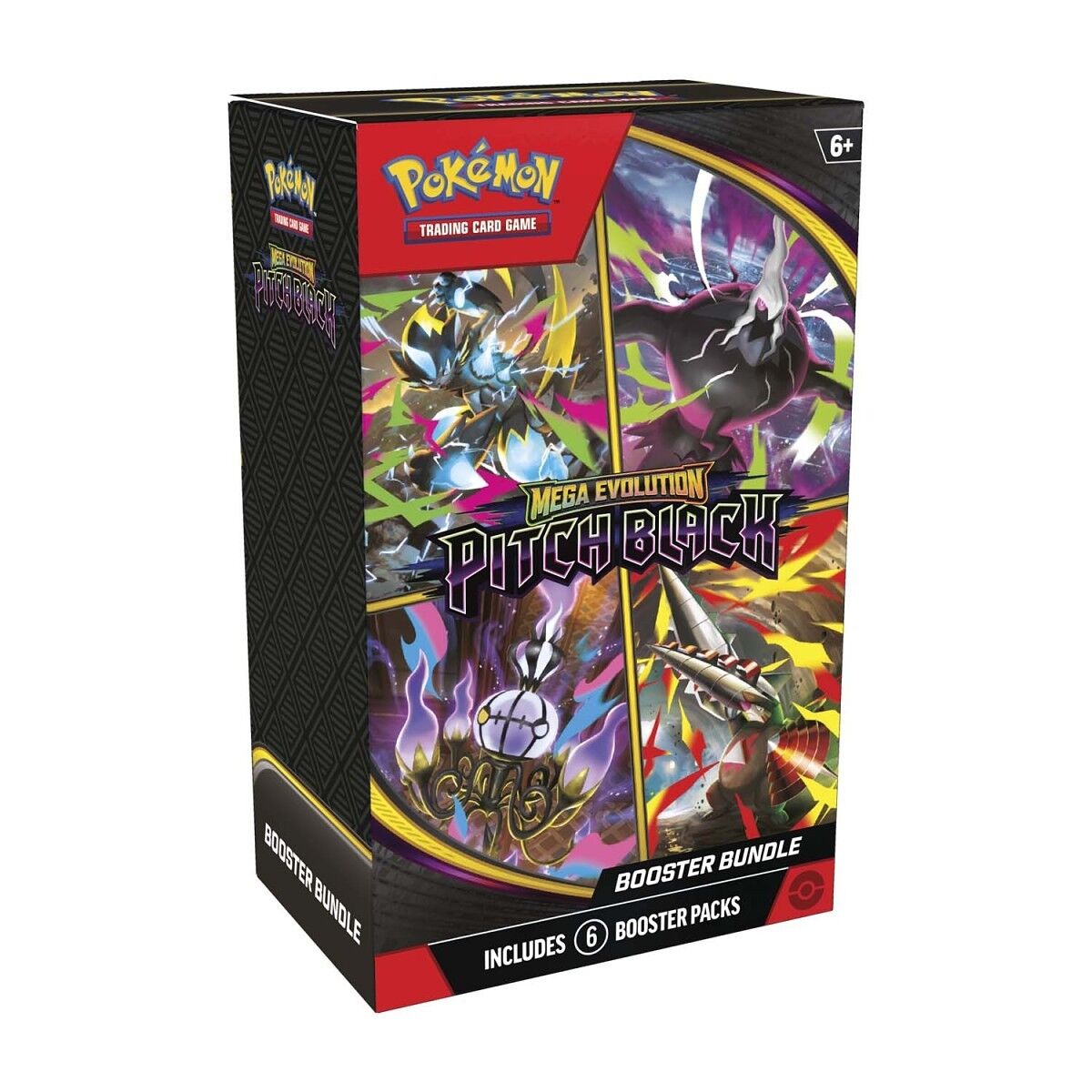
Delve into Darkness Beyond Limits!Twinkling city lights and a starry sky become obscured in darkness as Mega Darkrai ex arrives with mystery and malice! But Mega Zeraora ex fights back with thunderous strikes of lightning, leading the way for Mega Chandelure ex, Mega Excadrill ex, and more to join the fray. Shadows deepen and nightmares become reality in the Pokémon TCG: Mega Evolution—Pitch Black expansion!Includes six booster packs from the Pokémon TCG: Mega Evolution—Pitch Black expansionEach booster pack contains 10 cards, 1 Basic Energy, and 1 Pokémon TCG Live code card. Cards vary by pack.
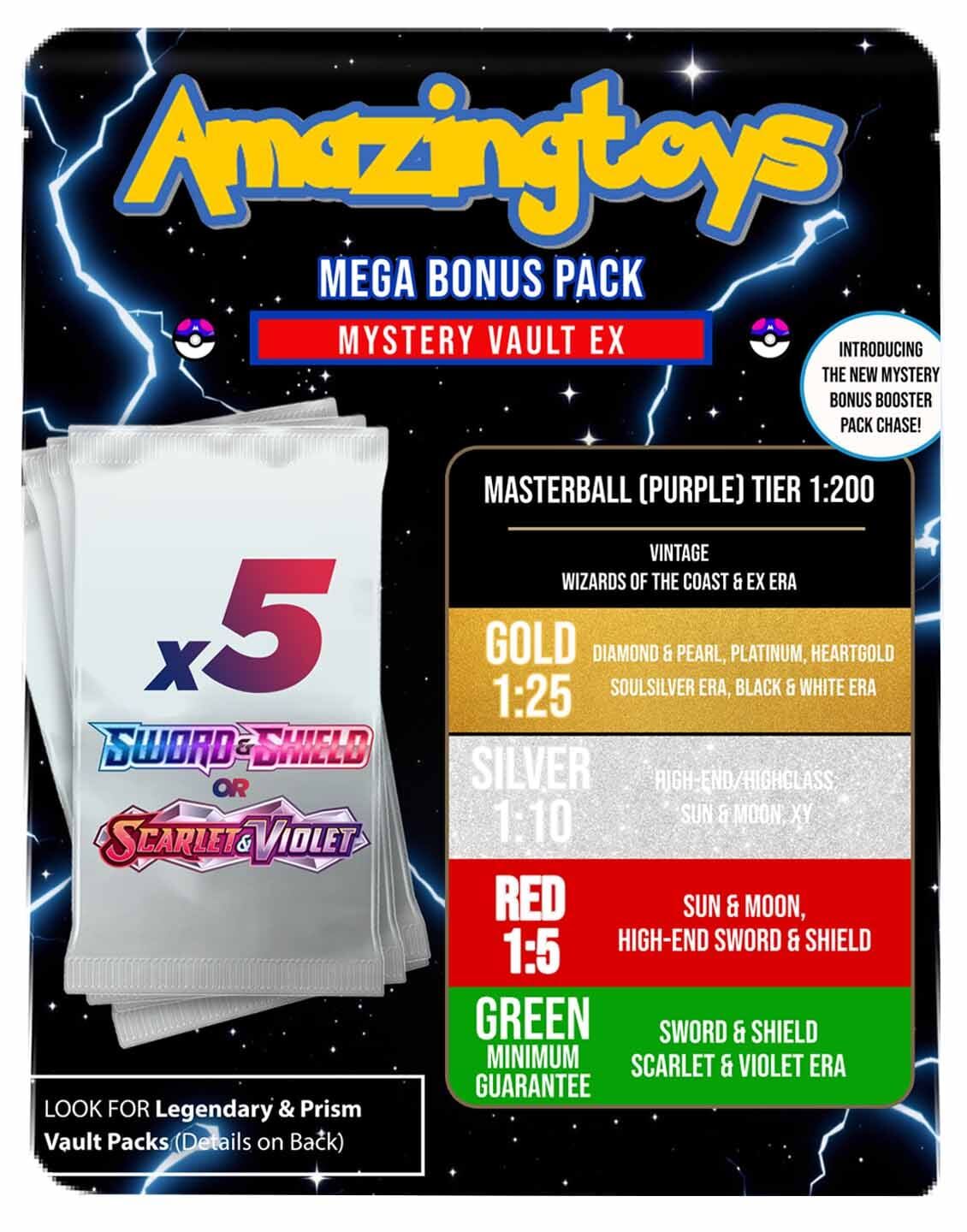
Pokémon AMAZINGTOYS® Ultimate Mystery Vault EX Booster Pack - Wave 3 With the Pokémon AMAZINGTOYS® Ultimate Mystery Pack – Wave 3, collectors and players get to experience a very special surprise highlight: lovingly hand-assembled by our family business, only 1,000 of these exclusive packs are put together and made ready to ship worldwide. Each of these limited Mystery Vault EX Booster Packs contains a total of six boosters – five regular boosters from the Sword & Shield or Scarlet & Violet era, plus one spectacular Amazing MEGA BONUS Mystery Booster. The included boosters are in English and Japanese and offer, alongside guaranteed classics, the chance of high-quality vintage or EX-era packs. Language: English/Japanese Contents of an Ultimate Mystery Vault EX Booster Pack 1x Amazing Mystery Booster contains 6 boosters, of which: 5 guaranteed booster packs from the Sword & Shield and Scarlet & Violet era 1 Amazing MEGA BONUS Mystery Booster GREEN: guaranteed booster from the Sword & Shield and Scarlet & Violet era RED: 1:5 booster from the Sun & Moon era or high-end Sword & Shield eraSILVER: 1:10 a high-class booster pack, XY era or high-end Sun & Moon era GOLD: 1:25 a booster from the Diamond & Pearl, Platinum, HeartGold & SoulSilver or Black & White era MASTERBALL (PURPLE): 1:200 a booster from the Vintage Wizards of the Cost or EX eraExclusively, the following chase packs are now also available:PRISM VAULT PACK 1:100 contains2 guaranteed booster packs from the Sword & Shield and Scarlet & Violet era1 GREEN: guaranteed booster from the Sword & Shield and Scarlet & Violet era1 RED: booster from the Sun & Moon era or high-end Sword & Shield era1 SILVER: a high-class booster pack, XY era or high-end Sun & Moon era1 GOLD: a booster from the Diamond & Pearl, Platinum, HeartGold & SoulSilver or Black & White era LEGENDARY HIGHCLASS CHASE 1:505 guaranteed high-class booster packs from the Sun & Moon, Sword & Shield or Scarlet & Violet era1 Amazing MEGA BONUS Mystery BoosterGREEN: guaranteed booster from the Sword & Shield and Scarlet & Violet eraRED: 1:5 booster from the Sun & Moon era or high-end Sword & Shield eraSILVER: 1:10 a high-class booster pack, XY era or high-end Sun & Moon eraGOLD: 1:25 a booster from the Diamond & Pearl, Platinum, HeartGold & SoulSilver or Black & White era MASTERBALL (PURPLE): 1:200 a booster from the Vintage Wizards of the Cost or EX era

Take On the Challenge of an Eternity!The hustle and bustle of the city turns into havoc as Mega Floette ex brings turmoil to the streets! Filled with courage and determination, Mega Greninja ex gathers other powerful Mega Evolution Pokémon ex, including Mega Pyroar ex and Mega Dragalge ex, to ward off this growing threat. As night falls, danger blossoms in the Pokémon TCG: Mega Evolution—Chaos Rising expansion!Contents:10 cards per pack
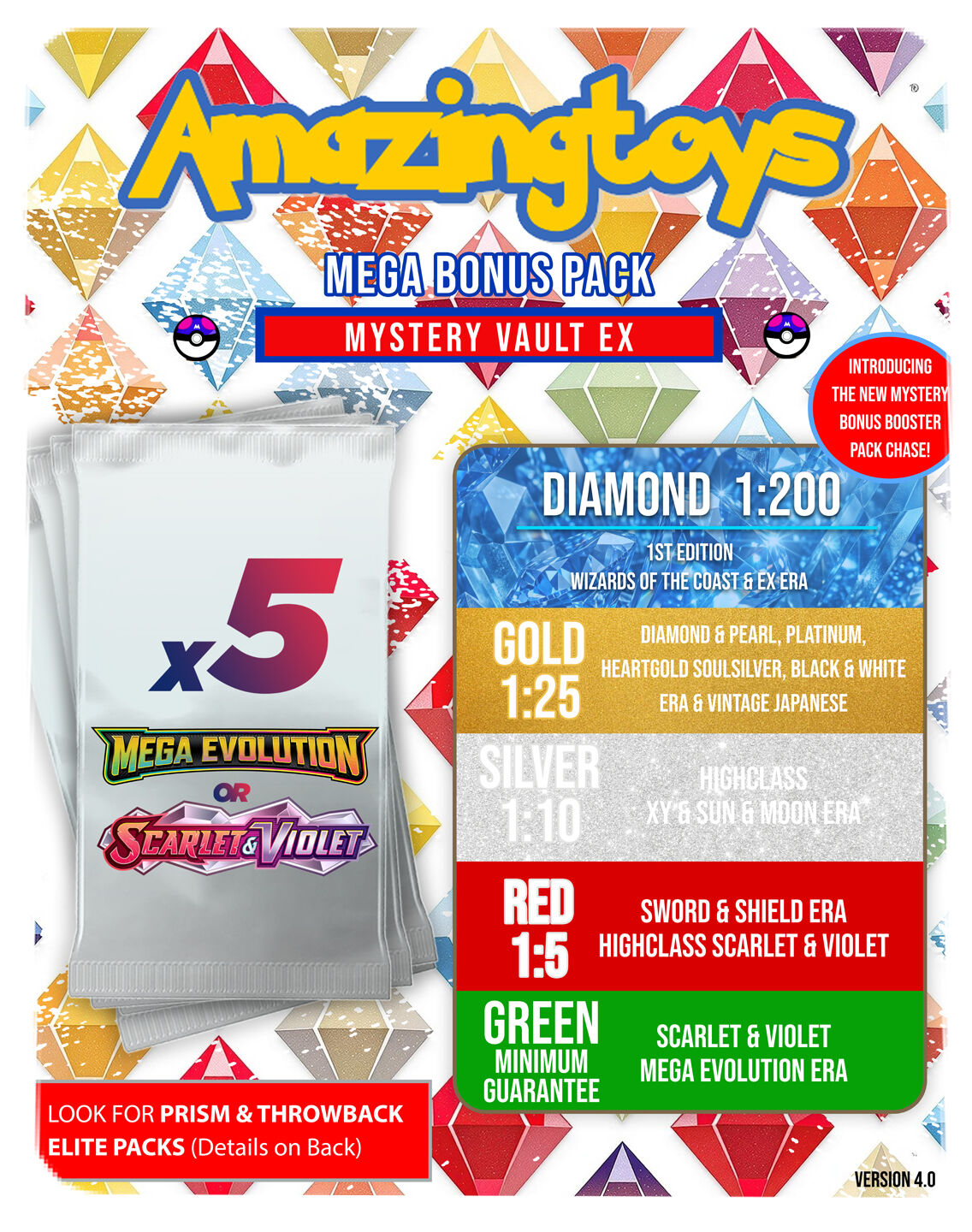
Pokémon AMAZINGTOYS® Ultimate Mystery Vault EX Booster Pack - Wave 4 With the Pokémon AMAZINGTOYS® Ultimate Mystery Pack – Wave 4, collectors and players experience a very special surprise highlight: in loving handwork by our family business, only 2'500 of these exclusive packs are put together and made ready to ship worldwide. Each of these limited Mystery Vault EX Booster Packs contains a total of six boosters – five regular boosters from the Scarlet& & Violet or Mega Evolution era, plus one spectacular Amazing MEGA BONUS Mystery Booster. The included boosters come in English and Japanese and offer, alongside guaranteed classics, a chance at high-value Vintage, 1st Edition or EX-era packs. Language: English/Japanese Contents of an Ultimate Mystery Vault EX Booster Pack 1x Amazing Mystery Booster contains 6 boosters, of which: 5 guaranteed booster packs from the Scarlet& & Violet and Mega Evolution era 1 Amazing MEGA BONUS Mystery Booster GREEN: Guaranteed booster from the Scarlet& & Violet and Mega Evolution era RED: 1:5 booster from the Sword& & Shield eraSILVER: 1:10 a Highclass Booster Pack, XY era or Sun& & Moon era GOLD: 1:25 a booster from Diamond& & Pearl, Platinum, HeartGold& & SoulSilver or Black& & White era DIAMOND: 1:200 a booster from Vintage1st Edition Wizards of the Cost or EX eraAlso available exclusively now are the following Chase Packs:PRISM VAULT PACK 1:100 contains2 guaranteed booster packs from the Scarlet& & Violet and Mega Evolution eraGREEN: Guaranteed booster from the Scarlet& & Violet and Mega Evolution eraRED: 1:5 booster from the Sword& & Shield eraSILVER: 1:10 a Highclass Booster Pack, XY era or Sun& & Moon eraGOLD: 1:25 a booster from Diamond& & Pearl, Platinum, HeartGold& & SoulSilver or Black& & White era THROWBACK ELITE CHASE 1:50 contains5 guaranteed booster packs from the XY or Sun& & Moon era1 Amazing MEGA BONUS Mystery BoosterGREEN: Guaranteed booster from the Scarlet& & Violet and Mega Evolution eraRED: 1:5 booster from the Sword& & Shield eraSILVER: 1:10 a Highclass Booster Pack, XY era or Sun& & Moon eraGOLD: 1:25 a booster from Diamond& & Pearl, Platinum, HeartGold& & SoulSilver or Black& & White era DIAMOND: 1:200 a booster from Vintage 1st Edition Wizards of the Cost or EX era
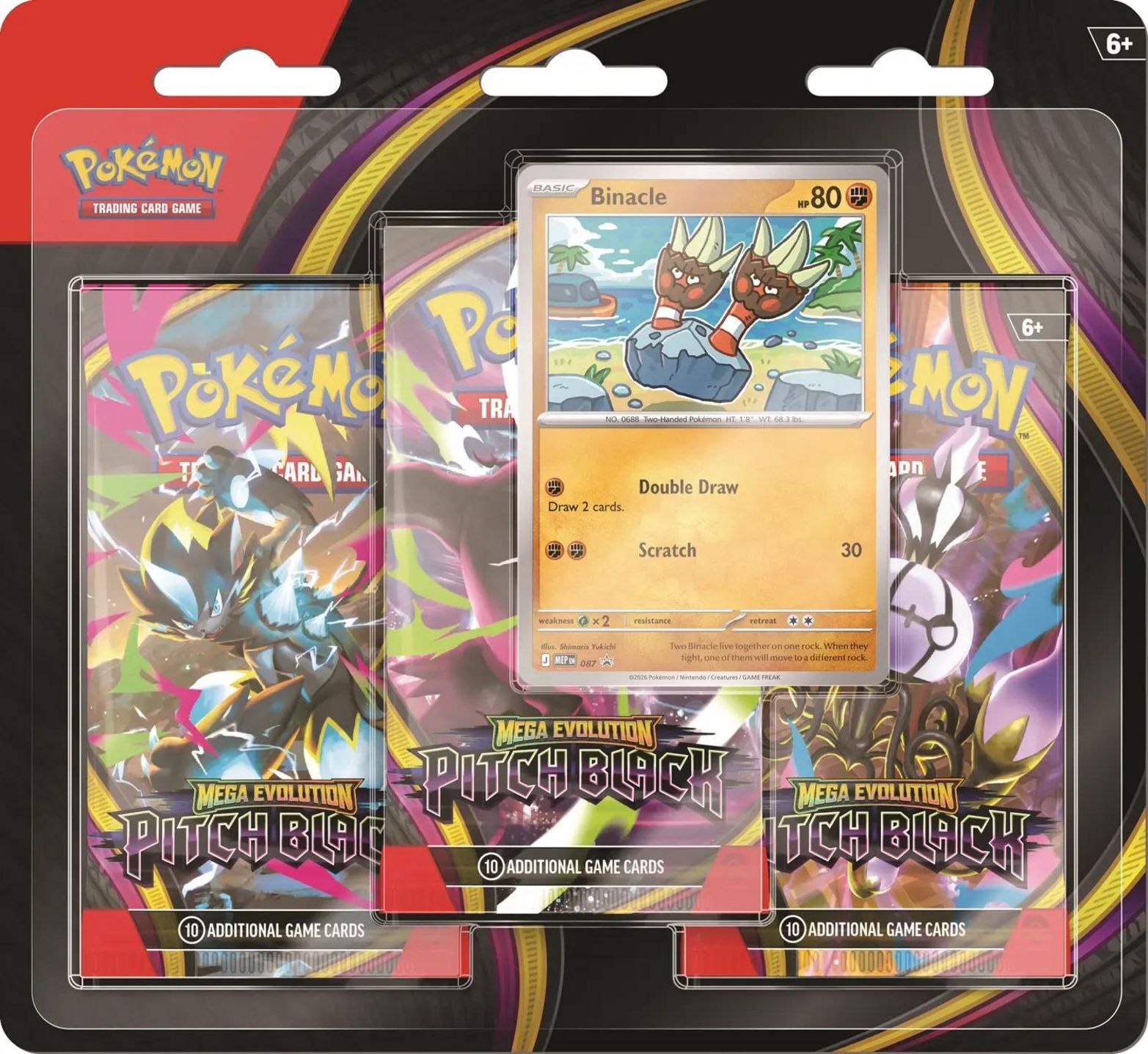
Delve into Darkness Beyond Limits! Twinkling city lights and a starry sky become obscured in darkness as Mega Darkrai ex arrives with mystery and malice! But Mega Zeraora ex fights back with thunderous strikes of lightning, leading the way for Mega Chandelure ex, Mega Excadrill ex, and more to join the fray. Shadows deepen and nightmares become reality in the Pokémon TCG: Mega Evolution—Pitch Black expansion!
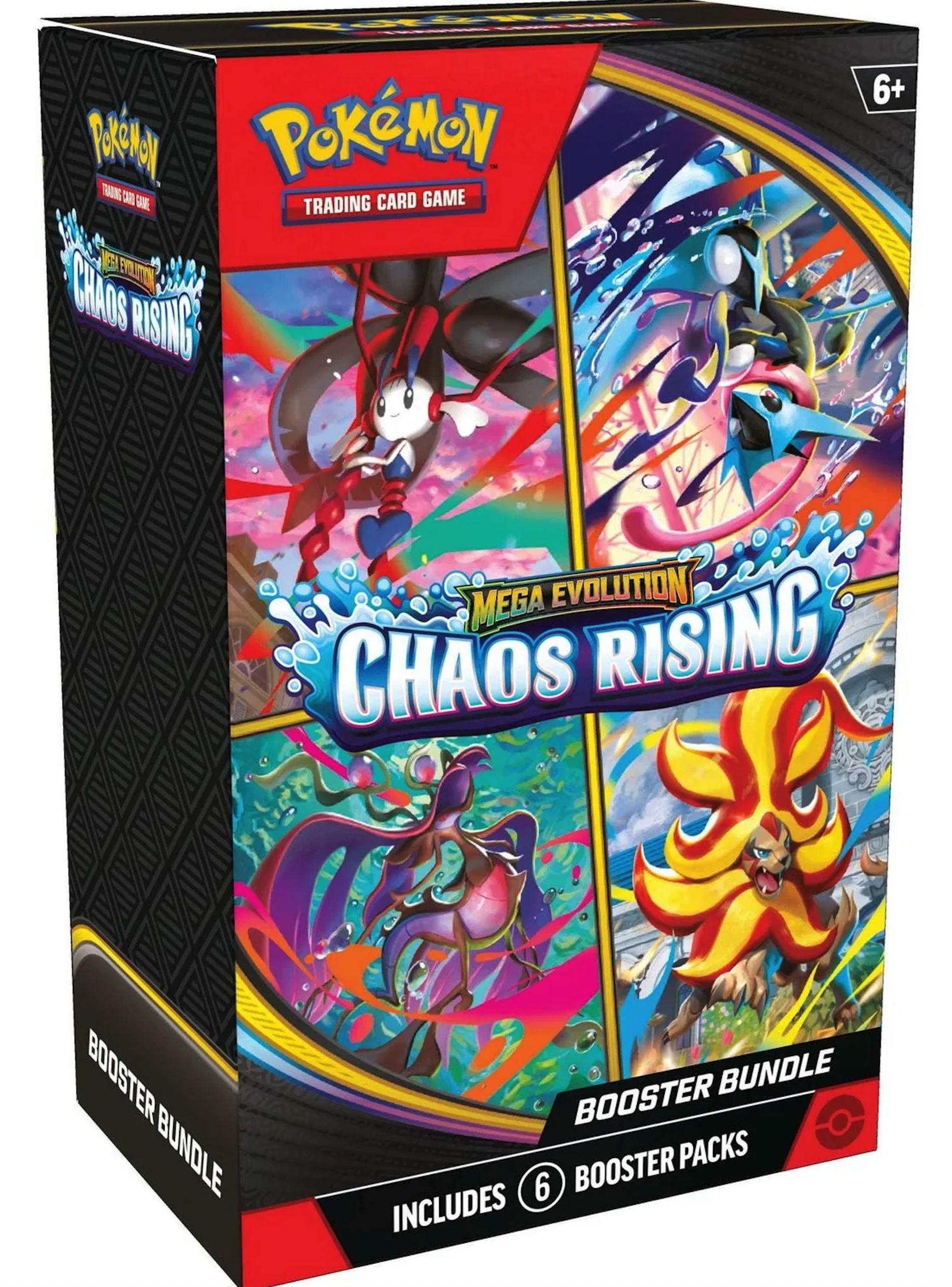
The hustle and bustle of the city turns into havoc as Mega Floette ex brings turmoil to the streets! Filled with courage and determination, Mega Greninja ex gathers other powerful Mega Evolution Pokémon ex, including Mega Pyroar ex and Mega Dragalge ex, to ward off this growing threat. As night falls, danger blossoms in the Pokémon TCG: Mega Evolution—Chaos Rising expansion! Take on the challenge of an eternity! Contains 6 booster packs from Pokémon TCG: Mega Evolution—Chaos Rising. (Each booster pack contains 10 game cards, 1 Basic Energy, and 1 Pokémon TCG Live code card. Cards vary by pack.) The hustle and bustle of the city turns into havoc as Mega Floette ex brings turmoil to the streets! Filled with courage and determination, Mega Greninja ex gathers other powerful Mega Evolution Pokémon ex, including Mega Pyroar ex and Mega Dragalge ex, to ward off this growing threat. Give your collection a boost with 6 booster packs from the Mega Evolution—Chaos Rising expansion.
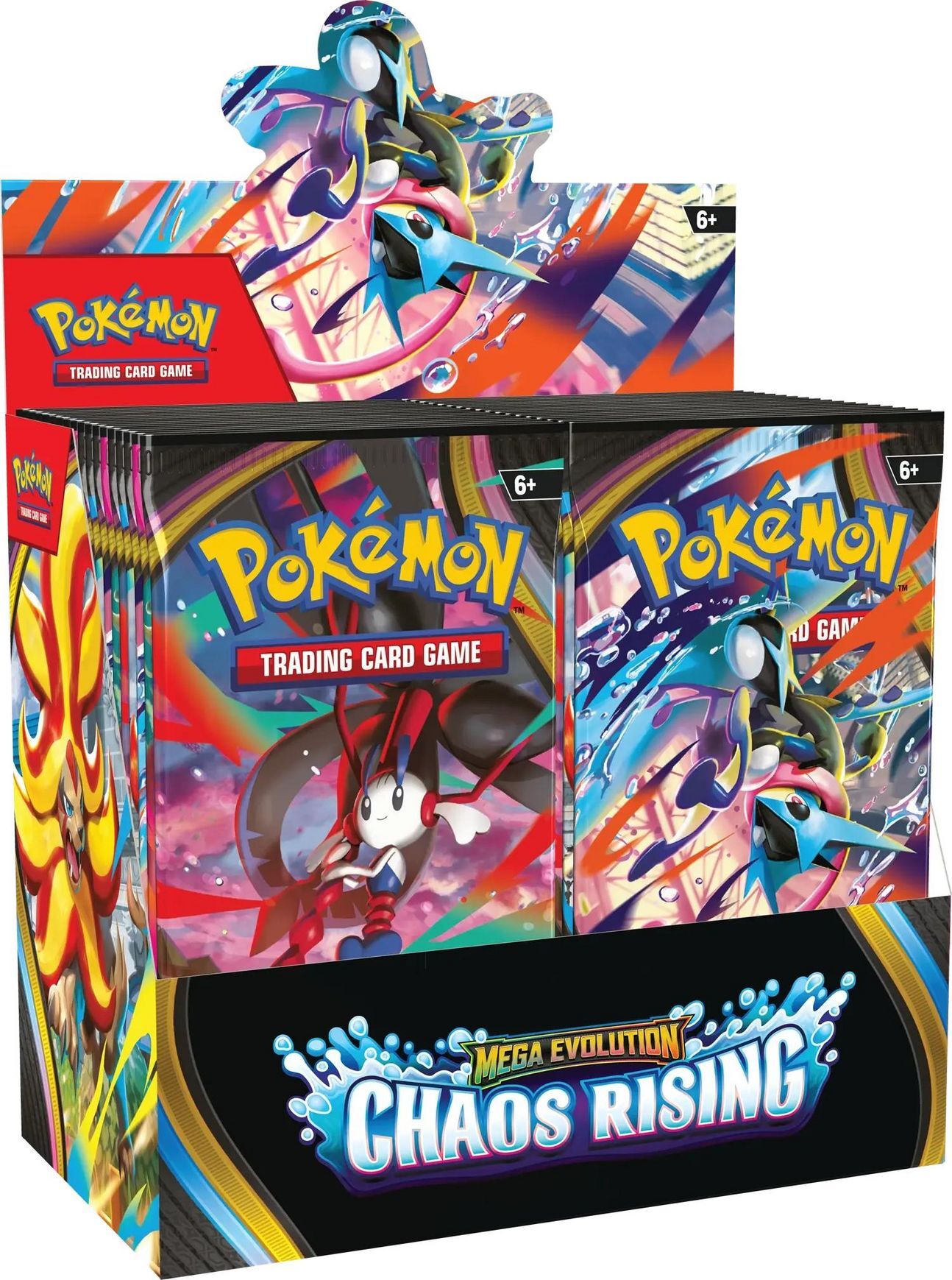
Take On the Challenge of an Eternity!The hustle and bustle of the city turns into havoc as Mega Floette ex brings turmoil to the streets! Filled with courage and determination, Mega Greninja ex gathers other powerful Mega Evolution Pokémon ex, including Mega Pyroar ex and Mega Dragalge ex, to ward off this growing threat. As night falls, danger blossoms in the Pokémon TCG: Mega Evolution—Chaos Rising expansion!