

Rare Pokémon cards: what is the rarest card in the world?
 Thomas KovacsLast updated: 18 May 2026 approx. 8 min read
Rare Pokémon cards hold a special appeal for players and collectors. The idea of holding a rare or perhaps even unique example in your hands fascinates Pokémon fans. We present the currently rarest cards in the world and show you which rarities you can also find in the AMAZINGTOYS® shop.
The most important points first:
- Rarity and condition determine the price of a Pokémon card. Protecting rare cards via PSA Grading is therefore particularly important.
- Several cards exist only once worldwide. These include, for example, the famous Illustrator Pikachu Grade 10 or Rayquaza Goldstar Grade 10
- A Rayquaza Goldstar Grade 9 is on offer in the AMAZINGTOYS® shop. There are only 10 such examples worldwide.
Rare Pokémon cards: what you should know
Some rare Pokémon cards exist only once in the entire world – others are so common that their price barely covers the cost of printing and materials.
That a rare Pokémon card is worth more than one that is available thousands of times over should surprise no one. But how do the dramatic differences in the rarity of some examples come about?
Three factors play a role here, and they often work together:
1. Original print run
If only a small number of a particular Pokémon card was printed, the rarity is of course very high from the outset. Very small print runs are found above all among the special editions: cards that were handed out as prizes for tournaments or competitions, for example, were often produced only 10, 20 or 30 times in total.
You will also find rare Pokémon cards among the first versions. Back in the 90s, Pokémon was still a small niche product for children. Only over the years did interest, demand and with them the print run grow. Before that success set in, considerably smaller print runs were put into circulation.
And of course The Pokémon Company itself also determines which Pokémon cards are rare: holographic cards or legendary Pokémon are found far less often in booster packs than standard Pokémon, Energy cards or common Trainer cards.
You can recognise the rarity (= number of printed examples) by small symbols on the card itself:
| Black circle | Common |
| Black diamond | Uncommon |
| Black star | Rare |
| Two black stars | Double Rare |
| Two white stars | Ultra Rare |
| One gold star | Illustration Rare |
| Two gold stars | Special Illustration Rare |
| Three gold stars | “Hyper Rare” - extremely rare |
A clever move by the company, because the chance of a rare Pokémon card is part of what makes collecting so appealing!
2. Attrition/loss over time
Some rare Pokémon cards have been in circulation for more than 30 years! After all, the first variants have been around since the mid-90s. It is clear that many examples were lost during that period. The trading cards had no real value for a very long time and were treated carelessly accordingly.
Owners threw away seemingly useless cards or traded them in. Countless treasures were also lost through damage: tears, creases or moisture quickly take their toll on the simple cardboard cards. The worldwide passion for collecting only really began in recent years.
Collectors protect their favourites today with PSA Grading: the cards are analysed by PSA, an internationally recognised grading body, and sealed in a protective plastic case. Their value is thereby permanently secured. At the start of the Pokémon craze, however, this procedure was not yet possible.
3. Misprints, test prints and other special features
Thousands of different artworks have been printed to date. In total, several million cards are likely to be in circulation. Something can quickly go wrong there! Numerous misprints and examples that were never intended for sale were produced in this way.
An error in the date or an incorrectly reproduced letter can turn a standard example printed thousands of times over into a very rare Pokémon card. Particular care is required here, though, in order to tell valuable misprints from cheap fakes!
Another reason why PSA Grading is of central importance today. It gives owners the certainty of owning a genuine, valuable misprint.
Test prints are also particularly rare: as the name suggests, these are trial versions that went to print first in order to check correctness and quality. Because of their very small print run, they too are among the very rare Pokémon cards.
Contents: 10x thermal rolls 57mm-25m Ø45, core 12mm | SEPA direct debit text | BPA-free receipt rollsThese thermal rolls are supplied in a shrink-wrapped pack of 10 and are suitable for various printers.- Thermal paper BPA-free, made in Germany- Best paper quality protects the print head- Smooth surface for even print darkness- Lasts 10 years and is temperature-resistant- Red end-of-roll marking (approx. 1 m before the end)- Reverse side can also be individually printed- Standardised SEPA direct debit text on the reverse side- Suitable for all common EC-Cash systems

Ready to have a hair-raising time? These colourful 2.5-inch figures are inspired by the DreamWorks Trolls animated film. Each wild-haired figure comes hidden in a bag for an element of surprise. Randomly receive 1 of 12 and try to collect them all! Style and play with the colourful and wild hair of characters such as Poppy, Branch, Guy Diamond, Harper and more. Each sold separately.
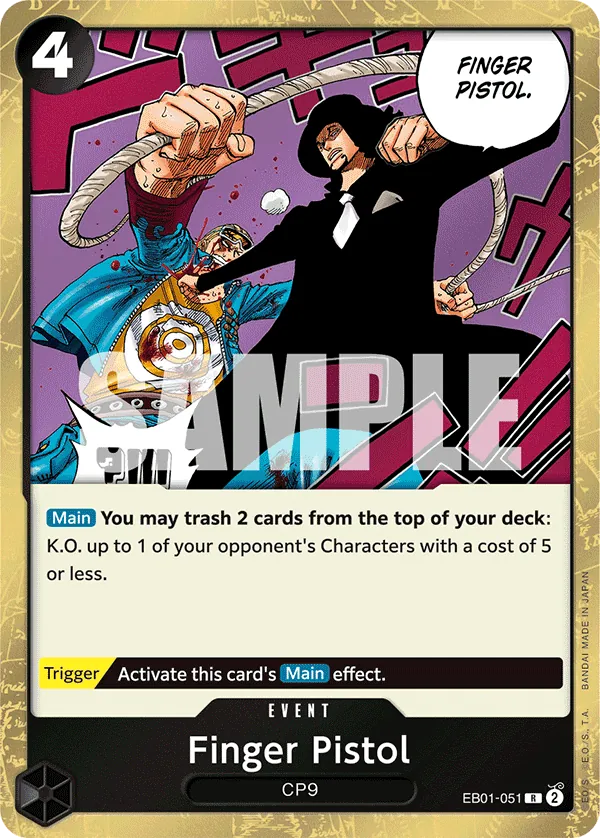
This One Piece TCG single card is perfect for expanding your collection or upgrading your One Piece deck! Of course, you'll find more trading cards from this series with us too!
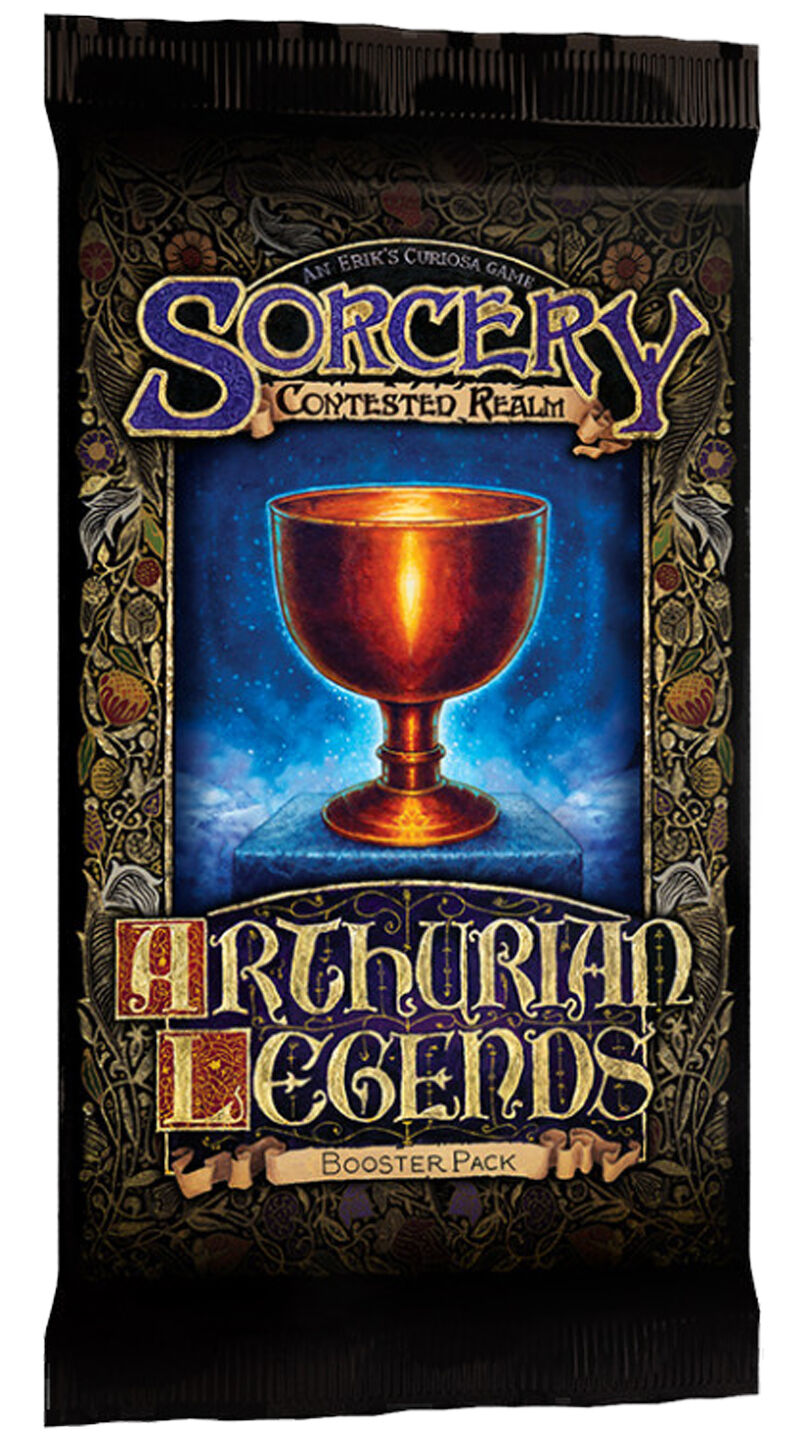
In the fantastic worlds of Sorcery: Contested Realm, mighty magic permeates every living being and even the land itself. With power comes conflict, as Avatars battle for supremacy.Each 15-card Booster Pack contains* 11 common cards, 3 uncommon cards and 1 rare card, with the chance that cards may be replaced by a unique rarity card, a foil card of any rarity or even a mysterious hidden curiosity.
Each 15-card booster contains 10 ordinary cards, 3 exceptional cards and 1 Elite or Unique card. The set contains 403 cards, each with a high-quality holographic foil version. The box topper includes 1x Sorcerer, 3x Rubble Tokens and 24x Mini Tokens.In the fantastical worlds of Sorcery: Contested Realm, powerful magic pervades every living being and even the land itself. With power comes conflict, as the Avatars battle for supremacy.
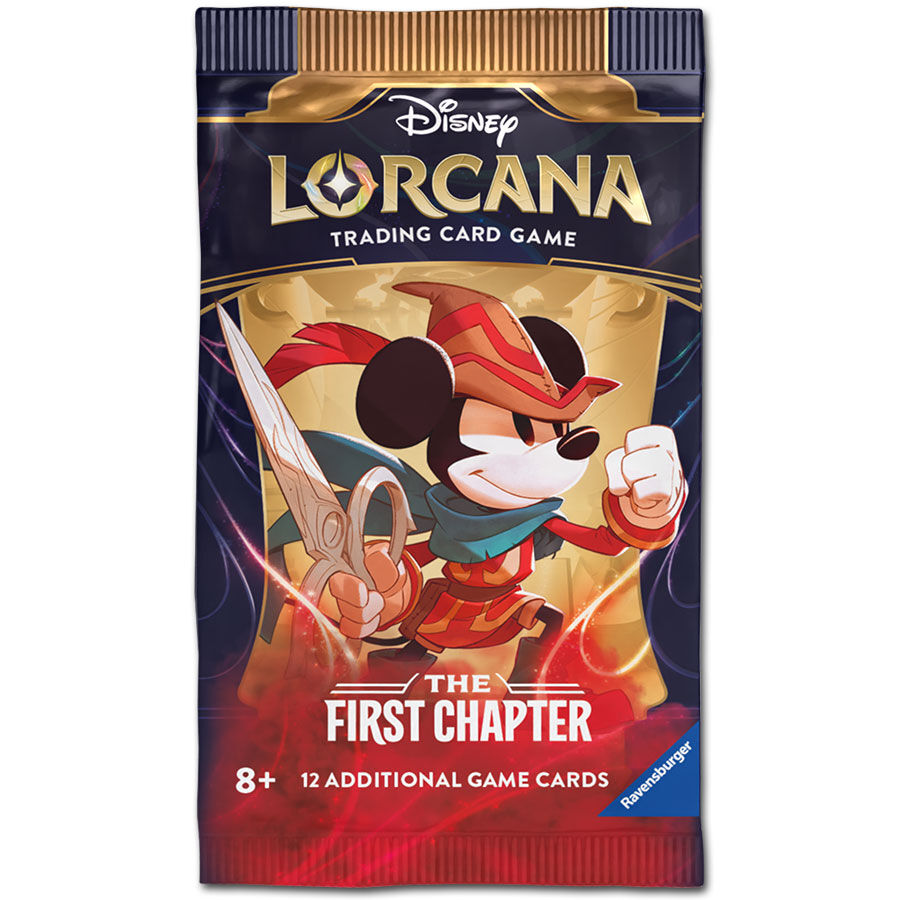
Unlike Starter Decks, Booster Packs contain twelve random cards from Disney Lorcana: The First Chapter. Use the cards from the Booster Packs to upgrade your Starter Decks with new cards or to build your own decks. Each Booster contains twelve random cards, consisting of:6 Common cards3 Uncommon cards2 Rare, Super Rare or Legendary cards1 Foil card (random rarity)
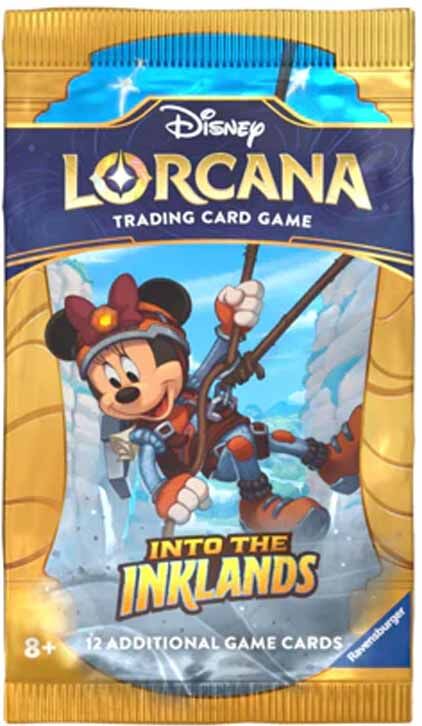
In Disney Lorcana, as a Luminari, you awaken glimpses of Disney characters with six magical inks. The ultimate treasure chest for players contains exclusive content and offers an insight into the world of Lorcana
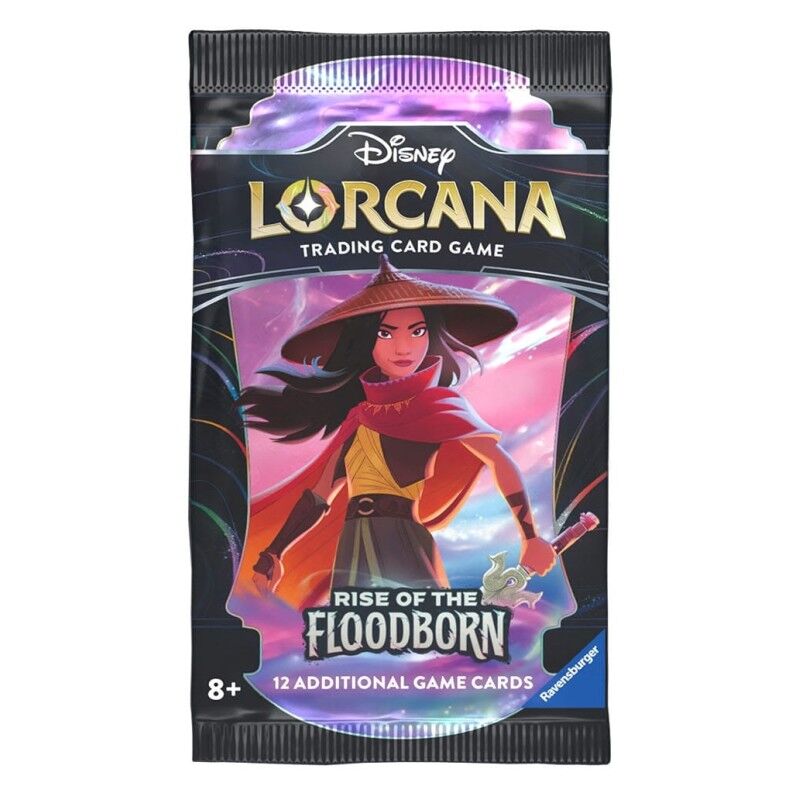
Unlike Starter Decks, Booster Packs contain twelve random cards from Disney Lorcana: Rise of the Floodborn. Use the cards from the Booster Packs to upgrade Starter Decks with new cards or to build your own decks. Each booster contains twelve random cards, made up of:6 common cards3 uncommon cards2 rare, epic or legendary cards1 foil card (random rarity)
Rarities at a glance: the rarest Pokémon cards
So which cards are the rarest in the world? The list is headed by three absolute one-offs, which at the same time also achieve the highest prices at auctions. The hotly coveted rarities are:
1. Ishihara-GX
With a few dozen examples (estimates range from 30 to 200 pieces), Ishihara-GX is at first glance not a truly rare Pokémon card. It is, however, extremely difficult to get hold of one!
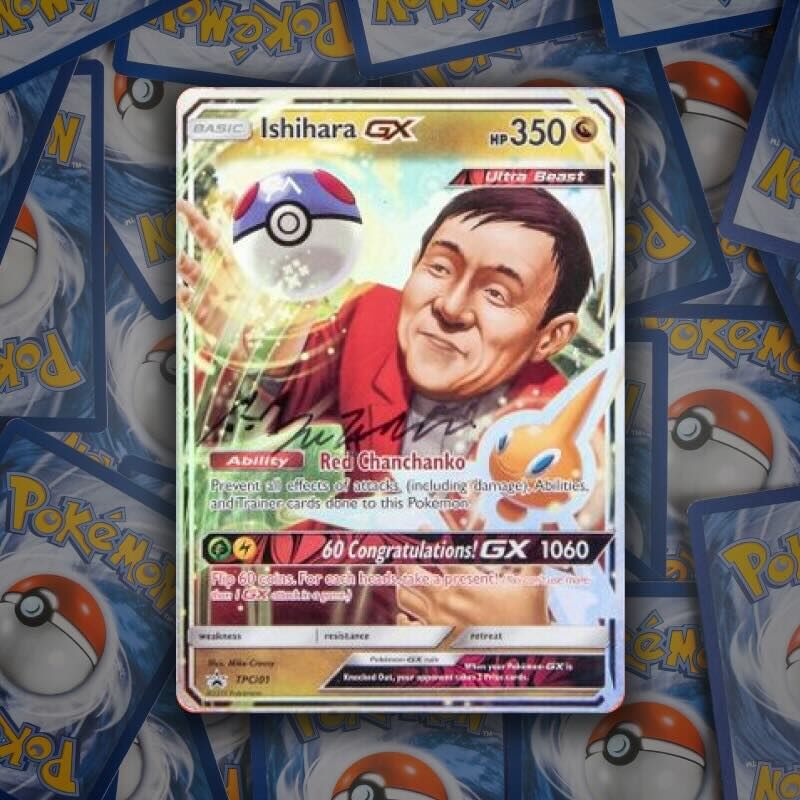
That is because the card showing the CEO of the Pokémon Company, Tsunekazu Ishihara, was only handed out to the participants of a private event during the World Championships in the USA in 2018. The occasion was the sixtieth birthday of the Pokémon boss.
A particularly rare example bearing a signature by Ishihara is especially sought after. At an auction it achieved an impressive price of around 250,000 US dollars (approx. 195,000 CHF).
2. Post Malone V (P25 Music 7)
The P25 programme was launched for the 25th anniversary of the international Pokémon debut: eleven international artists recorded 14 new songs for the anniversary. To honour the event fittingly, unique cards were also put into circulation.
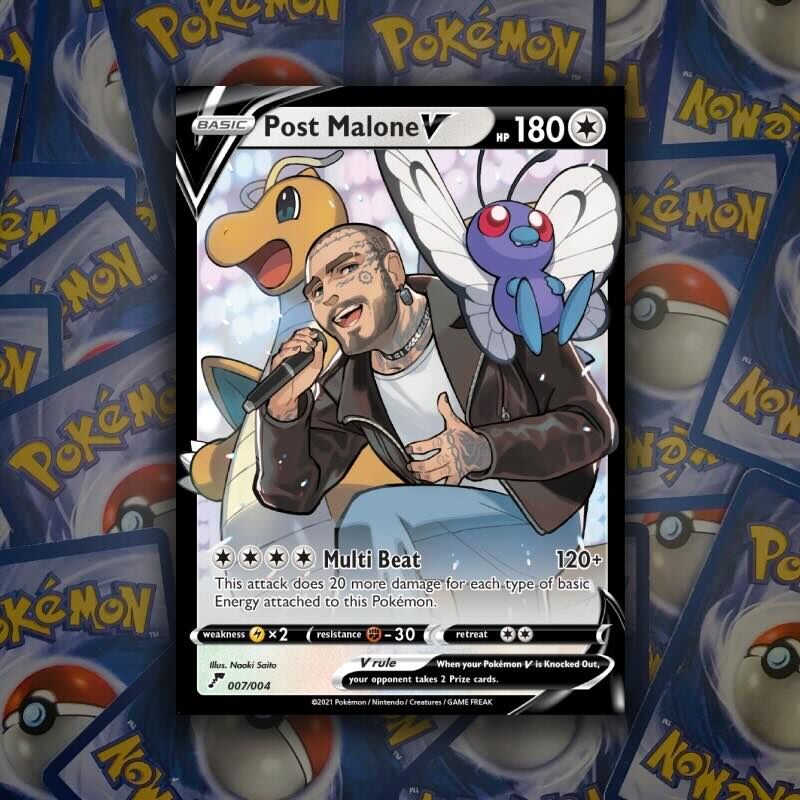
The best-known variant is certainly the Post Malone special print, but Katy Perry and J Balvin also received unique Pokémon cards with their faces on them. The one and only example was entrusted to each of the artists – the special editions are not available in the shops.
No price is therefore known for these particularly rare Pokémon cards either. Should they ever be auctioned, however, the owners could undoubtedly expect huge sums!
3. Commissioned Presentation Blastoise Galaxy Star Holo
An impressive example of the great importance of test prints: the Presentation Blastoise Galaxy Star Holo was the first test print in English and thus the very first English card.
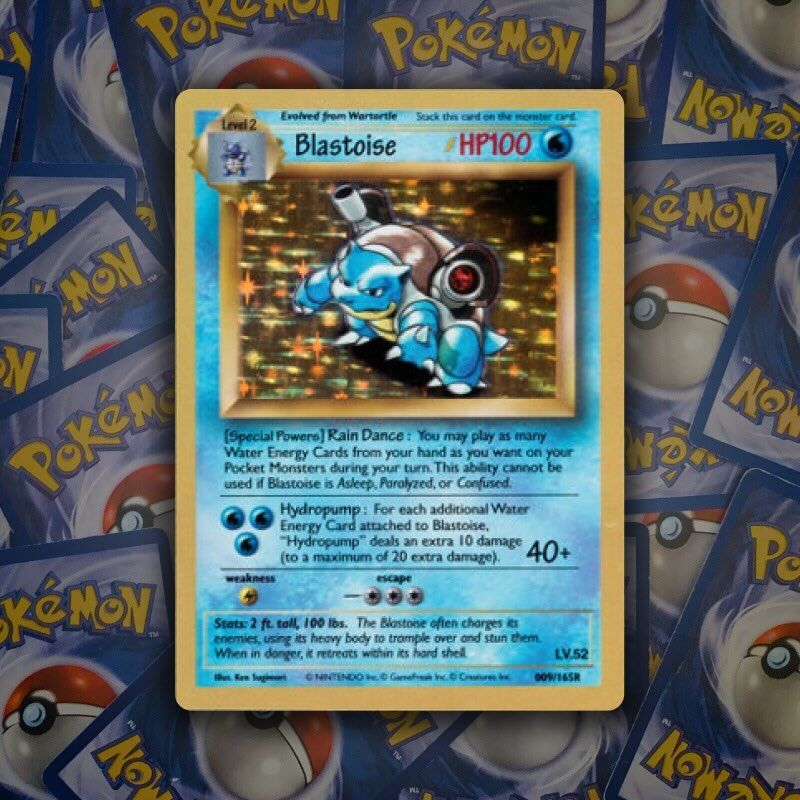
Wizards of the Coast produced it as a proof of concept in order to obtain approval from Nintendo for further production runs. The back of this unique card is completely white. Three further examples bearing the Wizards of the Coast logo also exist, but they cannot match the rarity of the “bare” variant.
A total of two of these Blastoise cards were made, but the second example is considered lost. It can therefore be assumed that today it is a one-off. The price reflects this as well: 360,000 USD was achieved at an auction.
4. Charizard Topsun Blue Black (1995/1997)
Charizard cards are repeatedly among the most expensive, rarest and best Pokémon cards. No wonder, then, that this list also features a variant: in the 90s, the Japanese brand Topsun included a card as a gift with its chewing gum.
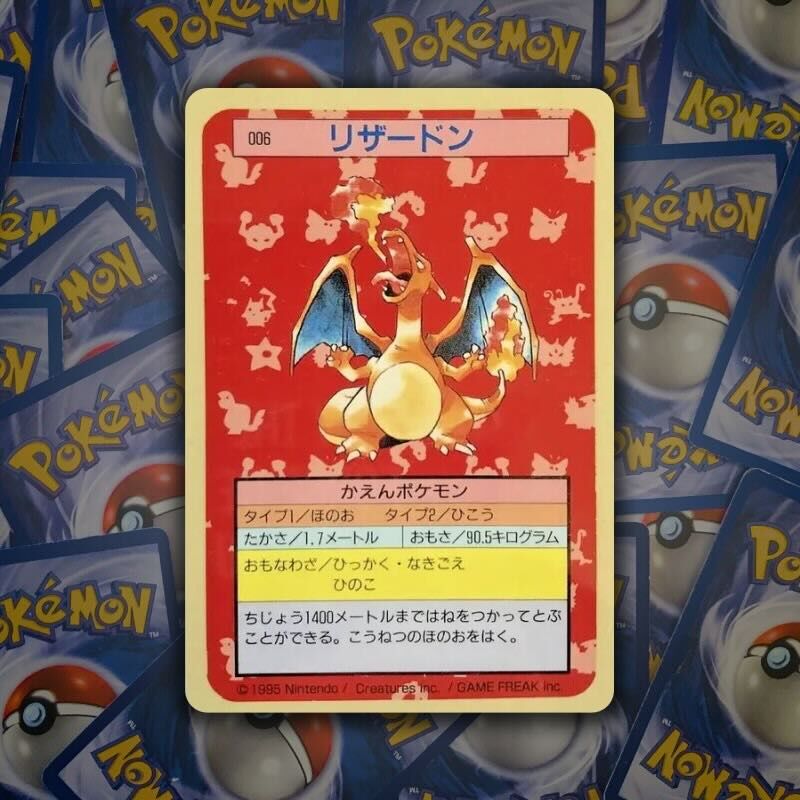
It shows a Charizard with a different text arrangement and completely different artwork. As it was a promotional gift, players and collectors initially had rather little interest. They would probably never have dreamt that a Topsun Charizard would one day be among the rarest Pokémon cards of all!
Demand for this special Charizard is enormous today. A misprint that fascinates collectors also contributes to this: the year is given as 1995, but the actual year of production is 1997.
Today only one card with PSA Grade 10 is known worldwide! So it is a one-off. You correspondingly have to dig deep into your pocket for it: the auction price was last around half a million US dollars!
5. Illustrator Pikachu Grade 10
Only 39 Illustrator Pikachu were ever produced. Just 20 examples are still known today, and only one of them is in the best possible PSA Grade 10. Here you can safely speak not only of one of the rarest Pokémon cards of all, but also of the most expensive: this Pikachu achieved 16.5 million US dollars (approx. 13 million CHF) at an auction!
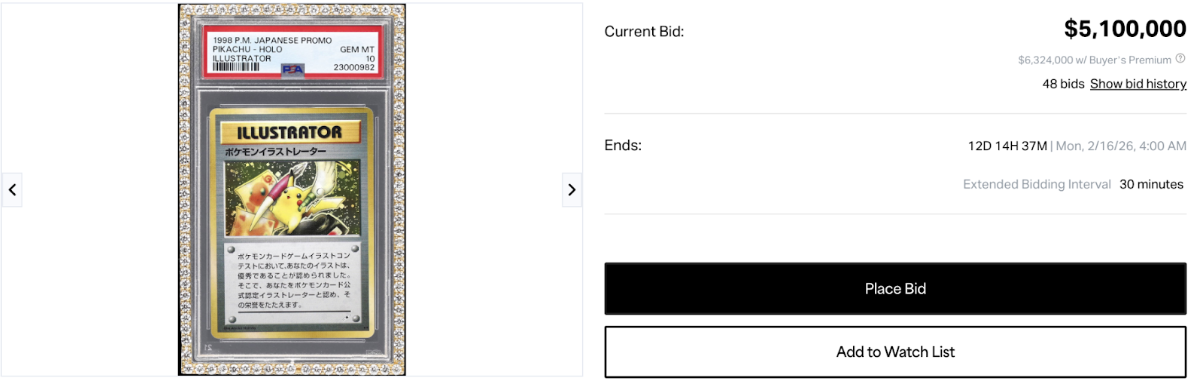
It is therefore the most expensive Pokémon card ever to have changed hands so far. And that although it is completely unusable for the actual card game! Illustrator Pikachu was originally a reward for artistic fans: a Japanese magazine held drawing competitions in 1997 and 1998 and awarded the card as a prize for the best entries.
The Japanese inscription reads: “We confirm that your illustration was an excellent contribution to our drawing competition. We therefore appoint you an officially recognised Pokémon card illustrator and admire your skills!”.
Illustrator Pikachu is the perfect example of how important a high PSA Grading is for particularly rare cards: another example with a grading of 9 achieved “only” 1.2 million USD at an auction.
The rarest Pokémon cards at AMAZINGTOYS®
If you are looking for rare Pokémon cards, AMAZINGTOYS® is the right address! In our shop you will find, among other things, a particularly rare Rayquaza Gold Star 107/107 EX Deoxys Holo.
This card, in an almost perfect PSA Grade 9, exists only 10 times in the entire world. Only one single example with Grade 10 is known. The owner of this rarity therefore only has to share their fame with ten other people.
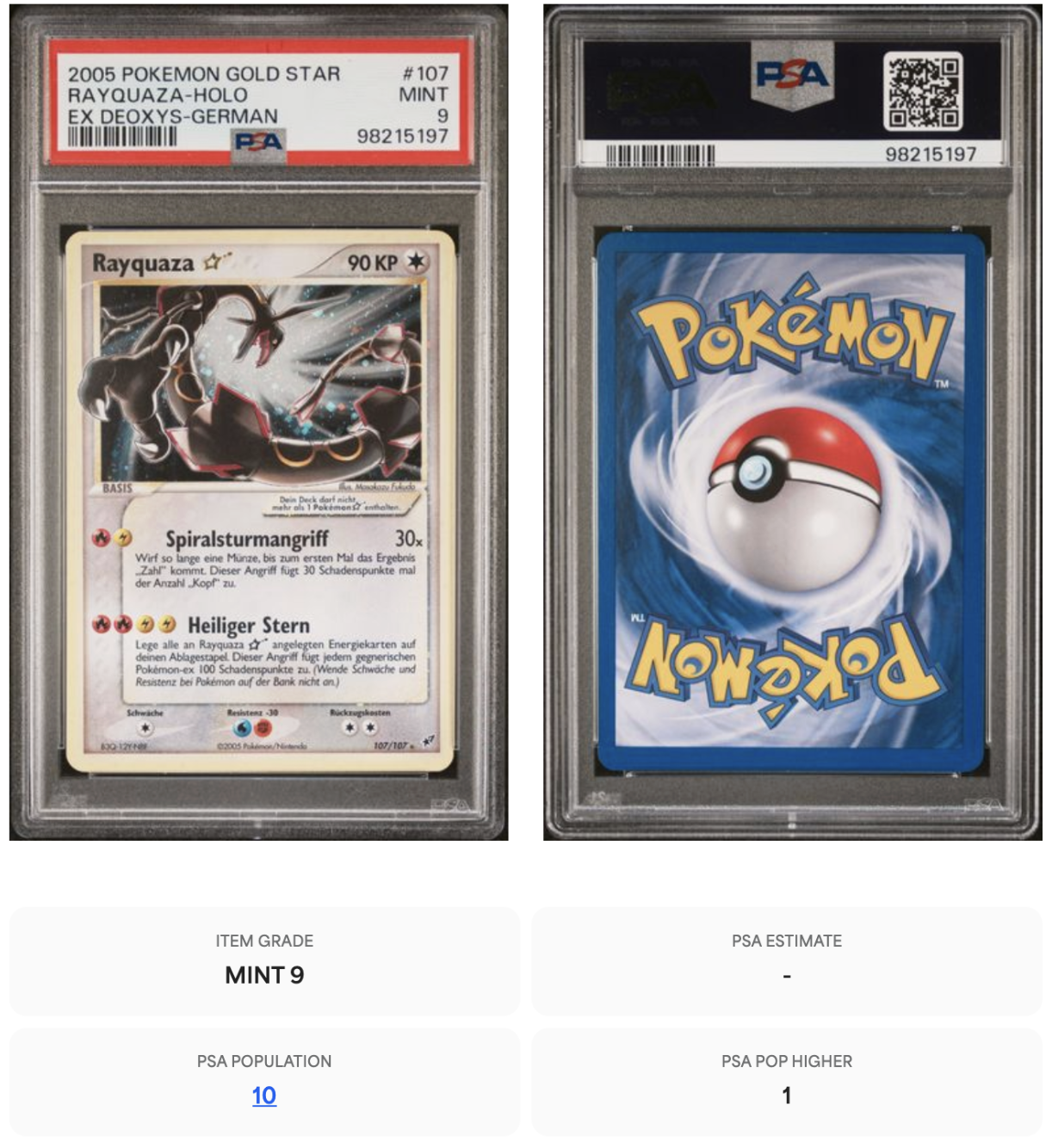
The total number (“PSA POPULATION”) of Rayquaza Gold Star EX Deoxys Holo stands at 10 examples. Only one card (“PSA POP HIGHER”) worldwide achieved an even higher grading. Source: psacard.com
But the Gold Star Rayquaza is not only one of the rarest Pokémon cards in our shop; it is also one of the best Pokémon cards for investors! Over the past 12 months the card has been able to quintuple its market value.
Conclusion: rare Pokémon cards almost always achieve the highest prices too
How often a Pokémon card is to be found largely determines its financial value as well as collectors' interest. The most expensive and most hotly coveted examples are absolute one-of-a-kind pieces. These include, for example, an Illustrator Pikachu Grade 10 (approx. 13 million CHF) or a Charizard Topsun Blue Black Grade 10 (approx. 500,000 USD).
A rare Pokémon card alone is, however, no guarantee of high prices! Only in combination with good condition and PSA Grading does a valuable investment come about. Thousands of rarities are indeed available, but they have been damaged by careless handling over the years.
Anyone who has their cards assessed by PSA not only receives a clear evaluation but also protects the treasures from further damage. The submitted examples are sealed in robust plastic cases and are then perfectly suited as an investment or for the display cabinet.
Players, collectors and investors therefore always have their best Pokémon cards given a corresponding PSA Grading. Rayquaza Gold Star 107/107 EX Deoxys Holo, one of the rarest Pokémon cards in the AMAZINGTOYS® shop, has an almost perfect Grade 9, for example. There are only 10 such examples worldwide, and only one with a Grade 10. An extremely rare treasure, then!
FAQ - Frequently asked questions:
The rarity can be read from small symbols in the bottom right-hand corner of the card. For genuinely rare, valuable copies the worldwide total (“POP”) is decisive, and it has to be looked up for each individual Pokémon.
The rarest and at the same time most expensive card is the Illustrator Pikachu with PSA grade 10. Only one copy (of the 39 originally printed) exists in this condition. At auction the price came to 16.5 million USD (approx. CHF 13 million)
Rarity often, but not always, goes hand in hand with a high value. Rare Pokémon cards also have to be in good condition (PSA grading!) to fetch a high value online or at auctions.
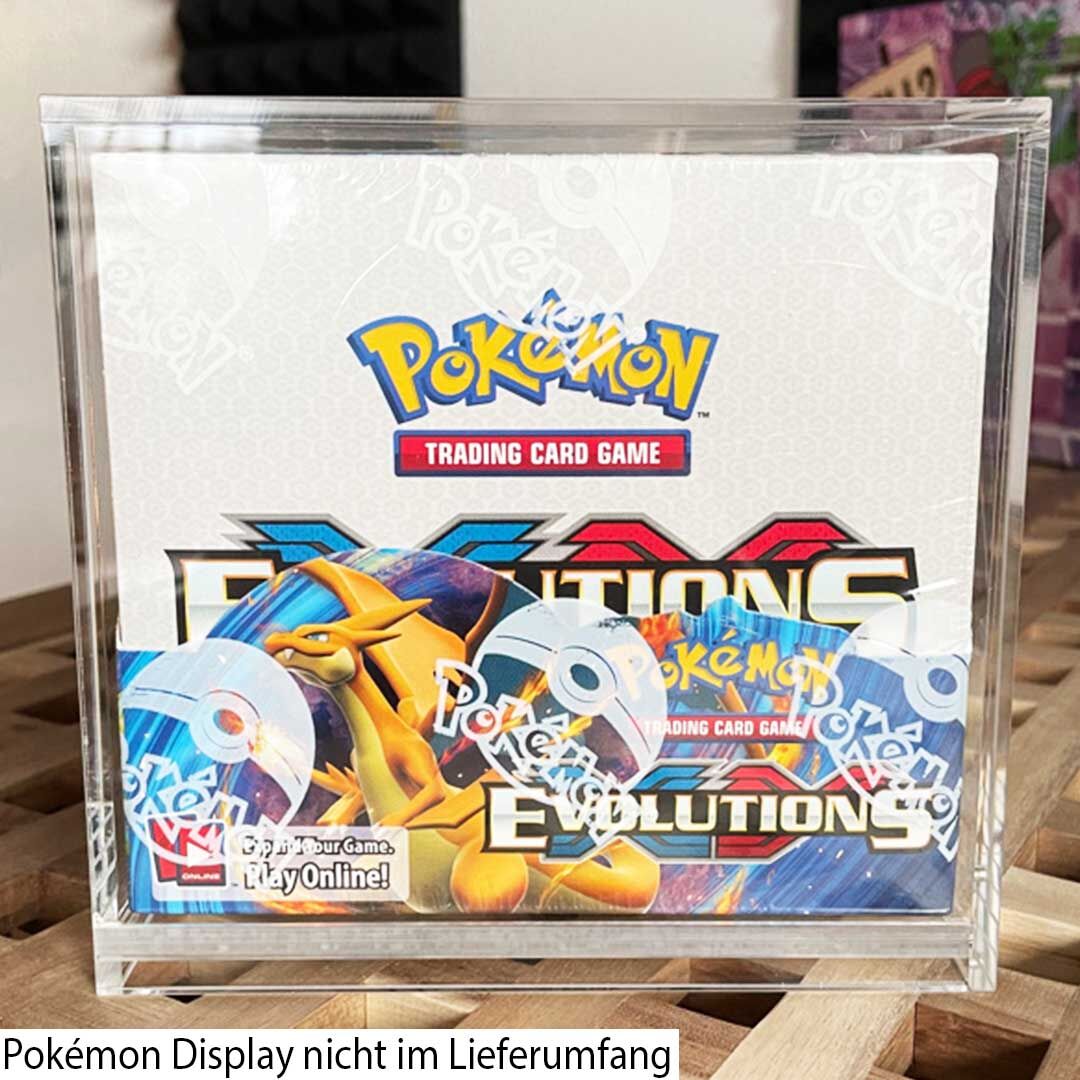
Pokémon Acrylic Booster Box Display A high-quality, modern acrylic box to safely protect Pokémon display boxes. These acrylic boxes are perfectly suited for displays from the EX Series era onwards. This makes them compatible with Sword & Shield, Sun & Moon, XY, Black & White displays, etc.Important: Pokémon Sword & Shield Battle Styles displays only fit the following acrylic case due to their thicker size. These boxes are ideal for stacking or displaying several Pokémon displays on top of each other. This keeps your displays safely protected from dust or pressure damage at all times. The Pokémon Acrylic Booster Box Display is closed with a simple sliding closure held together by a discreet magnet. This ensures maximum aesthetics when displaying it in a cabinet or storing it. Not just for the collector's heart, but for the collector's eye too. Size: 138mm x 125mm x 78mm *** 1x Acrylic Booster Display Box is supplied; the displays shown in the images are for illustration purposes only and are NOT included. ***
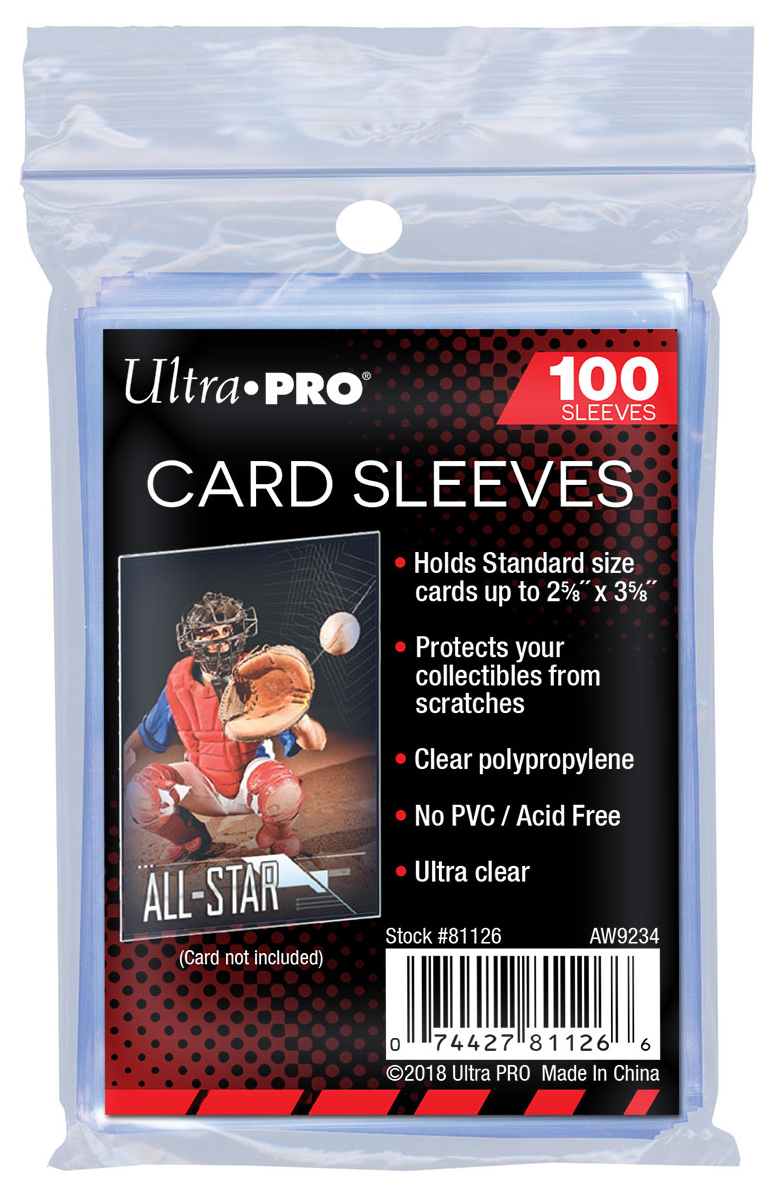
Ultra PRO - Regular Soft Card Deck Protectors (100 pro pack) 100 Card Sleeves (100 pro pack). - Suitable for Pokémon, Magic and Yu-Gi-Oh! cards. Archival-grade, acid-free and non-PVC premium card sleeves designed to hold standard 2-1/2" X 3-1/2" cards. Made from heavy-gauge clear polypropylene for improved protection. Ideal for use with toploaders. Made in the U.S.A. 100 count per pack. Holds standard size cards 2-1/2" X 3-1/2"ultra clear polypropylene Consistent sizing Fits inside Toploaders No PVC / Acid Free
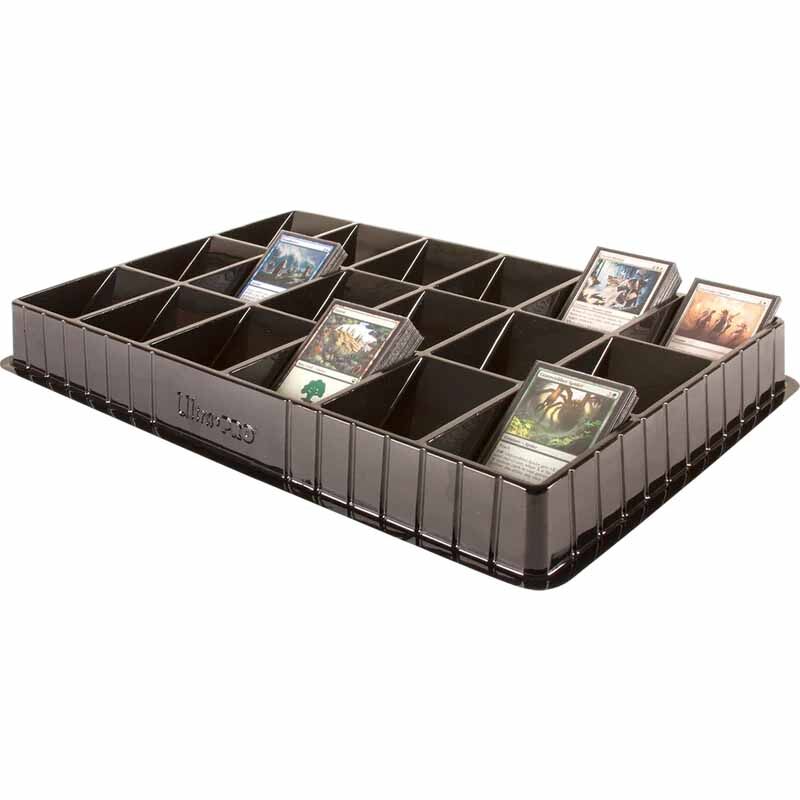
Lightweight card sorting tray, ideal for sorting trading cards. With 18 angled compartments that are also perfect for displaying trading cards.(*Cards not included)Lightweight, vacuum-formed tray for sorting and organising trading cardsIdeal for card sellers and retailersCan be used to sort and organise sports trading cards, tokens, playing cards and other trading cards18 compartments in 3 rows of 6 compartments eachStackable

Card Holder Stand Ultra PRO #81256 1x Card Holder Stand Ultra PRO #81256 (Without Card Saver – example only) These card stands are perfect for displaying trading cards and collectible cards. Compatible with Top Loaders, Card Savers and Card Holders.
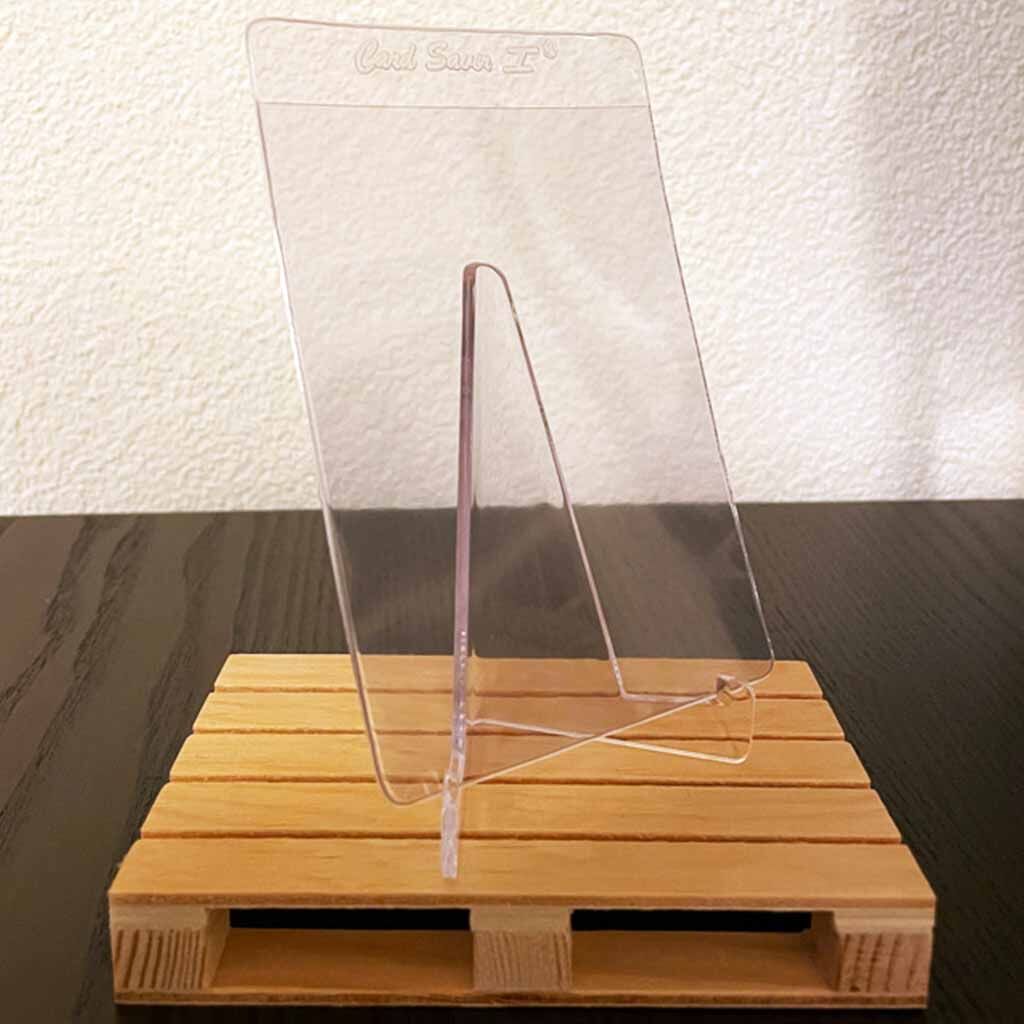
Card Saver Graded Card PSA Submission Card Holders Regular (Card Savers I) 1x Card Saver Graded Card PSA Submission Card Holders Regular (No stand - example only) These holders are perfect for submitting Trading Cards and collectible cards such as Pokémon, Yu-Gi-Oh! Magic etc. for grading to PSA Grading or Beckett Grading.
Ultimate Guard Classic Card Deck Protectors Sleeves (100 per pack) 100 Ultimate Guard Classic Card Deck Protectors Sleeves. - Suitable for Pokémon, Magic and Yu-Gi-Oh! cards.
Ultra PRO Binder - PRO-Binder White 9-pocket Arctic White PRO-Binder with embossed middle black web material gives cards a classic framed look. Side loading pocket design to prevent cards from easily falling out. Elastic strap holds the binder shut when not in use. All materials made from archival-safe, acid-free non-PVC material. Holds 360 cards in Ultra Pro Deck Protector sleeves.Archival-safe, acid-free non-PVC material.Black web material creates a no-slip grip for cards.Side loading pocket design to prevent cards from easily falling out.Elastic strap holds the binder shut when not in use.
Ultra PRO Sleeves White - Deck Protector 60 white Ultra PRO sleeves suitable for Yu-Gi-Oh! cards.
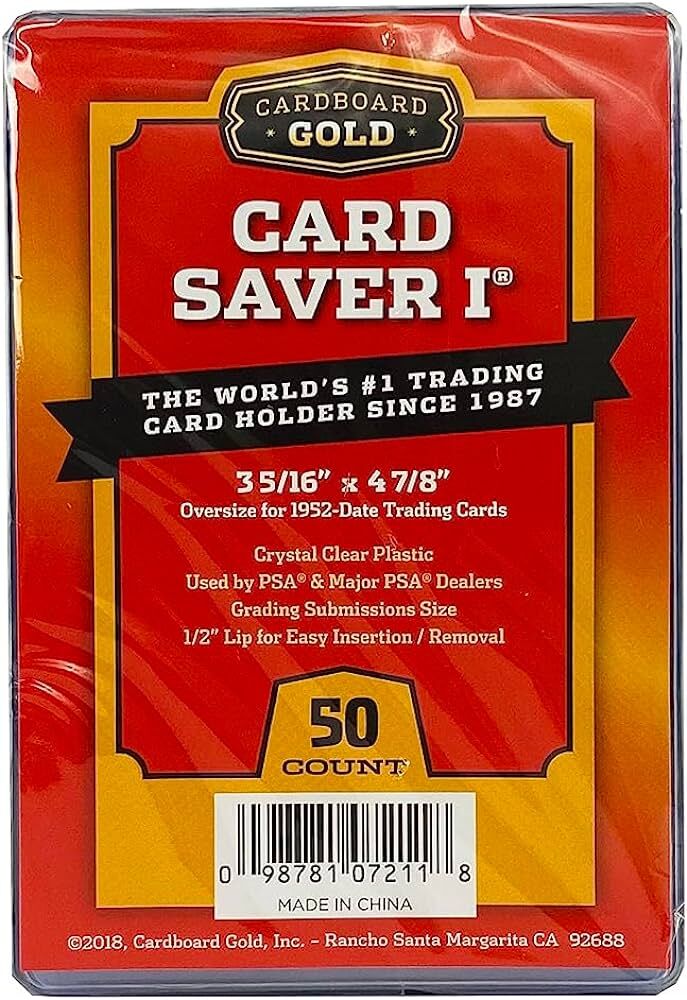
50 Cardboard Gold Graded Card PSA Submission Card Savers 1 These sleeves are perfect for sending trading cards and collectible cards for grading to PSA Grading or Beckett Grading.
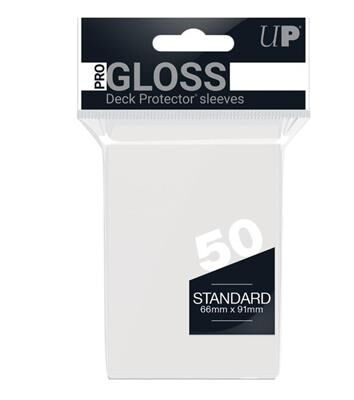
Ultra PRO Sleeves Clear Standard Size 50 Clear Ultra PRO sleeves suitable for Magic, Pokémon cards. Product size: 66 mm x 91 mm.

Ultra Pro Toploader 3" x 4" Clear Regular (25 per pack) 25 Pieces – (63.5 x 88.9 mm) Toploader / Standard size trading cards (Magic, Pokémon, Yu-Gi-Oh!, Digimon TCG, WoW TCG)
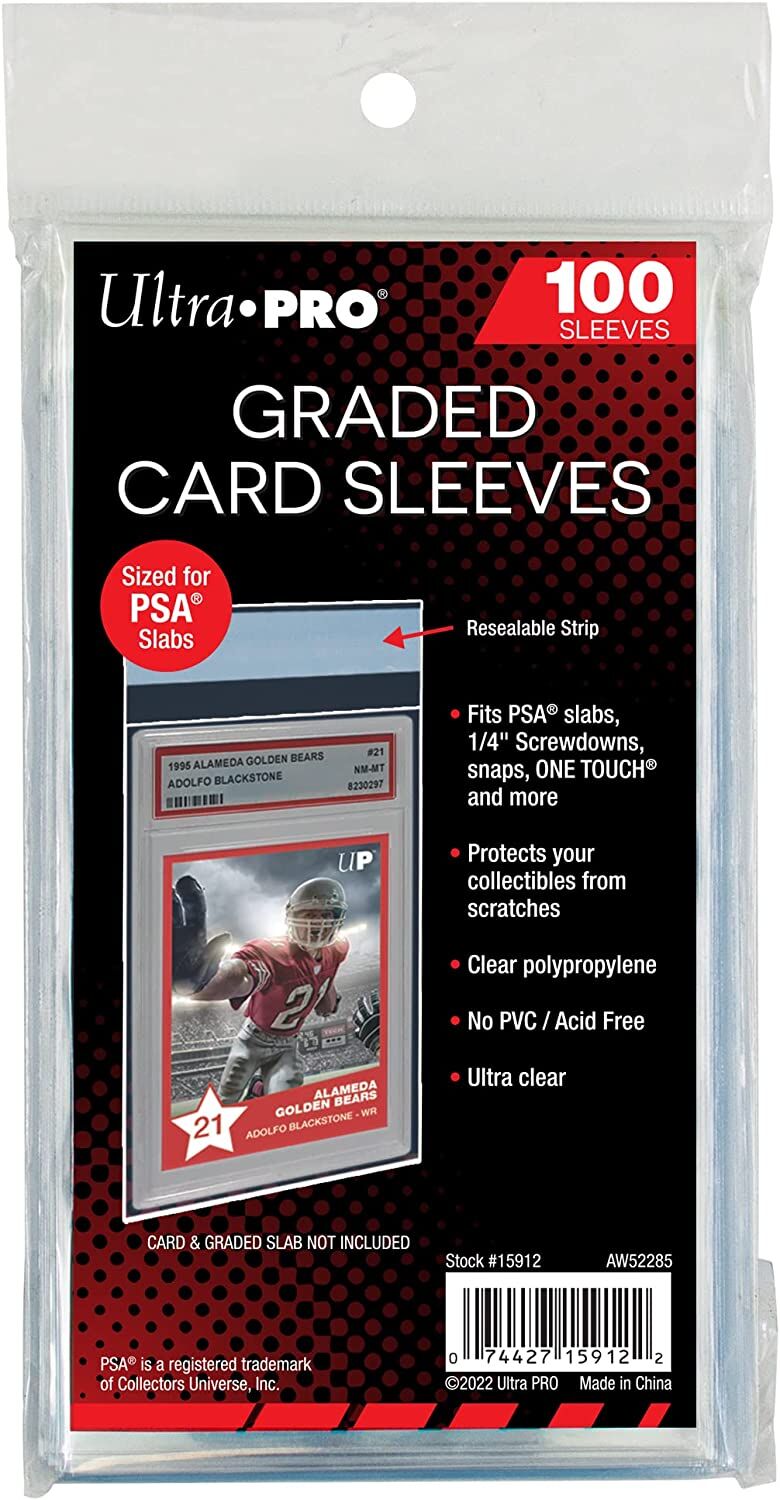
PSA Graded Card Slab Realable Sleeves - Ultra Pro Resealable sleeves for PSA-certified card slabs, offering the best fit Also suitable for 6.35 mm (1/4 inch) clamps, snap buttons, one-touch and more Protects your collectibles from scratches Includes PSA Graded Card Slab Realable Sleeves (other pictured items not included)