

Pokémon rarity levels: assessing rarity and value correctly
 Thomas KovacsLast updated: 17 May 2026 approx. 8 min read
Eight different Pokémon rarity levels help you to assess cards quickly and reliably. We introduce the categories, show you important special features and explain how they influence the value of your Pokémon cards.
The most important points first:
- All Pokémon cards fall into one of nine official rarity levels or into various special categories
- The rarity levels are suitable for a first impression, but they are not enough for details on value or strength
- Even within individual rarity categories there can be enormous differences in price and demand
What lies behind the rarity levels of Pokémon cards
Players, collectors and investors are fascinated by rare Pokémon cards. Not only because of the exclusive feeling of being one of only a few (or perhaps even the only?) owners in the world; these copies usually also achieve the highest prices, look the best or are particularly strong in the actual card game.
To make them easier to tell apart, Nintendo and the three predecessor publishers introduced Pokémon rarity levels for all cards. Small symbols in one corner (usually bottom left) show you which category you are dealing with:
| Black circle | Common |
| Black diamond | Uncommon |
| Black star | Rare |
| Black star with “Promo” | Promo card |
| Two black stars | Double Rare |
| Two silver stars | Ultra Rare |
| One golden star | Illustration Rare |
| Two golden stars | Special Illustration Rare |
| Three golden stars | “Hyper Rare” - extremely rare |
“Rarity” is to be taken literally here: over 34 million Pokémon cards have been produced worldwide to date and the vast majority of them come from the “Common” category.
The higher the rarity level, the fewer copies were produced. The chance of finding such a card in Pokémon Booster Packs is correspondingly lower. The smaller number often, but not always, goes hand in hand with higher demand and higher prices.
The Pokémon rarity levels are therefore a good way to gauge at a glance how common a card is. If you want to find the best Pokémon cards (price, power in the card game …), however, you have to go into even more detail.
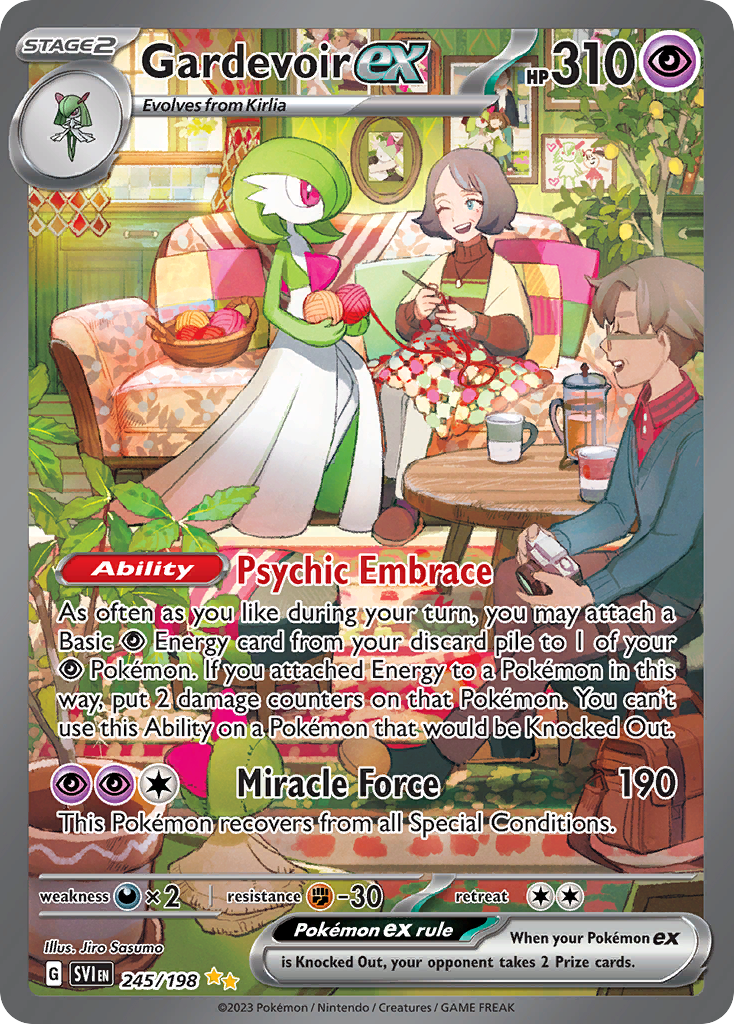
This Pokémon single card is perfect for expanding your collection or upgrading your Pokémon deck! Of course, you'll find more trading cards from this series with us too!
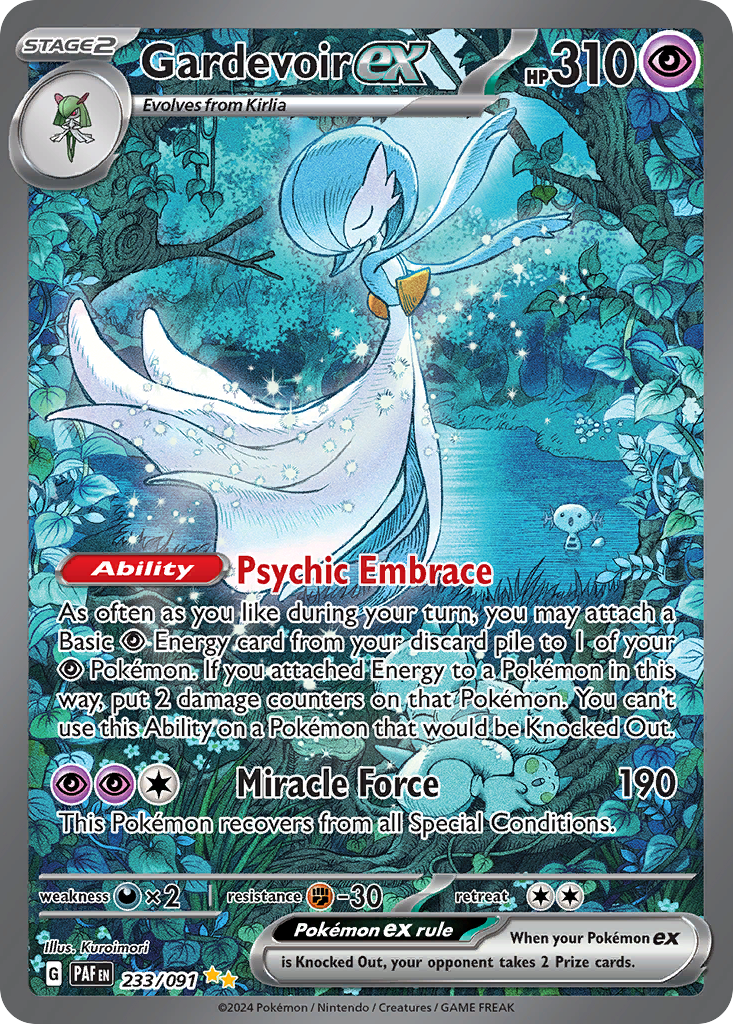
This Pokémon single card is perfect for expanding your collection or upgrading your Pokémon deck! Of course, you'll find more trading cards from this series with us too!
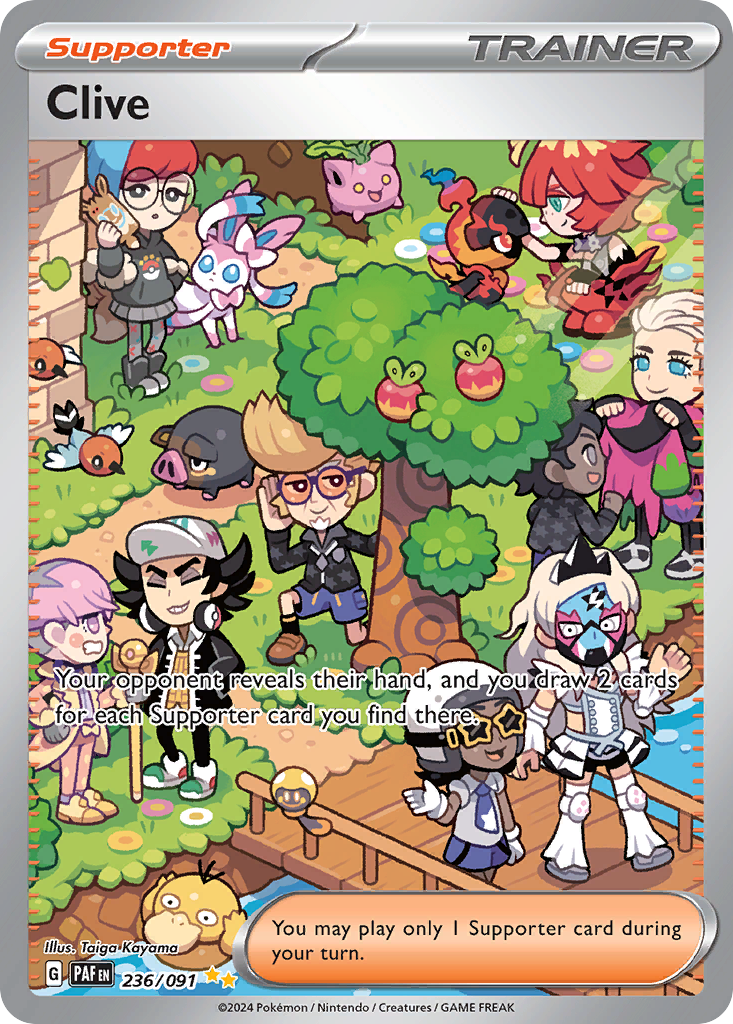
This Pokémon single card is perfect for expanding your collection or upgrading your Pokémon deck! Of course, you'll find more trading cards from this series with us too!
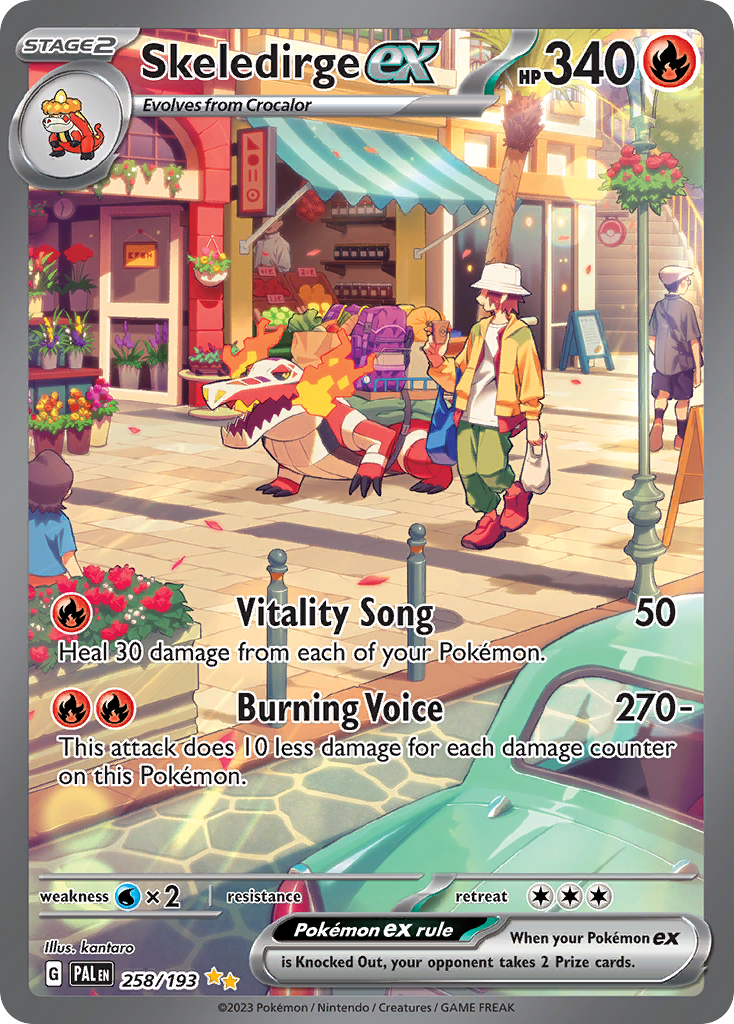
This Pokémon single card is perfect for expanding your collection or upgrading your Pokémon deck! Of course, you'll find more trading cards from this series with us too!
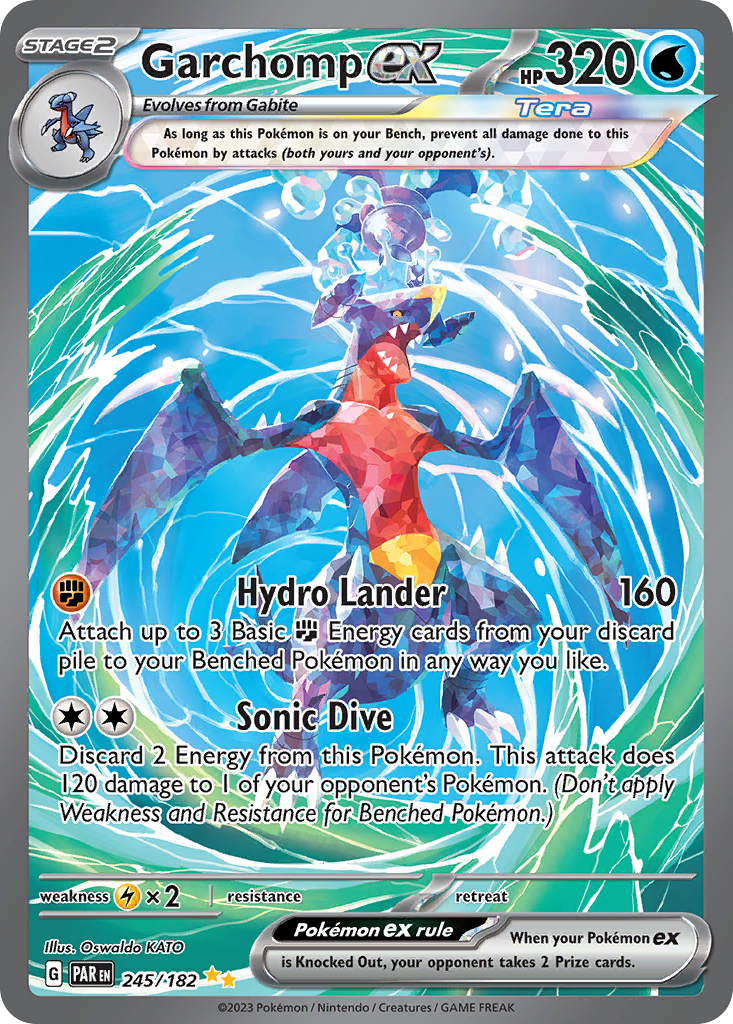
This Pokémon single card is perfect for expanding your collection or upgrading your Pokémon deck! Of course, you'll find more trading cards from this series with us too!
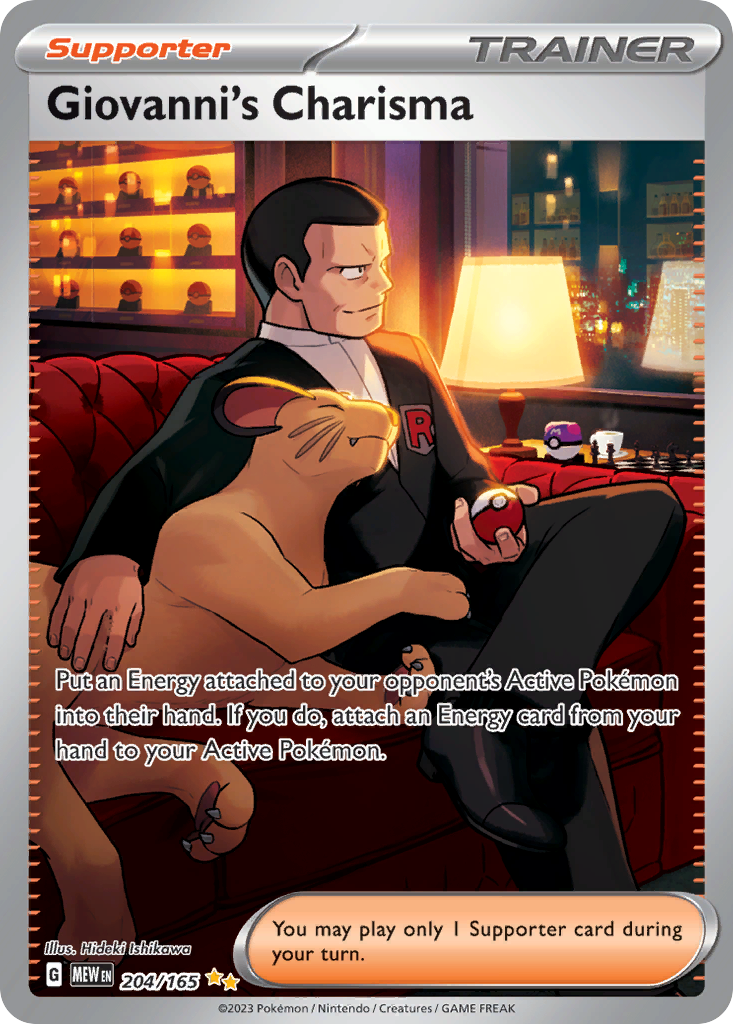
This Pokémon single card is perfect for expanding your collection or upgrading your Pokémon deck! Of course, you'll find more trading cards from this series with us too!
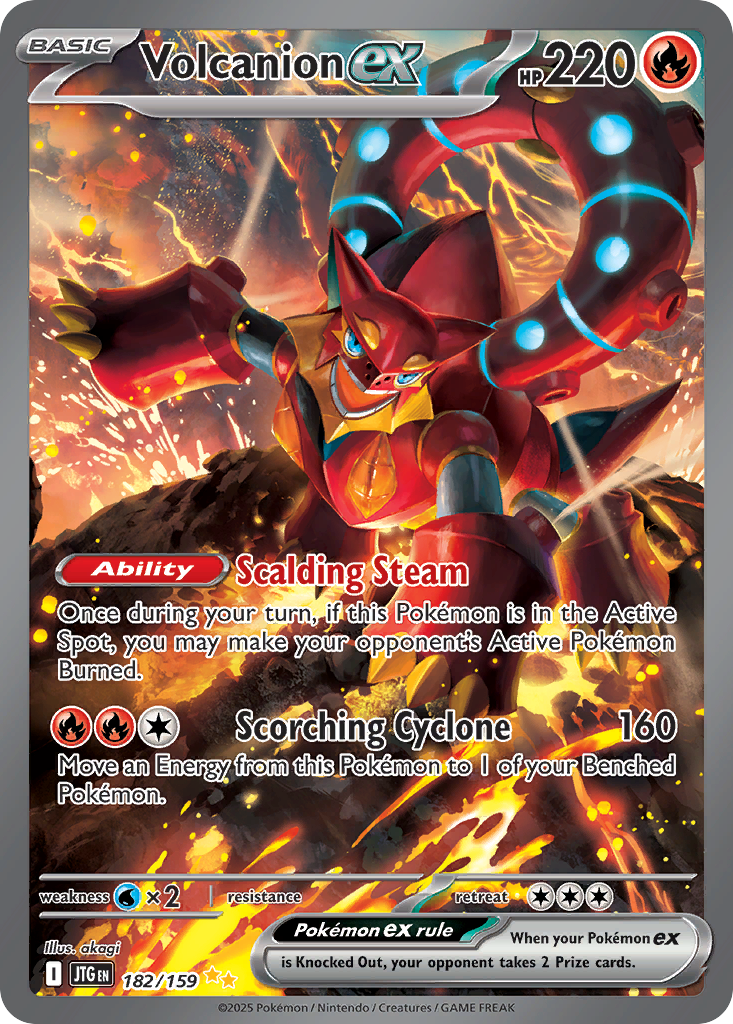
This Pokémon single card is perfect for expanding your collection or upgrading your Pokémon deck! Of course, you'll find more trading cards from this series with us too!
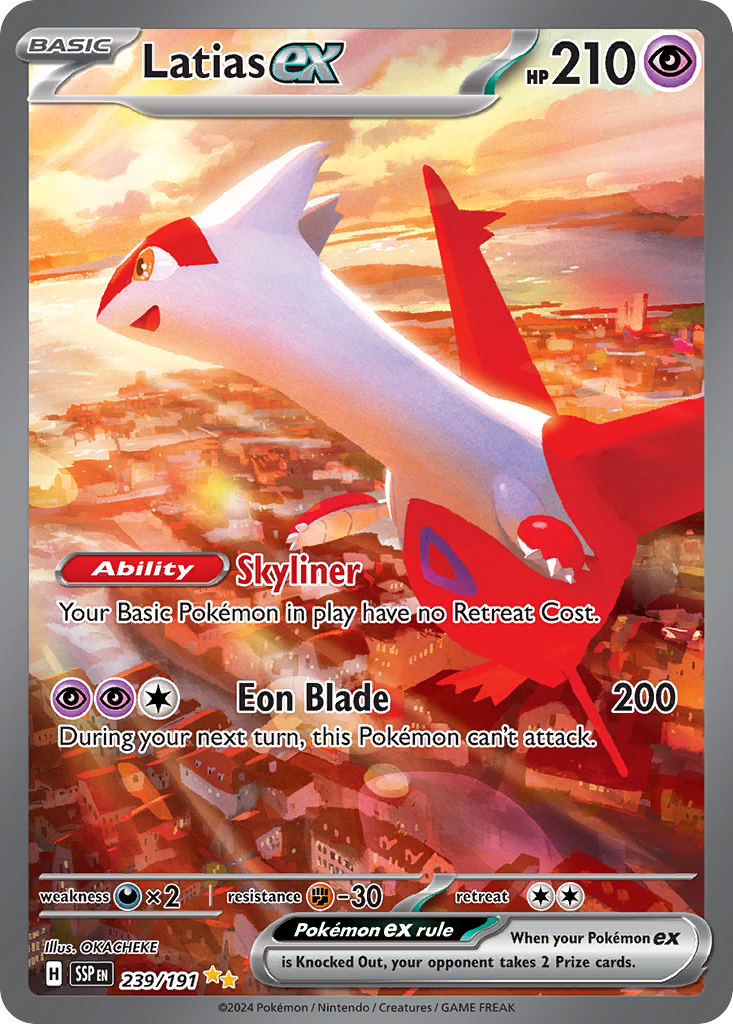
This Pokémon single card is perfect for expanding your collection or upgrading your Pokémon deck! Of course, you'll find more trading cards from this series with us too!
Pokémon rarity levels explained
Without further ado, let us look at the eight main categories. Every official Pokémon card falls into one of these rarity levels or belongs to a small number of special categories that we present to you afterwards.
9. Common
The most frequent rarity level is called “Common” and lives up to its name: the majority of all cards fall into this category. In a normal Pokémon booster pack you will find five such copies on average. They are shown by a black circle.
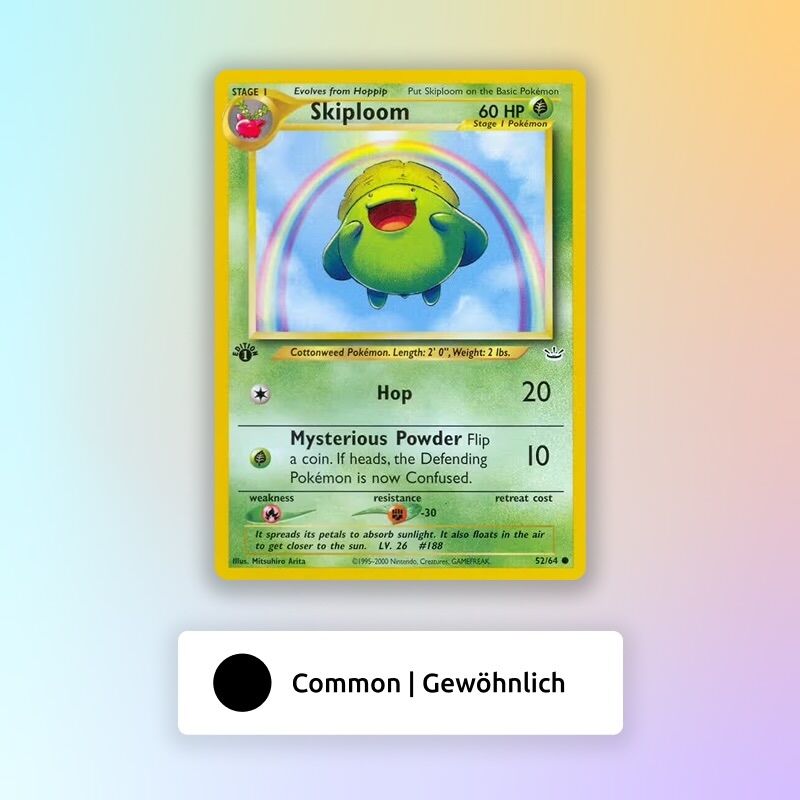
Energy cards, Trainers or Pokémon fall into this category – primarily Basic Pokémon or other rather weak variants. Common cards form the backbone of every deck and are therefore indispensable.
Although you generally cannot expect very high prices, there are some expensive Pokémon cards in this rarity level. Kabuto cards from the 1st Edition Fossil set, for example, have gained massively in value thanks to social media hype. A collector known only by the name “Kabuto King” is buying up every copy he can find.
Word has got around: within a few months the price rose from just CHF 1 to more than 50 today! Further increases in value are to be expected if Kabuto King carries on buying cards.
8. Uncommon
The logical next level is the uncommon or “Uncommon” cards. You can expect three such Pokémon cards in an average booster pack. Their identifying feature is a black diamond / black rhombus.
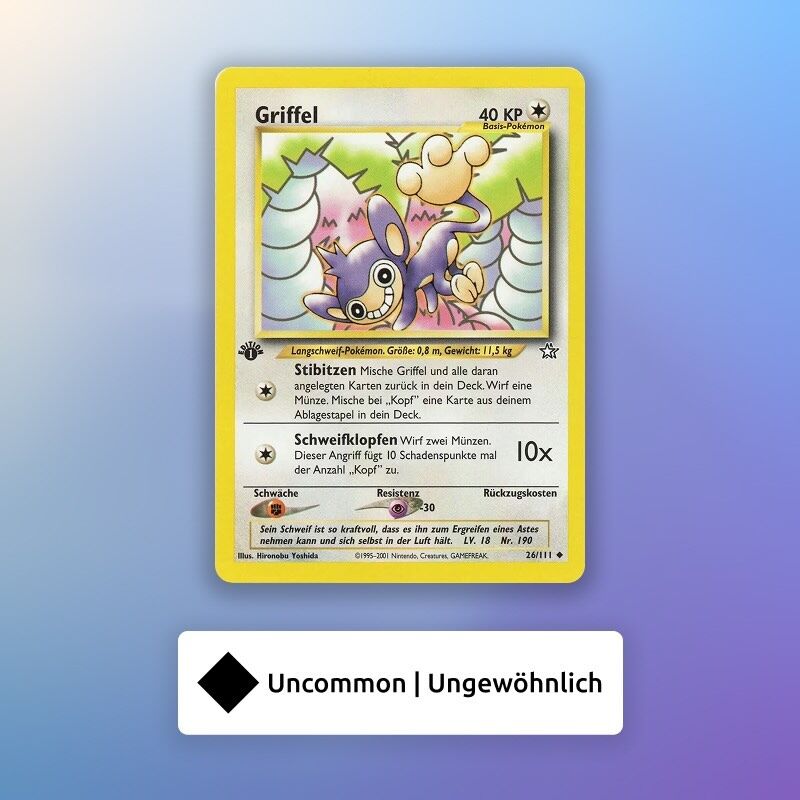
In this rarity level you will find Basic Pokémon or evolution stages (often the second of three possible evolutions), special Energy cards and various Trainer cards.
7. Rare
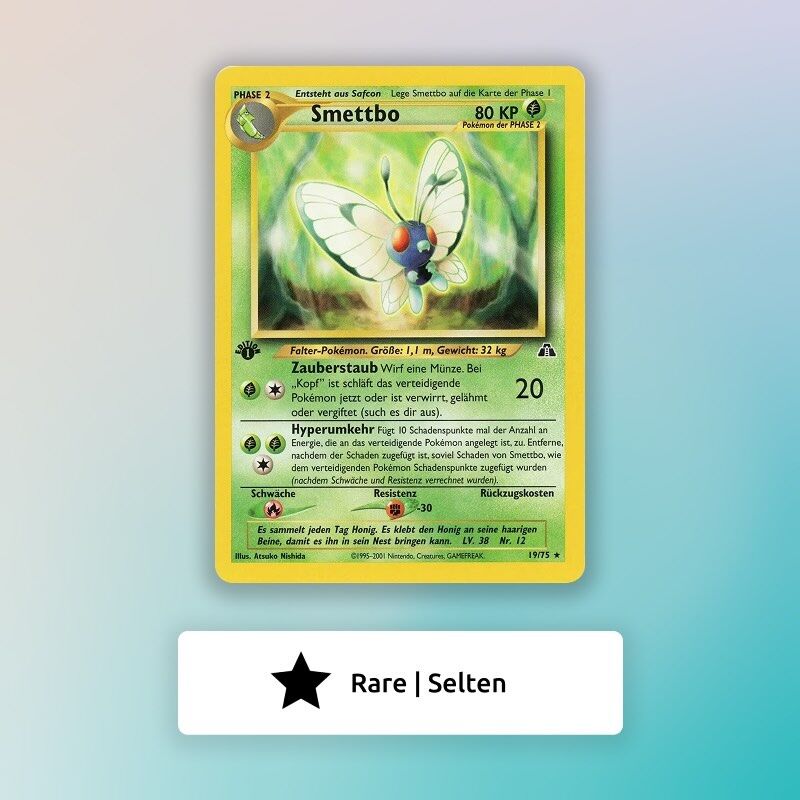
With one to two copies per booster, “Rare” cards are quite rare and easy to recognise by the black star. This rarity level also contains holographic cards (the picture has a hologram effect), Reverse Holo (the whole card apart from the picture has a hologram effect) and non-holographic cards.
They are often the third evolution stage of a Pokémon, strategically interesting Trainer cards or legendary Pokémon. Some copies of this rarity level are extremely sought-after and achieve top prices: the 1st Edition Charizard Pokémon card, holographic and Shadowless, is the most expensive Pokémon card (not a promo) in the world. A grade 10 card was auctioned in 2022 for 420,000.00 US dollars!
6. Double Rare
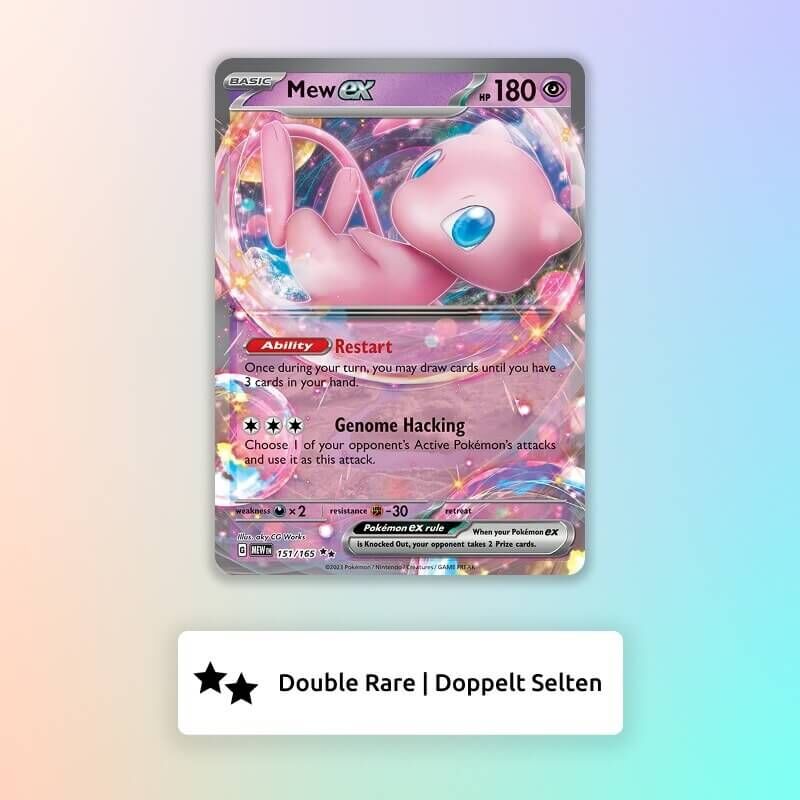
The next rarity level “Double Rare” was introduced with the Scarlet & Violet series in order to bring order to the category chaos that had prevailed until then. You can recognise it by two black stars and an artwork that extends across the whole card.
These are always Pokémon EX cards without a hologram. You will look in vain for Trainer cards, Holo and Reverse Holo or Energy in this category. In value and demand they are roughly comparable to V, VSTAR and VMAX from the Sword & Shield series.
Copies of this rarity level are overshadowed by newer series with elaborate designs. It is therefore possible to acquire these Pokémon cards quite cheaply: the popular Mew ex - sv2a 151/165 is already available for less than CHF 20!
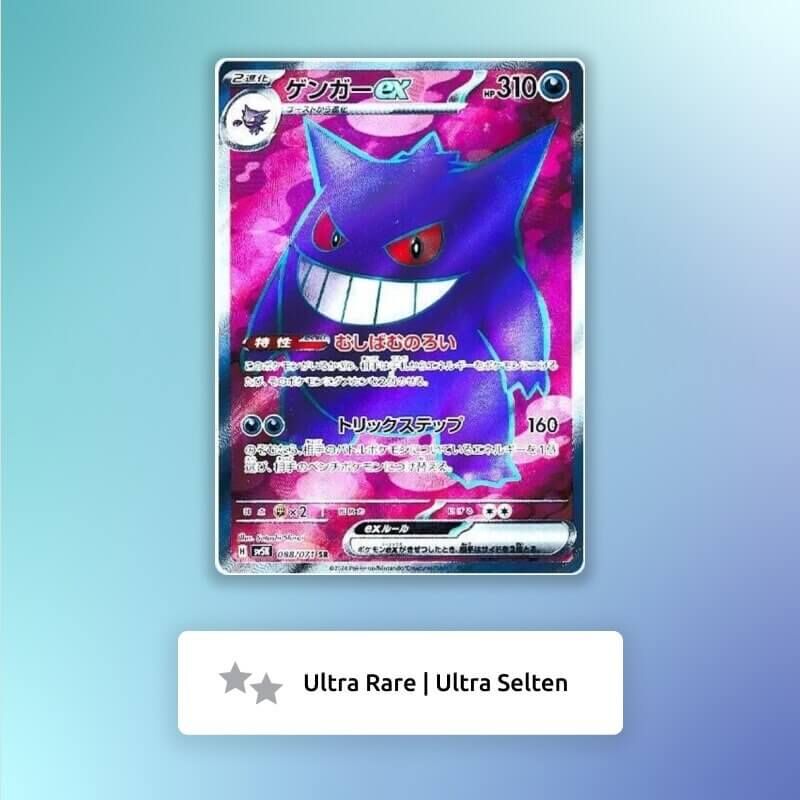
5. Ultra Rare
Next up are two silver stars: in the Ultra rarity level you will find a wide selection of EX Pokémon as well as strategically interesting Trainer cards. In Japan the category is called “Super Rare” and carries the abbreviation “SR” instead of the silver stars.
4. Illustration Rare
As the name suggests, this rarity level stands out for its particularly beautiful artwork, which extends across the whole card. You recognise it by a single golden star. Japanese cards use the designation “Art Rare” with the abbreviation “AR” instead.
In this category you will usually find simple Pokémon and Trainer cards that merely have particularly beautiful artwork. Investors are rather less interested in such copies, which makes them comparatively affordable: a Palafin - sv4a 339/190, for example, is available from as little as CHF 15.90.
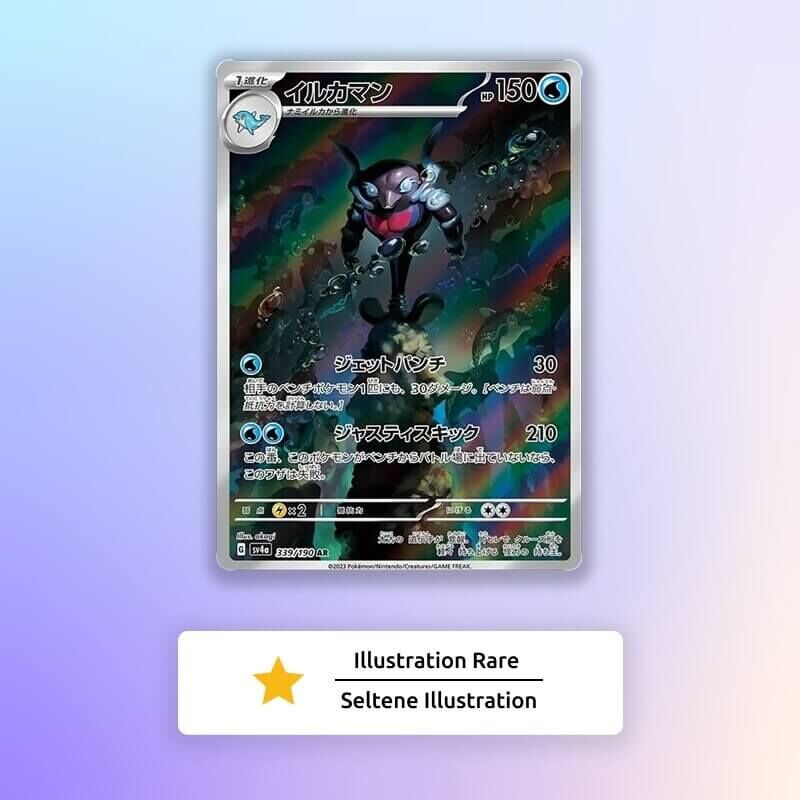
Thanks to their low price and the fact that they are “standard Pokémon”, Illustration Rare cards are also very well suited to the actual card game: such Pokémon cards are the basis of every deck, because you cannot win a game with legendary, ex and other special Pokémon alone!
3. Special Illustration Rare
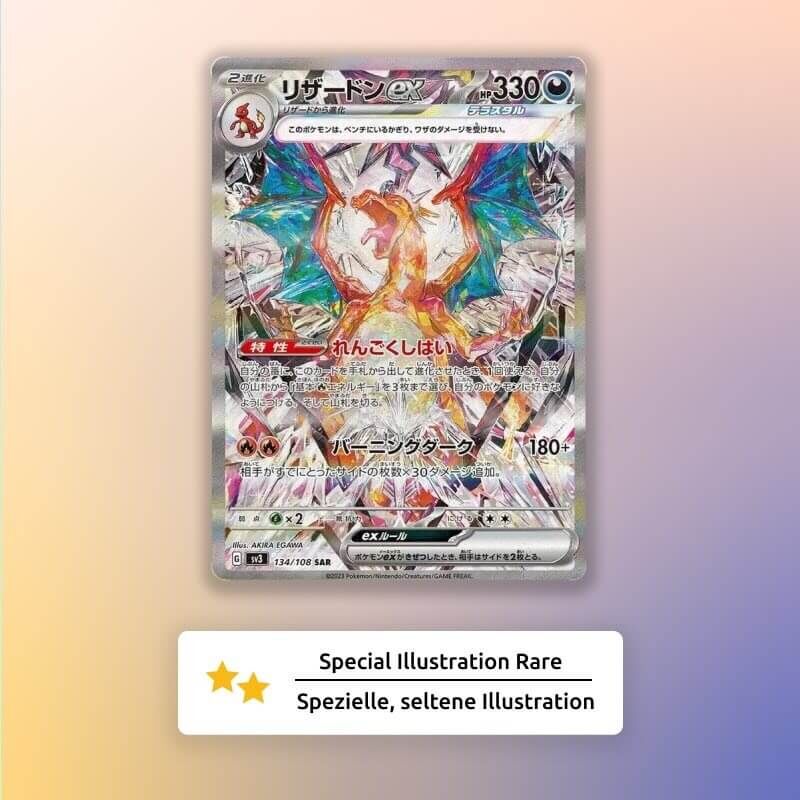
The “Special Illustration Rare” category is closely related to “Illustration Rare”, just special. Here you will find exclusively ex Pokémon and particularly useful Trainer cards. You can recognise them by two golden stars or by the abbreviation “SAR” on Japanese cards.
For such cards you have to dig a little deeper into your pocket, as they appeal to collectors, investors and players alike. Demand is correspondingly high. A Charizard ex - sv3 134/108, a Charizard Pokémon card from the Special Illustration Rare rarity level, for example costs around CHF 289.
2. Hyper Rare
The Hyper Rare rarity level was also introduced with the Scarlet & Violet expansion. You can recognise it by three golden stars. In Japan, however, this line is known as “Ultra Rare” (abbreviation UR), which repeatedly leads to confusion with the English category of the same name.
In terms of content, you will find well-known Trainer, Stadium, Energy and Pokémon cards here in a new, golden design. All copies are holographic and have a textured surface. As a special gimmick, if you look closely you will find hidden Pokémon on the Stadium cards of this level.

1. Promo cards
Promotional cards are not to be found in Pokémon Decks or Booster Packs. Instead, they are handed out as special gifts when visiting a Pokémon cinema film, as prizes for taking part in or winning a tournament, as promotional giveaways and at other events.
You recognise this Pokémon rarity level by the word “Promo” in front of a black star. It is probably the most versatile category: some of the cards exist ten thousand times over and have no particular value for either collectors or players; other copies, on the other hand, achieve the highest prices of all!
By far the most expensive Pokémon card that has ever changed hands is an Illustrator Pikachu with PSA grading 10. The price: an incredible 16.5 million US dollars (approx. CHF 13 million). This promo card was awarded as a reward for a drawing competition in Japan in 1997 and 98.
More Pokémon rarity levels
The Pokémon rarity levels were standardised with the Scarlet & Violet series, and other categories that had been common until then were discontinued. Of course you will still find these cards at AMAZINGTOYS®! Because they are no longer produced and often have unique artwork and abilities, they are valuable collector's items.
The most important categories include:
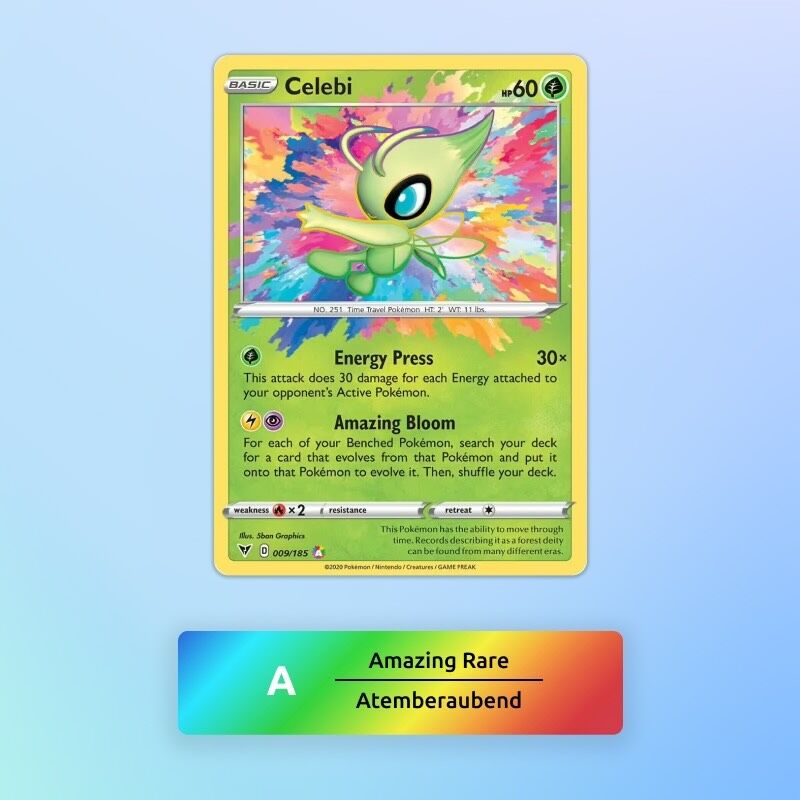
Amazing Rare
This rarity level stands out for its particularly colourful illustrations. It can be recognised by an “A” in front of a rainbow background. It covers a small number of legendary Pokémon such as Celebi, Kyogre and co., which otherwise do not differ from other cards.
Do the AMAZINGTOYS® Trade-In
- Sell or trade in Pokémon, Magic, One Piece and Yu-Gi-Oh! cards
- Assessment by a pro – guaranteed fair price
- Bulk, sealed, single cards and entire collections
Rainbow Rare
Rainbow Rare cards use a single silver star as their symbol and can be recognised immediately by their colouring: the artwork is kept in muted rainbow colours and extends across the whole card.
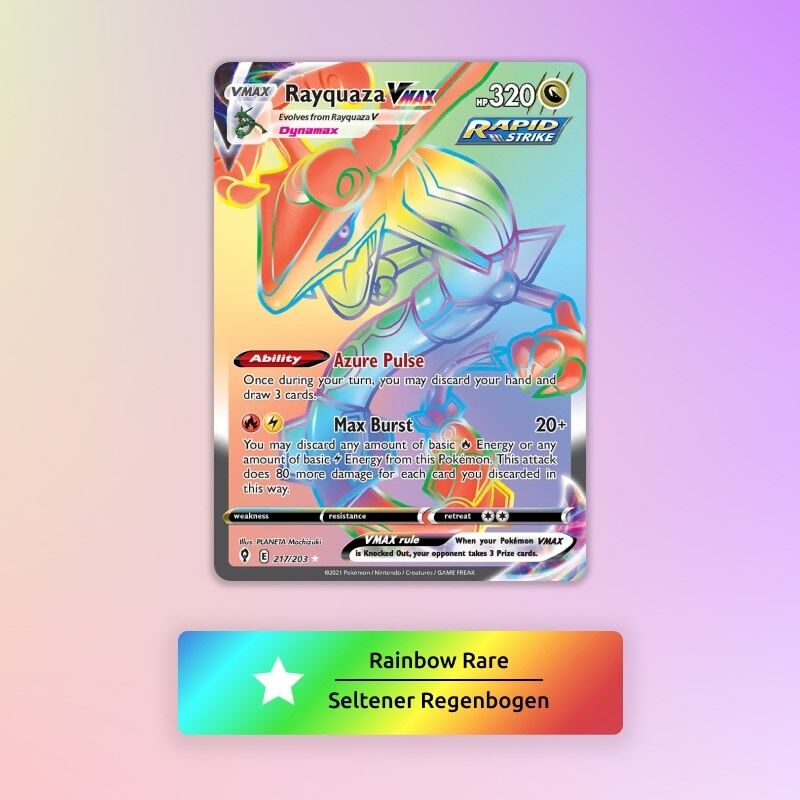
It is merely a new design with the same abilities and characteristics of the Pokémon. The rainbow variant Rayquaza VMAX - 217/203 and the Holo Rare VMAX Rayquaza VMAX - 111/203, for example, offer exactly the same HP, attacks and ability, but a very different price!
Shiny Rare and Shiny Ultra Rare
These rarity levels were introduced with the Hidden Fates expansion. They can be recognised by one or two hollow golden stars. In Japan these cards carry the abbreviation “S” or “SR”.
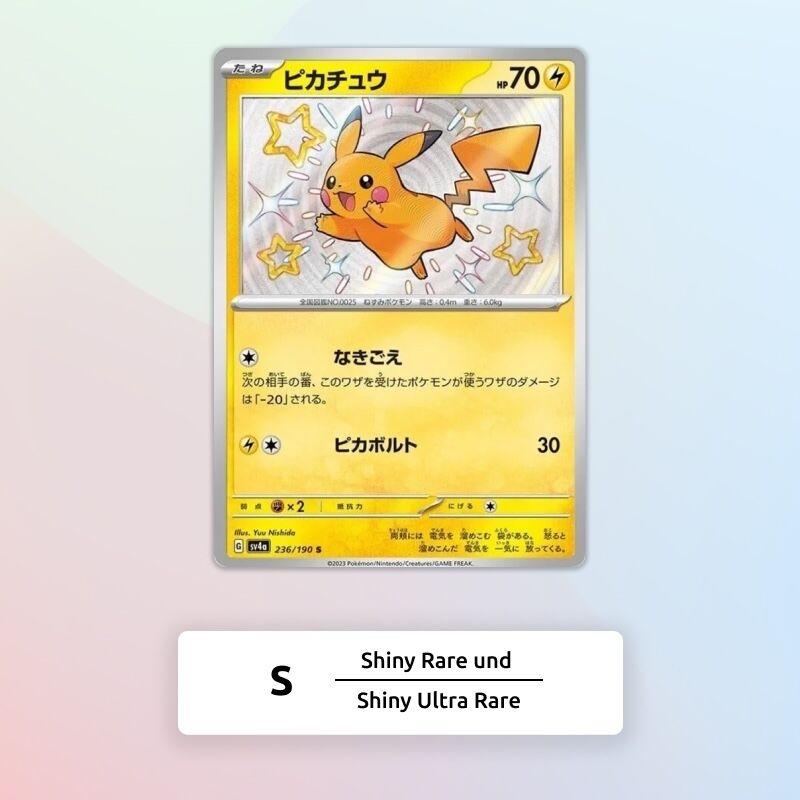
They show Shiny versions of well-known Pokémon from the Rare and Ultra Rare category. Here too, HP, attacks and abilities are the same – only the artwork is different. That alone is enough, however, to drive up the demand and the price of the Pokémon cards dramatically!
Conclusion: the Pokémon rarity level is an important price factor
All official Pokémon cards carry a rarity level. This symbol, usually in the bottom left-hand corner, shows how often a copy can be found in Booster Packs.
The level therefore has a strong influence on rarity and demand – but it is not the only factor! The most expensive Pokémon cards often combine further aspects such as printing errors or particularly popular Pokémon.
In general, valuable, strong and beautiful cards can be found in every rarity level. Even the most frequent category “Common” plays an important role in every deck and contains many popular and sought-after copies.
So the best Pokémon card cannot be identified from the rarity level. For a first impression, however, the categories are certainly useful.
Frequently asked questions
Pokémon cards are divided into Common, Uncommon and Rare. The Rare rarity is divided once again into dozens of subcategories with differing designs and prices.
Unfortunately the rarities are not suitable for determining the value of a Pokémon card. Instead, every card has to be checked individually. The condition is also of great importance here.
All Pokémon cards have a symbol that indicates the rarity. These show how common a card is and are good for a first impression. Other factors such as demand and age can play an important role too.
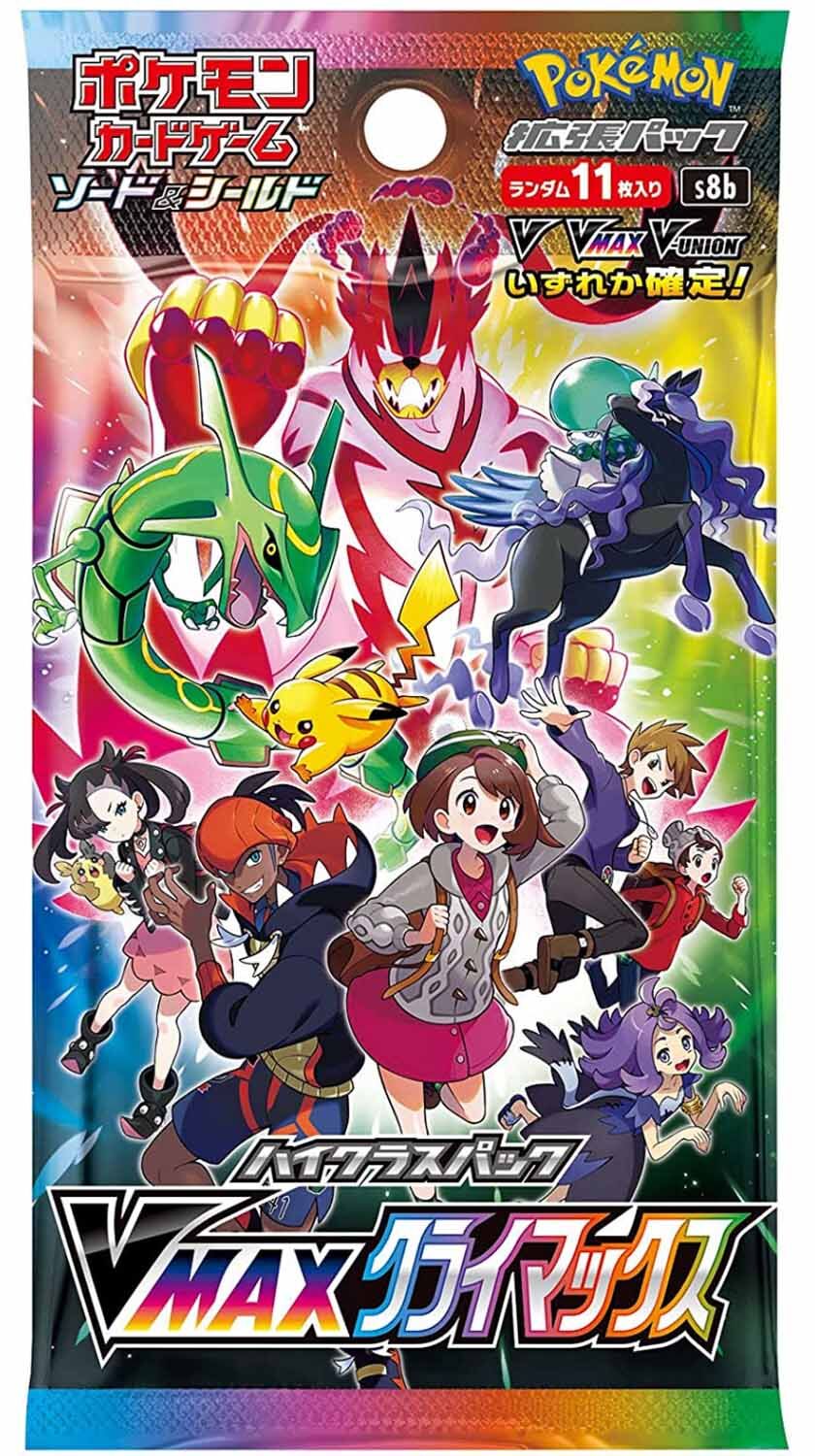
Pokémon VMAX Climax (s8b) Booster Language: Japanese Cycle: Sword & Shield Contents of one booster: 1x booster contains 10 cards One card is guaranteed to be a «V» card or better
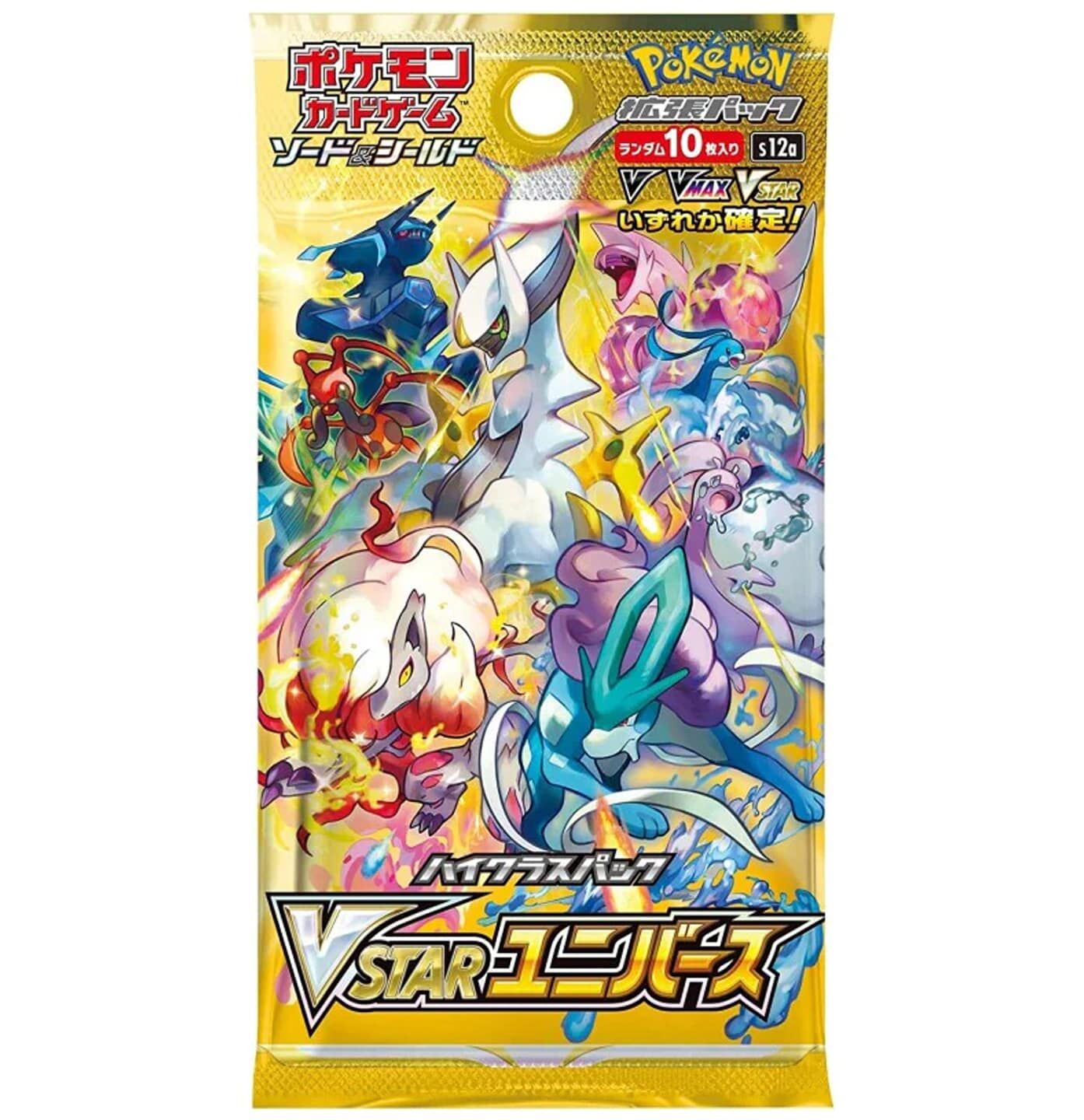
Pokémon VSTAR Universe (s12a) Booster Pack Language: Japanese Era: Sword & Shield Contents of a Booster: 1x Booster contains 10 cards Of which one card is guaranteed to be a «V» card or higher
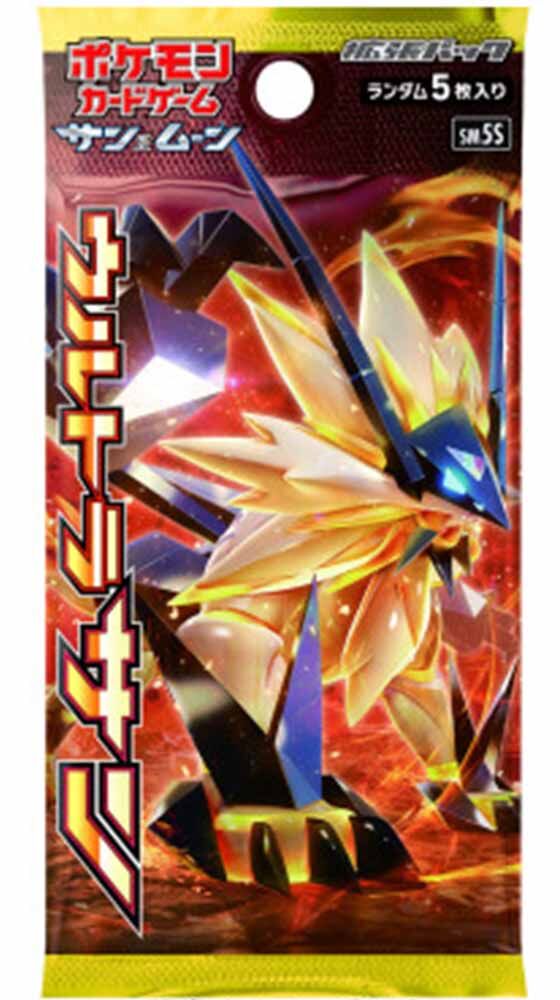
Pokémon Ultra Sun (sm5s) Booster Language: Japanese 1x Booster contains 5 cards
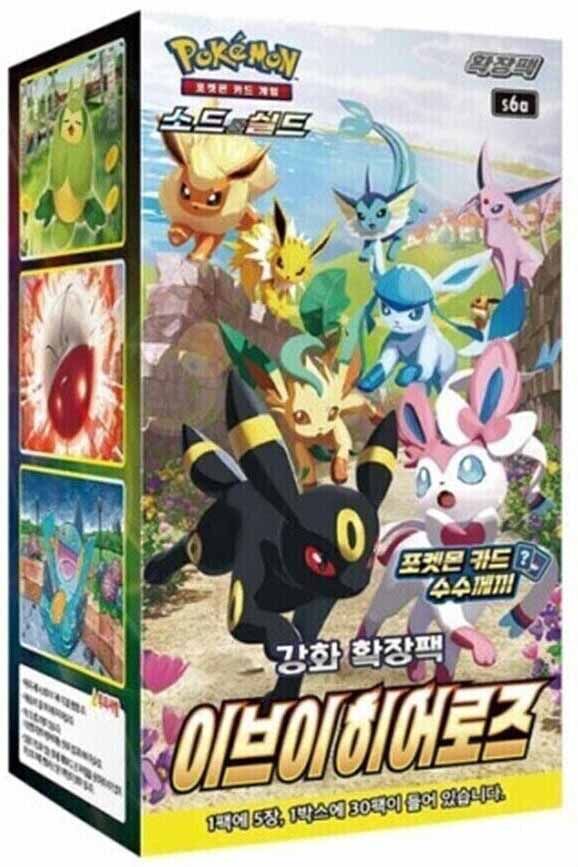
Pokémon Eevee Heroes (s6a) Booster Display Language: Korean 1x Display contains 30 boosters with 5 cards each
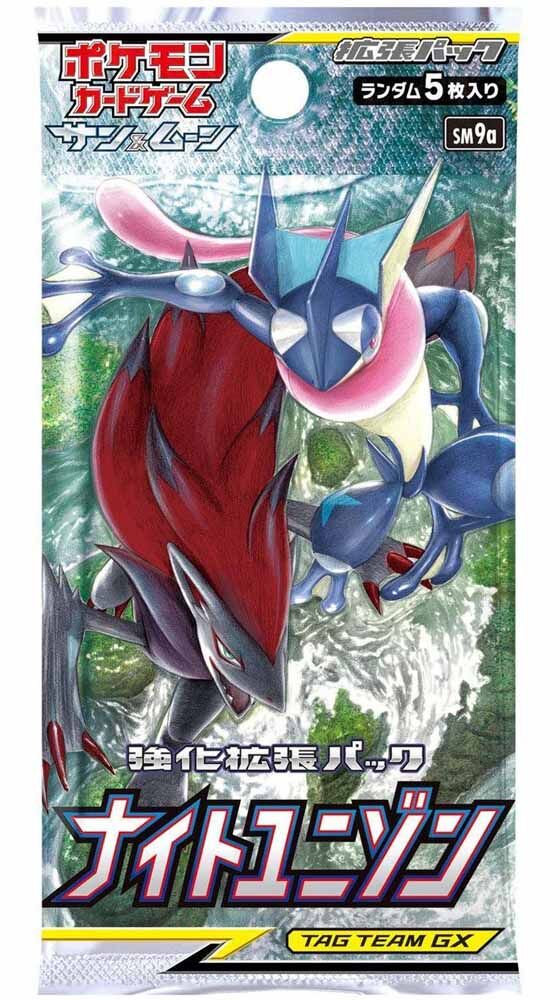
Pokémon Night Unison (sm9a) Booster Language: Japanese 1× Booster contains 5 cards
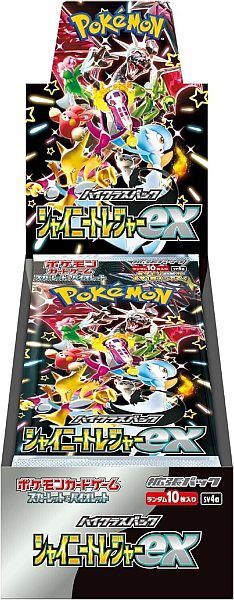
"Shiny Treasure EX" is introduced as the first "High Class Set" of the "Scarlet & Violet" era in Japan. We can look forward to an impressive set in which the "Shiny" Pokémon reappear with alternative colours. Display contents: One display contains 10 boosters One booster contains 10 cards
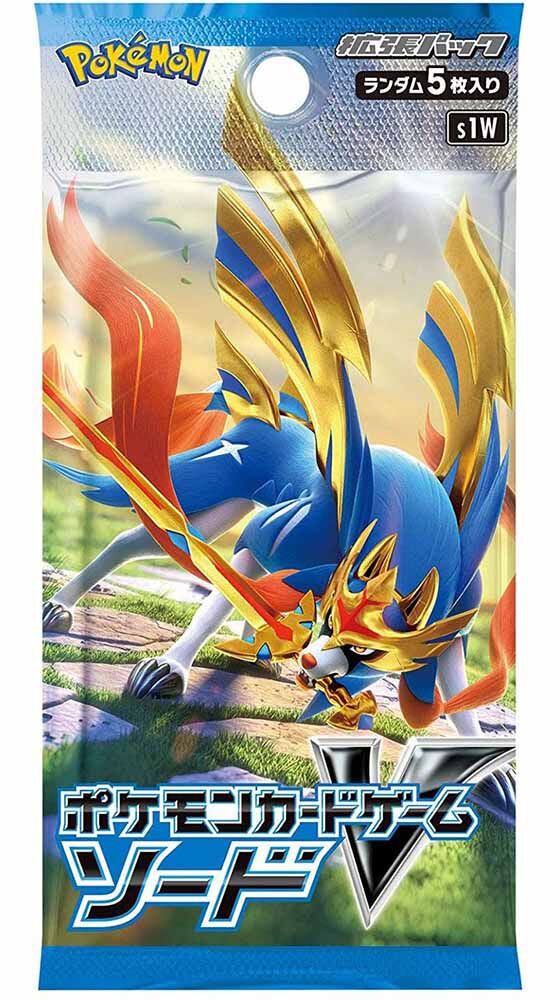
Pokémon Expansion Pack Sword (s1w) Booster Language: Japanese 1x Booster contains 5 cards
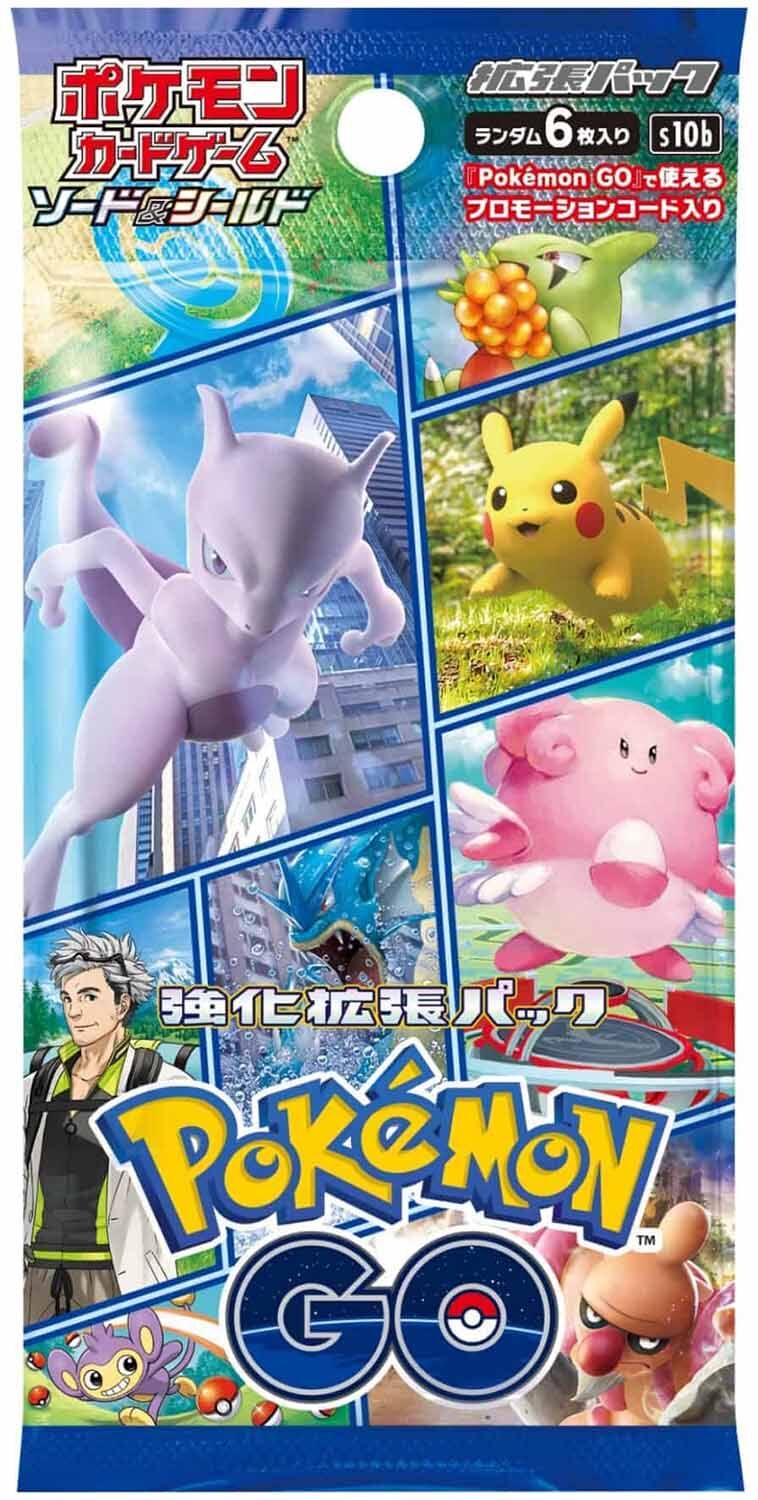
Pokémon GO Set (s10b) Booster Language: Japanese 1x booster contains 6 cards
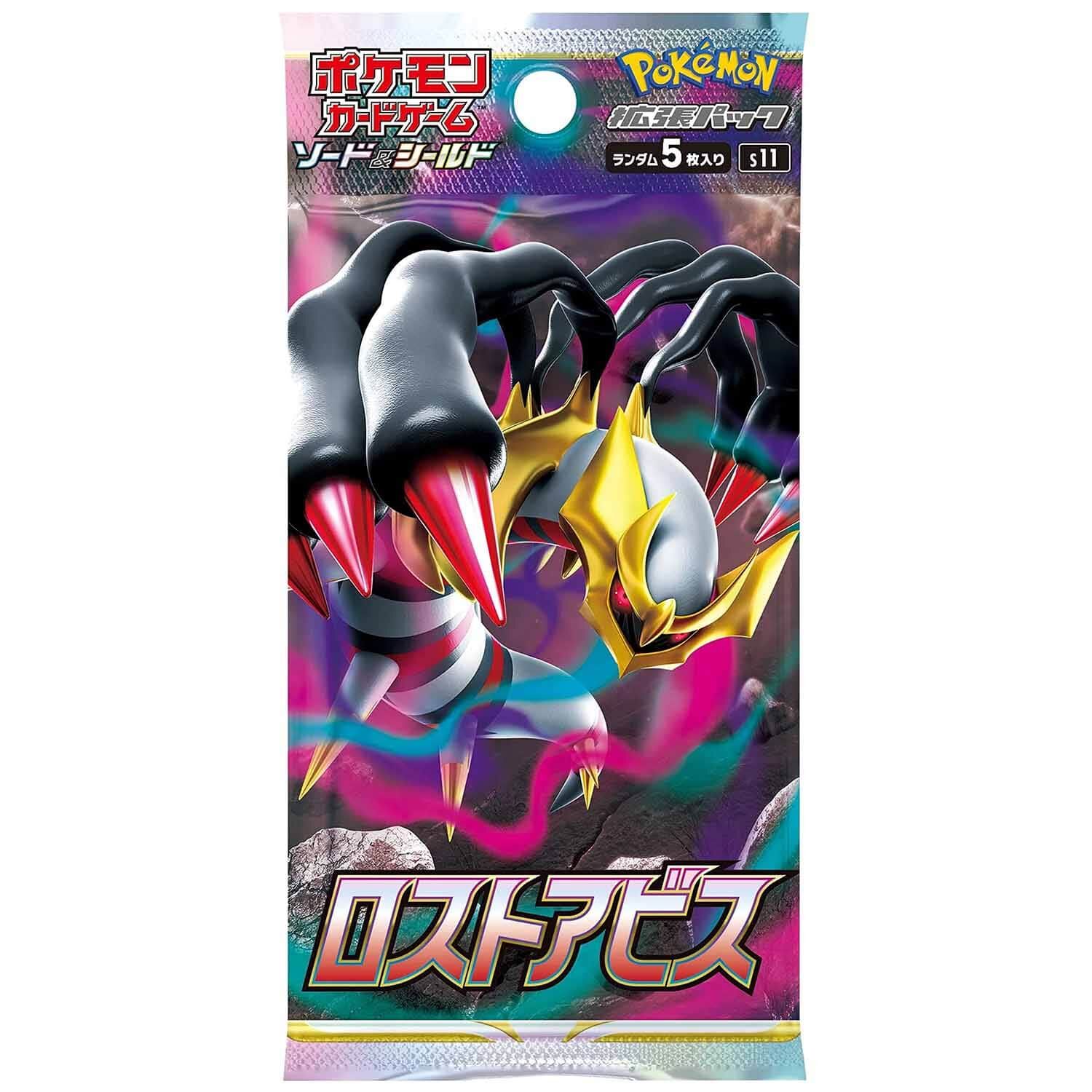
Pokémon Lost Abyss (s11) Booster Language: Japanese 1x booster contains 5 cards
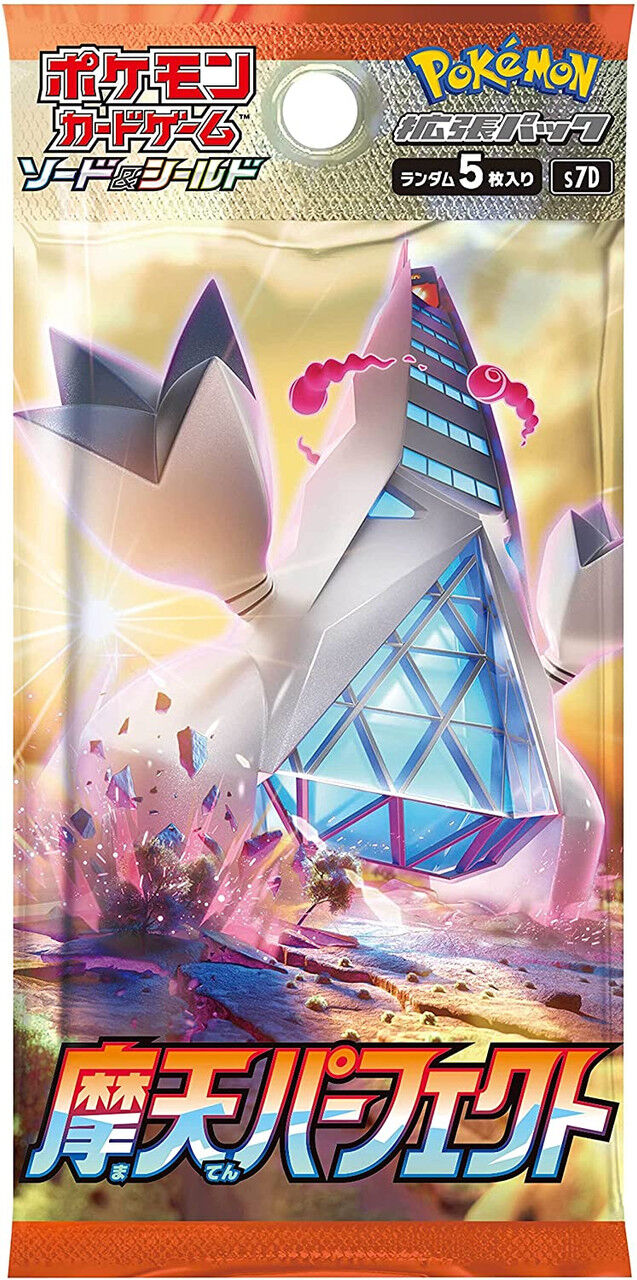
Pokémon Skyscraping Perfection (s7D) Booster Pack Language: Japanese 1x Booster contains 5 cards
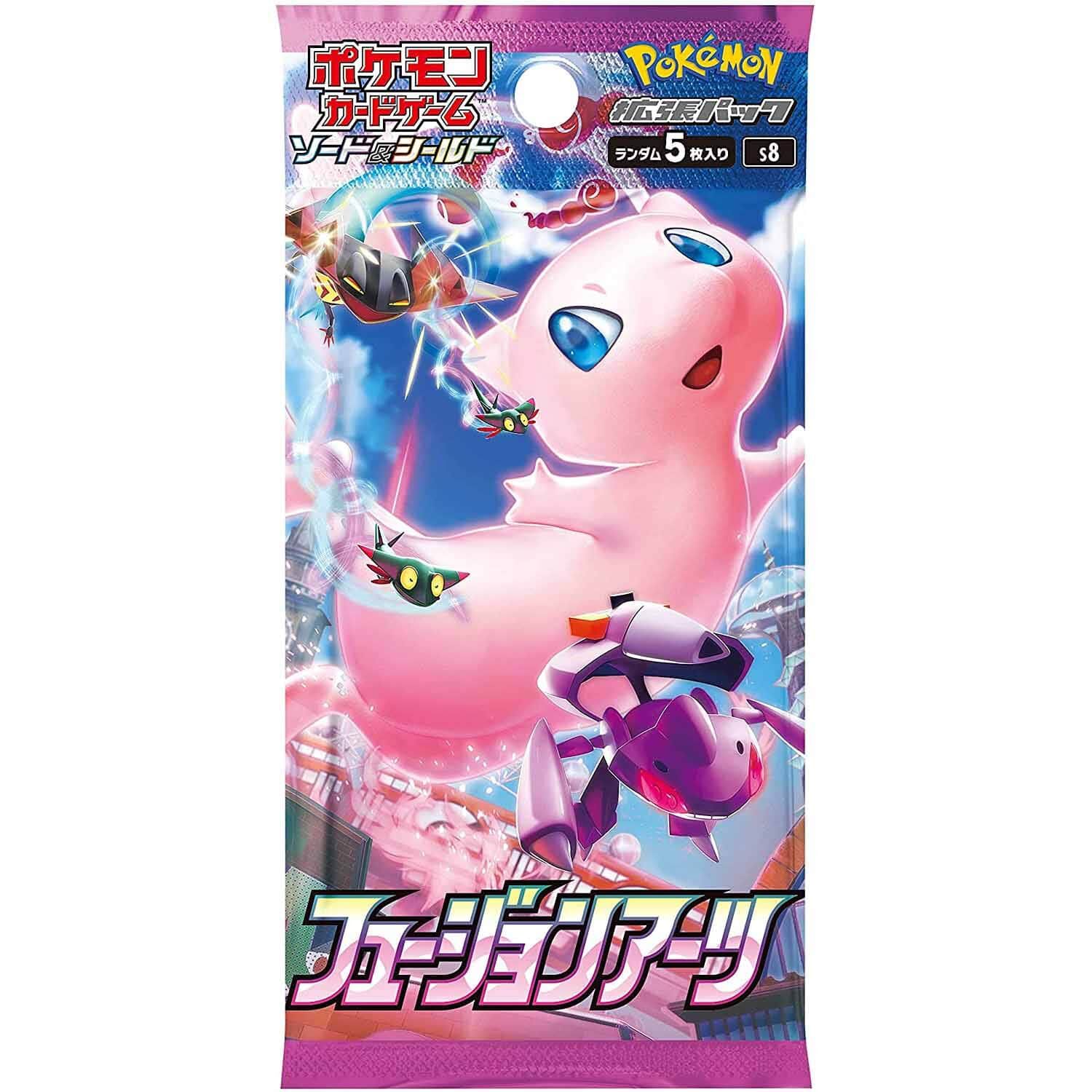
Pokémon Fusion Arts (s8) Booster Pack Language: Japanese 1x Booster contains 5 cards
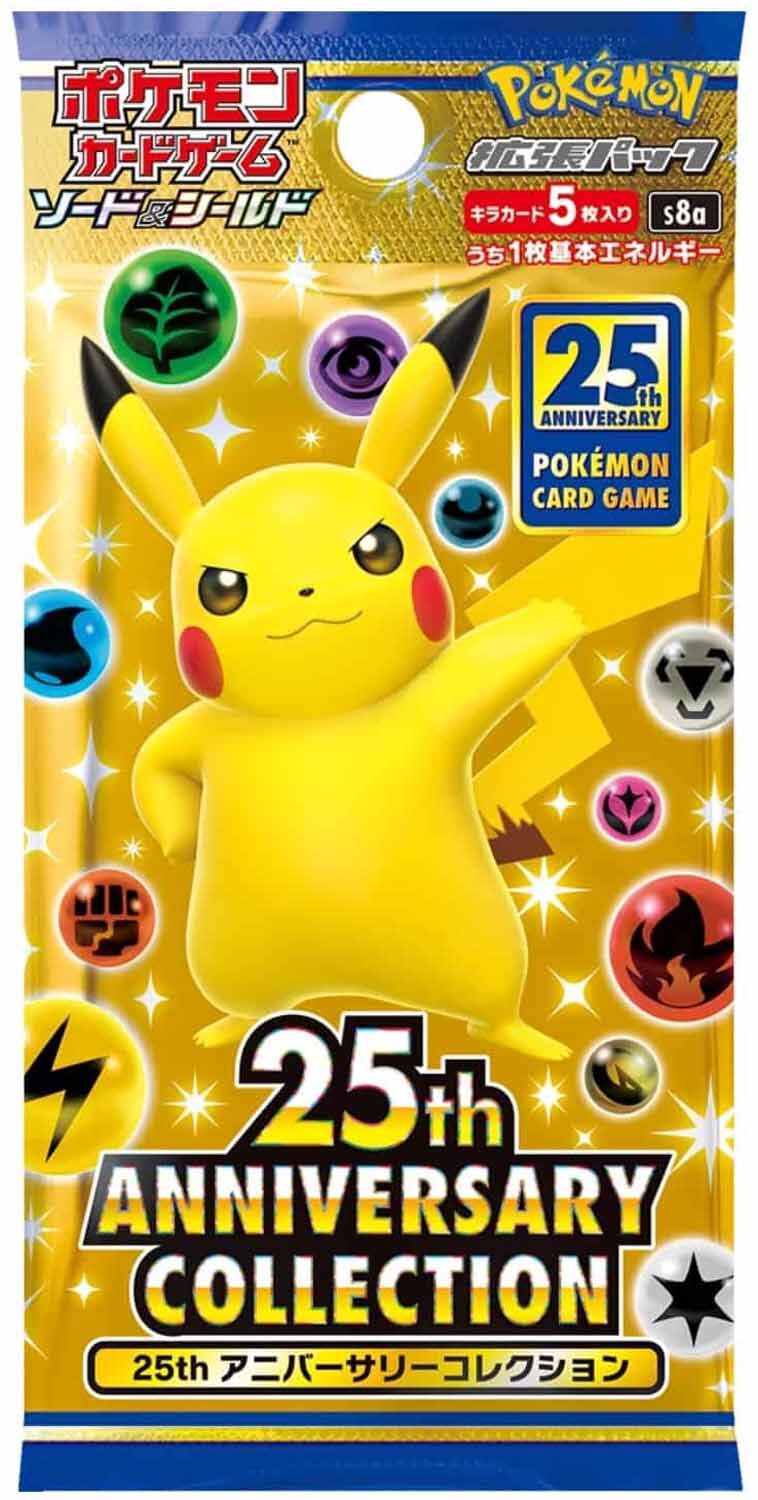
Pokémon 25th Anniversary Collection (s8a) Booster Pack – JP Language: Japanese 1x Booster contains 5 cards