

Sold out
 English
Sony
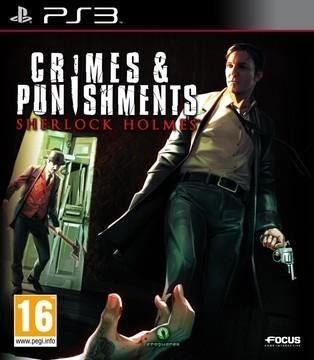
Sherlock Holmes: Crimes & Punishments - Boxed - PS3
49,90CHF
incl. VAT
Currently sold out ·
Sign up and we will let you know as soon as the item is back.
Regular price:
CHF 49.90
Currently unavailable
Product number: PS3-47891-OVP-EN
Description
Crimes & Punishments: Sherlock Holmes puts the player in control of the fictional detective Sherlock Holmes. The game is set in the late 19th century and, unlike its predecessors, does not tell one big case but six smaller, independent cases. Three of these are original stories and two (The Fate of Black Peter and The Abbey Grange Affair) are based on Sherlock Holmes stories by Arthur Conan Doyle. The puzzle on the tracks is based on Doyle's story The Lost Special, but the rest of the story is original. In all cases, Holmes is investigating a murder.
Solving crimes has four main components. The first part is exploring the environment: here the player controls Holmes in either first or third person (the point-and-click interface of the predecessors is no longer available) and navigates him through the locations, e.g. a garden or a manor house. When Holmes gets close to something interesting, a notification appears, and after pressing a button, Holmes can make an observation or interact with the object. In some cases, the game switches to a first-person view and shows details of the object, e.g. a shelf, and the player moves a cursor looking for further hotspots. When a smaller object is viewed in detail mode, it can be rotated. "Completed" hotspots are marked, and the detail view is automatically exited once no further information can be found. In addition, there are two special viewing modes that can be switched on while exploring the environment: Instinct (allows Holmes to spot small details) and Imagination (Holmes reconstructs past events in his mind). Since these viewing modes are mandatory for finding certain clues, a notification appears when they should be used.
The second component is questioning suspects and witnesses. When Holmes starts a conversation, he has a range of topics to choose from. This usually leads to an automatic dialogue between Holmes and the other person, but in some cases Holmes can intervene if the person is lying. He is then presented with a series of counterarguments, from which he must choose the correct one. These are either clues gathered previously or conclusions Holmes draws about the person: as in the novels, Holmes closely examines the person's appearance to draw conclusions about their character and history. In terms of gameplay, this is similar to the object detail view: you move the cursor over the person and click on hotspots.
The third component consists of mini-games, which frequently occur when examining evidence or searching the environment, e.g. when picking a lock. The gameplay of these mini-games is varied and can consist of puzzles, action, or simply using items in the correct order. While most are short, some, such as creating a timeline of events, can be somewhat more elaborate. All mini-games can be skipped. In addition, there are some inventory-based puzzles in which Holmes must collect a few items in order to use them (automatically) with another item.
All of this comes together in the fourth component: the deductions. These take place on a separate screen and lead to the solution of the case. First, there is a compilation of all the clues Holmes has found so far, and the player must select two that belong together and form a deduction, e.g. "the victim was shot" and "the revolver is missing a bullet" can lead to the deduction "the victim was shot with the revolver". Several conclusions together lead to a further conclusion and finally to the murderer or to the next step in the investigation, e.g. a re-enactment of the crime. However, many clues can be interpreted differently, and that is the player's task: they must choose between two alternatives based on everything they have learned - different interpretations lead to different results. In the end, the player is free to choose the conclusion, and the game does not prevent the wrong suspect from being accused. After the case, however, the player can optionally see whether the choice was correct and jump back to the final decision. There is also always a moral decision to be made, which comes down to bringing the murderer to justice with the full force of the law or showing leniency.
Since the cases are independent of one another, these decisions have no effect other than a letter or newspaper story that can be picked up in the next case. While most environments only apply to the respective case and are only gradually unlocked, there are two locations that are visited in almost every case: Holmes' and Watson's house (for investigations, examining evidence and changing Holmes' appearance) and Scotland Yard (to interrogate arrested suspects and inspect their belongings, visit the morgue or talk to Inspector Lestrade). The player controls almost exclusively Holmes; other characters such as Watson or the bloodhound Toby are only controlled in a few sequences.
Details & specifications
Genre Action & Adventure
Platform Playstation 3 (PS3)
Condition Used, with original packaging
Language English
ManufacturerSony
Release03.10.2014
Product numberPS3-47891-OVP-EN
Shipping, payment & returns
Shipped from our Swiss warehouse with Swiss Post. Free from CHF 149 within Switzerland & Liechtenstein. Orders placed by 3 pm go out the same working day. 14-day right of return on sealed goods.
Pay securely with
Payment: TWINT · VISA · Mastercard · Amex · Apple Pay · Google Pay · PayPal · Bank transfer · Cash on collection
Product information "Sherlock Holmes: Crimes & Punishments - Boxed - PS3"
Crimes & Punishments: Sherlock Holmes puts the player in control of the fictional detective Sherlock Holmes. The game is set in the late 19th century and, unlike its predecessors, does not tell one big case but six smaller, independent cases. Three of these are original stories and two (The Fate of Black Peter and The Abbey Grange Affair) are based on Sherlock Holmes stories by Arthur Conan Doyle. The puzzle on the tracks is based on Doyle's story The Lost Special, but the rest of the story is original. In all cases, Holmes is investigating a murder.
Solving crimes has four main components. The first part is exploring the environment: here the player controls Holmes in either first or third person (the point-and-click interface of the predecessors is no longer available) and navigates him through the locations, e.g. a garden or a manor house. When Holmes gets close to something interesting, a notification appears, and after pressing a button, Holmes can make an observation or interact with the object. In some cases, the game switches to a first-person view and shows details of the object, e.g. a shelf, and the player moves a cursor looking for further hotspots. When a smaller object is viewed in detail mode, it can be rotated. "Completed" hotspots are marked, and the detail view is automatically exited once no further information can be found. In addition, there are two special viewing modes that can be switched on while exploring the environment: Instinct (allows Holmes to spot small details) and Imagination (Holmes reconstructs past events in his mind). Since these viewing modes are mandatory for finding certain clues, a notification appears when they should be used.
The second component is questioning suspects and witnesses. When Holmes starts a conversation, he has a range of topics to choose from. This usually leads to an automatic dialogue between Holmes and the other person, but in some cases Holmes can intervene if the person is lying. He is then presented with a series of counterarguments, from which he must choose the correct one. These are either clues gathered previously or conclusions Holmes draws about the person: as in the novels, Holmes closely examines the person's appearance to draw conclusions about their character and history. In terms of gameplay, this is similar to the object detail view: you move the cursor over the person and click on hotspots.
The third component consists of mini-games, which frequently occur when examining evidence or searching the environment, e.g. when picking a lock. The gameplay of these mini-games is varied and can consist of puzzles, action, or simply using items in the correct order. While most are short, some, such as creating a timeline of events, can be somewhat more elaborate. All mini-games can be skipped. In addition, there are some inventory-based puzzles in which Holmes must collect a few items in order to use them (automatically) with another item.
All of this comes together in the fourth component: the deductions. These take place on a separate screen and lead to the solution of the case. First, there is a compilation of all the clues Holmes has found so far, and the player must select two that belong together and form a deduction, e.g. "the victim was shot" and "the revolver is missing a bullet" can lead to the deduction "the victim was shot with the revolver". Several conclusions together lead to a further conclusion and finally to the murderer or to the next step in the investigation, e.g. a re-enactment of the crime. However, many clues can be interpreted differently, and that is the player's task: they must choose between two alternatives based on everything they have learned - different interpretations lead to different results. In the end, the player is free to choose the conclusion, and the game does not prevent the wrong suspect from being accused. After the case, however, the player can optionally see whether the choice was correct and jump back to the final decision. There is also always a moral decision to be made, which comes down to bringing the murderer to justice with the full force of the law or showing leniency.
Since the cases are independent of one another, these decisions have no effect other than a letter or newspaper story that can be picked up in the next case. While most environments only apply to the respective case and are only gradually unlocked, there are two locations that are visited in almost every case: Holmes' and Watson's house (for investigations, examining evidence and changing Holmes' appearance) and Scotland Yard (to interrogate arrested suspects and inspect their belongings, visit the morgue or talk to Inspector Lestrade). The player controls almost exclusively Holmes; other characters such as Watson or the bloodhound Toby are only controlled in a few sequences.
Solving crimes has four main components. The first part is exploring the environment: here the player controls Holmes in either first or third person (the point-and-click interface of the predecessors is no longer available) and navigates him through the locations, e.g. a garden or a manor house. When Holmes gets close to something interesting, a notification appears, and after pressing a button, Holmes can make an observation or interact with the object. In some cases, the game switches to a first-person view and shows details of the object, e.g. a shelf, and the player moves a cursor looking for further hotspots. When a smaller object is viewed in detail mode, it can be rotated. "Completed" hotspots are marked, and the detail view is automatically exited once no further information can be found. In addition, there are two special viewing modes that can be switched on while exploring the environment: Instinct (allows Holmes to spot small details) and Imagination (Holmes reconstructs past events in his mind). Since these viewing modes are mandatory for finding certain clues, a notification appears when they should be used.
The second component is questioning suspects and witnesses. When Holmes starts a conversation, he has a range of topics to choose from. This usually leads to an automatic dialogue between Holmes and the other person, but in some cases Holmes can intervene if the person is lying. He is then presented with a series of counterarguments, from which he must choose the correct one. These are either clues gathered previously or conclusions Holmes draws about the person: as in the novels, Holmes closely examines the person's appearance to draw conclusions about their character and history. In terms of gameplay, this is similar to the object detail view: you move the cursor over the person and click on hotspots.
The third component consists of mini-games, which frequently occur when examining evidence or searching the environment, e.g. when picking a lock. The gameplay of these mini-games is varied and can consist of puzzles, action, or simply using items in the correct order. While most are short, some, such as creating a timeline of events, can be somewhat more elaborate. All mini-games can be skipped. In addition, there are some inventory-based puzzles in which Holmes must collect a few items in order to use them (automatically) with another item.
All of this comes together in the fourth component: the deductions. These take place on a separate screen and lead to the solution of the case. First, there is a compilation of all the clues Holmes has found so far, and the player must select two that belong together and form a deduction, e.g. "the victim was shot" and "the revolver is missing a bullet" can lead to the deduction "the victim was shot with the revolver". Several conclusions together lead to a further conclusion and finally to the murderer or to the next step in the investigation, e.g. a re-enactment of the crime. However, many clues can be interpreted differently, and that is the player's task: they must choose between two alternatives based on everything they have learned - different interpretations lead to different results. In the end, the player is free to choose the conclusion, and the game does not prevent the wrong suspect from being accused. After the case, however, the player can optionally see whether the choice was correct and jump back to the final decision. There is also always a moral decision to be made, which comes down to bringing the murderer to justice with the full force of the law or showing leniency.
Since the cases are independent of one another, these decisions have no effect other than a letter or newspaper story that can be picked up in the next case. While most environments only apply to the respective case and are only gradually unlocked, there are two locations that are visited in almost every case: Holmes' and Watson's house (for investigations, examining evidence and changing Holmes' appearance) and Scotland Yard (to interrogate arrested suspects and inspect their belongings, visit the morgue or talk to Inspector Lestrade). The player controls almost exclusively Holmes; other characters such as Watson or the bloodhound Toby are only controlled in a few sequences.
| Genre: | Action & Adventure |
|---|---|
| Platform: | Playstation 3 (PS3) |
| Condition: | Used, with original packaging |
No reviews yet
Got this item? Tell others what it’s like.
Sign in to write a review
Only customers with an account who bought the item from us can review it. In the app you can do it straight from your order.
Only customers who bought the item from us can review it. Reviews appear with first name, initial and town. We check every review before it is published.
Similar products

