

Who is the real Spider-Man?
 Thomas Sr. (Captain Collector)Last updated: 24 August 2020 approx. 3 min read
So much has been written about the actual origin of the now legendary Spider-Man that you could fill several books with it. Stan Lee always claimed to have created the character on his own. Steve Ditko held it against him, because he claimed the design of the costume and at least a considerable part of the character for himself. And Jack Kirby claimed to have supplied the basic idea and the name for Spider-Man.
Ditko's dark dystopia
Who invented it? No idea. Presumably all three icons of American superhero culture had something to do with the creation of our friendly neighbourhood Spider-Man. But that's not what this is about. This is about how the character was shaped by three artists who are responsible for us knowing Spider-Man the way he swings through the street canyons of New York today, like an asphalt Tarzan.
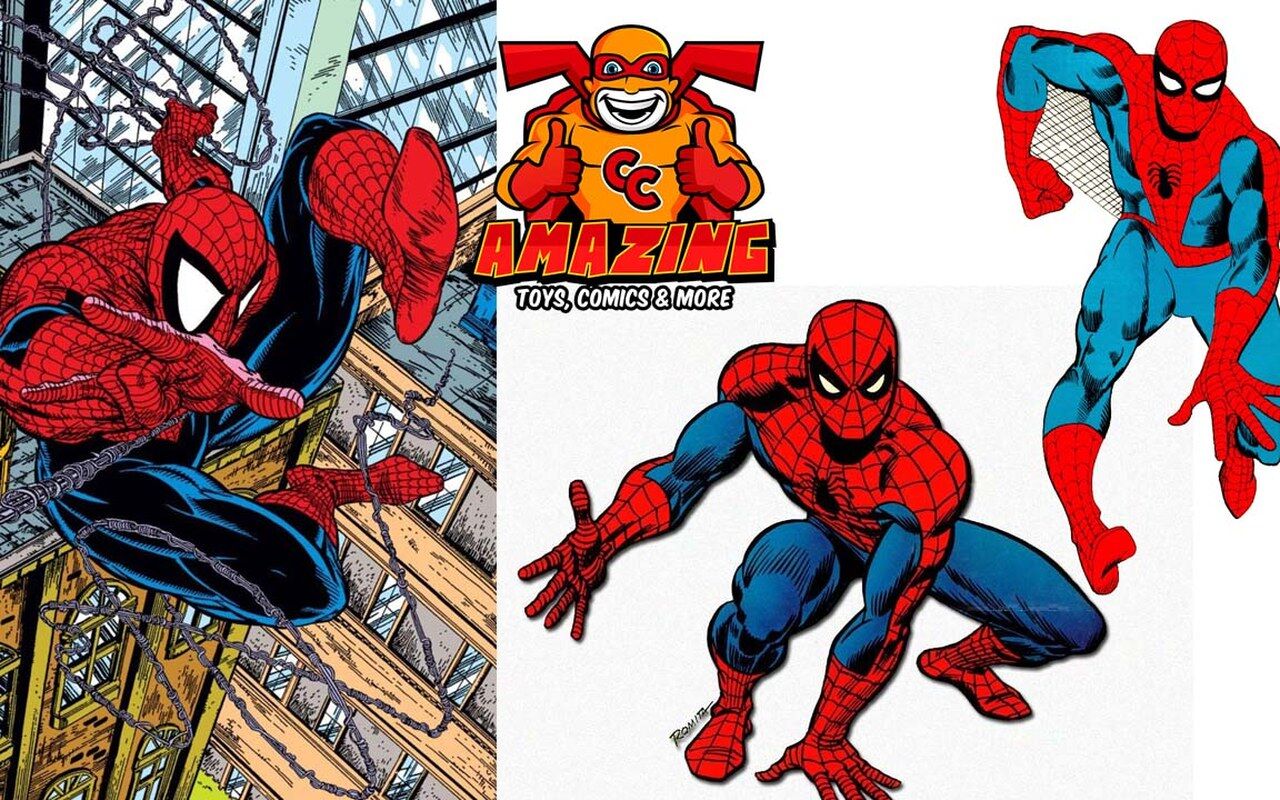
Steve Ditko was certainly the man who defined him first and gave him his essential features. Ditko's Spider-Man was lean and muscular and wore a meticulously fine-meshed costume with the distinctive web pattern that probably nobody after him managed so skilfully. Kirby, who drew Spider-Man a few times, certainly didn't manage it at all. (Sorry, King of Comics, I may be a Kirby fan, but …)
The world of Ditko's Spider-Man was always dark, gloomy, shot through with shadows and somewhat menacing. Main characters and extras alike displayed Ditko's slightly exaggerated gestures and facial expressions, which sometimes reminded you of the old silent films. And quite often you had the impression of having drifted slightly into caricature.
Romita's rocking dynamism
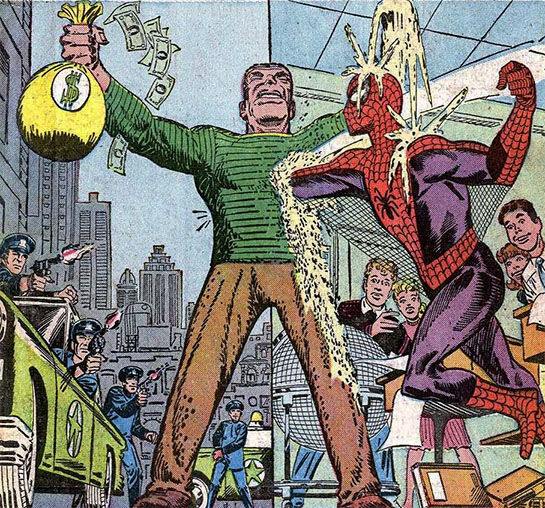
Things were quite different with John Romita, who took over the pen from Ditko in the mid-1960s after Ditko had fallen out with Stan Lee. After a few issues that still looked a little clumsy and angular, Romita very quickly found the brilliant Spider-Man style and visually redefined the web-slinger.
The hero became a little more muscular, his costume a shade lighter and the web design somewhat looser. That also had the advantage of saving time, because fewer web lines had to be meticulously inked. The setting changed completely too: you were no longer in a gloomy, twilit New York, but on sunny streets with pretty women smiling enchantingly.
Romita definitely took Spider-Man to a new level. Today young people would probably call it “Next Level Shit“. I can only agree, and Romita's visual version lasted more than twenty years, even though he by no means drew Spider-Man for that long. Artists who followed him, such as Ross Andru, adopted his version practically one to one.
The pen of the fan
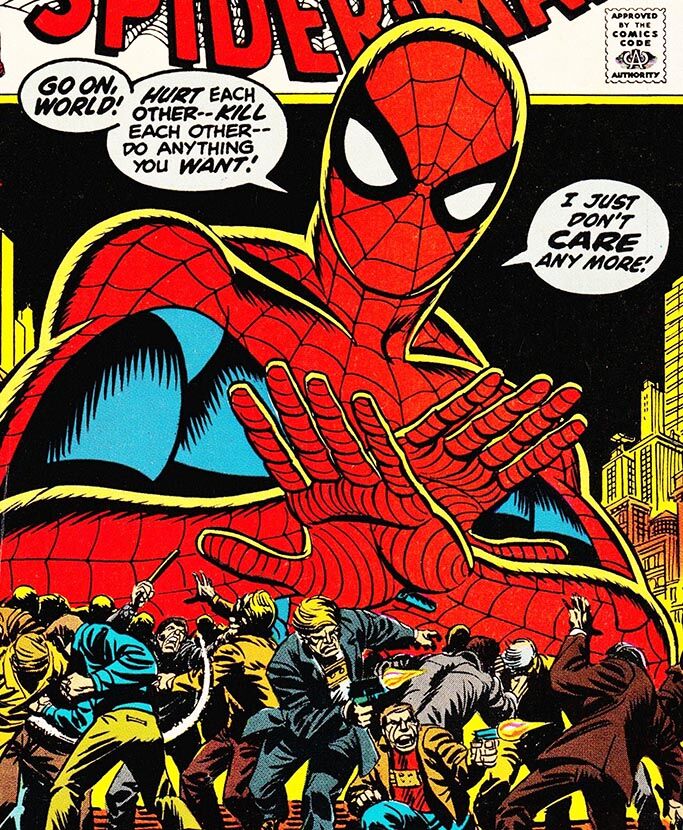
And then came Todd McFarlane. He belonged to the first generation of artists recruited from former fans. McFarlane had grown up with comics and entered the industry, which was looking for new talent in the late eighties.
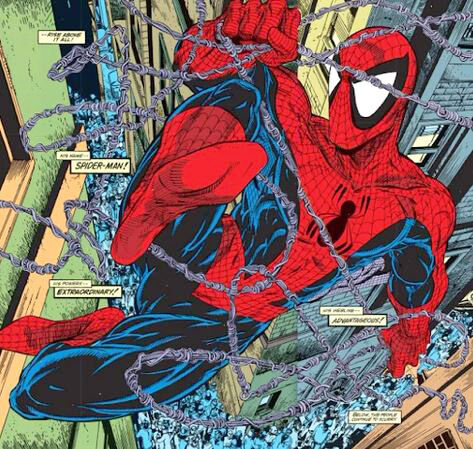
His Spider-Man is a logical visual evolution, and the most essential features are probably the oversized eye slits, you can hardly call them slits any more, and his very special way of drawing the web line from Spidey's wrist glands. To top it all, he went back to Steve Ditko and multiplied the webbing in the red part of the costume again.
I don't want to go any further here, and I'd rather keep quiet about the dreadful new variants of Spider-Man's costume in recent years. I've never understood why you have to change something that is absolutely iconic and known to everyone.
So there they are, the three essential interpretations of a legendary comic character. Which one is the best? Everyone has to decide that for themselves, and it probably also depends on which of the three variants you first came into contact with. In any case, Spider-Man has one of the most visually interesting costumes in the entire superhero community!
What do you think, which of the three visual variants does Captain Collector like best?
Thomas Sr. (Captain Collector)Captain Collector's Secret Spider-Man MystiqueSpider-Man in the shop
You'll find comics from all three eras at AMAZINGTOYS® under Spider-Man.

Clarity. Strategy. Building wealth.With Ready for Money, Thomas B. Kovacs shows you step by step the concrete path to your first 100 000 Swiss francs – and far beyond. Clear, practical and uncompromisingly geared to Swiss reality.Whether you're just starting out or already investing – this book gives you the foundation for real financial freedom.💡 What awaits you: Concrete, immediately actionable steps for systematic wealth building The trinity of success: Earn. Save. Invest. Smart diversification for stability in times of crisis Practical knowledge specifically for the Swiss financial system Sustainable strategies for long-term self-determination One tool. One plan. One investment in yourself. 🚀 Don't wait for the perfect moment – start your financial future now and secure your personal copy!More about the author Thomas B. Kovacs.

With a digital gift card, you've made exactly the right choice – the person you're giving it to can fulfil their own wishes right away. Can't find the right gift? Before you buy something they might never use, let the recipient decide for themselves. During its validity period, the voucher can be used without restriction on amazingtoys.ch or in the AMAZINGTOYS® Store. It cannot be replaced if lost or stolen. The validity period is 5 years from the date of payment. No cash payout is possible.Important note: The digital voucher is sent by email immediately after payment is completed. Please note that the voucher code can only be used once payment has been received.
With a digital gift card, you've made exactly the right choice – the person you're giving it to can fulfil their own wishes right away. Can't find the right gift? Before you buy something they might never use, let the recipient decide for themselves. During its validity period, the voucher can be used without restriction on amazingtoys.ch or in the AMAZINGTOYS® Store. It cannot be replaced if lost or stolen. The validity period is 5 years from the date of payment. No cash payout is possible.Important note: The digital voucher is sent by email immediately after payment is completed. Please note that the voucher code can only be used once payment has been received.
With a digital gift card, you've made exactly the right choice – the person you're giving it to can fulfil their own wishes right away. Can't find the right gift? Before you buy something they might never use, let the recipient decide for themselves. During its validity period, the voucher can be used without restriction on amazingtoys.ch or in the AMAZINGTOYS® Store. It cannot be replaced if lost or stolen. The validity period is 5 years from the date of payment. No cash payout is possible.Important note: The digital voucher is sent by email immediately after payment is completed. Please note that the voucher code can only be used once payment has been received.
With a digital gift card, you've made exactly the right choice – the person you're giving it to can fulfil their own wishes right away. Can't find the right gift? Before you buy something they might never use, let the recipient decide for themselves. During its validity period, the voucher can be used without restriction on amazingtoys.ch or in the AMAZINGTOYS® Store. It cannot be replaced if lost or stolen. The validity period is 5 years from the date of payment. No cash payout is possible.Important note: The digital voucher is sent by email immediately after payment is completed. Please note that the voucher code can only be used once payment has been received.
With a digital gift card, you've made exactly the right choice – the person you're giving it to can fulfil their own wishes right away. Can't find the right gift? Before you buy something they might never use, let the recipient decide for themselves. During its validity period, the voucher can be used without restriction on amazingtoys.ch or in the AMAZINGTOYS® Store. It cannot be replaced if lost or stolen. The validity period is 5 years from the date of payment. No cash payout is possible.Important note: The digital voucher is sent by email immediately after payment is completed. Please note that the voucher code can only be used once payment has been received.

ONE PIECE Saikyo Jump Promo Pack“Summit Powerhouses Pack”3 cards per packEdward Newgate {P-152}Portgas D. Ace {P-153}Monkey D. Luffy {P-154}All cards feature metallic foil treatment!

Ultimate Guard Comic Bags Resealable - Silver Size (100) Ultimate Guard comic accessories 100 premium, resealable protective sleeves for comics up to 181 x 268 mm (7 1/8 x 10 1/2 inches) in size. Maximum transparency 5 cm wide, resealable closure flap PVC-free, acid-free Archival safeImportant note: Due to the production process, slight warping of the product cannot always be avoided. A deviation of 3mm is within the tolerance range and therefore does not constitute a defect. Any warping that occurs can be corrected by carefully bending the card stock in the opposite direction.

Ultimate Guard Silver Size Comic Bag + Backing Board Bundle High-quality Silver Size comic bag + backing board for safely archiving comics. Ideally suited for long-term storage Package Contents: 1x Ultimate Guard resealable comic bag, Silver Size 1x Ultimate Guard comic backing board, Silver Size The comic is not included. Product Size: 26.8 x 18.1 cm (H x W cm)

Avengers #8 Facsimile Comic: Avengers #8 Language: English Publisher: Marvel Comics Year: April 2023 Condition: Near Mint, NM, 9.4 Avengers #8 as a facsimile edition of the original issue 8 with the first appearance of Kang the Conqueror. A classic of the Silver Age of Marvel Comics reissued! The issue is in near-mint condition. Tags: avengers, kang, kang the conqueror, jack kirby, stan lee, marvel comics

100 high-quality and resealable protective sleeves for manga with a size up to 15 x 21.8 cm.– Suitable for most manga and graphic novels– Extremely high transparency– Resealable closure flap– PVC-free, acid-free– Archival safe

Savage She-Hulk #1 Facsimile Comic: Savage She-Hulk #1 Language: English Publisher: Marvel Comics Year: February 2023 Condition: Near Mint Plus, NM+, 9.6 Savage She-Hulk #1 as a facsimile edition of the original issue 1. A classic of Marvel Comics' Bronze Age, reprinted! The issue is in like-new condition. Tags: she-hulk, savage she-hulk, marvel comics