

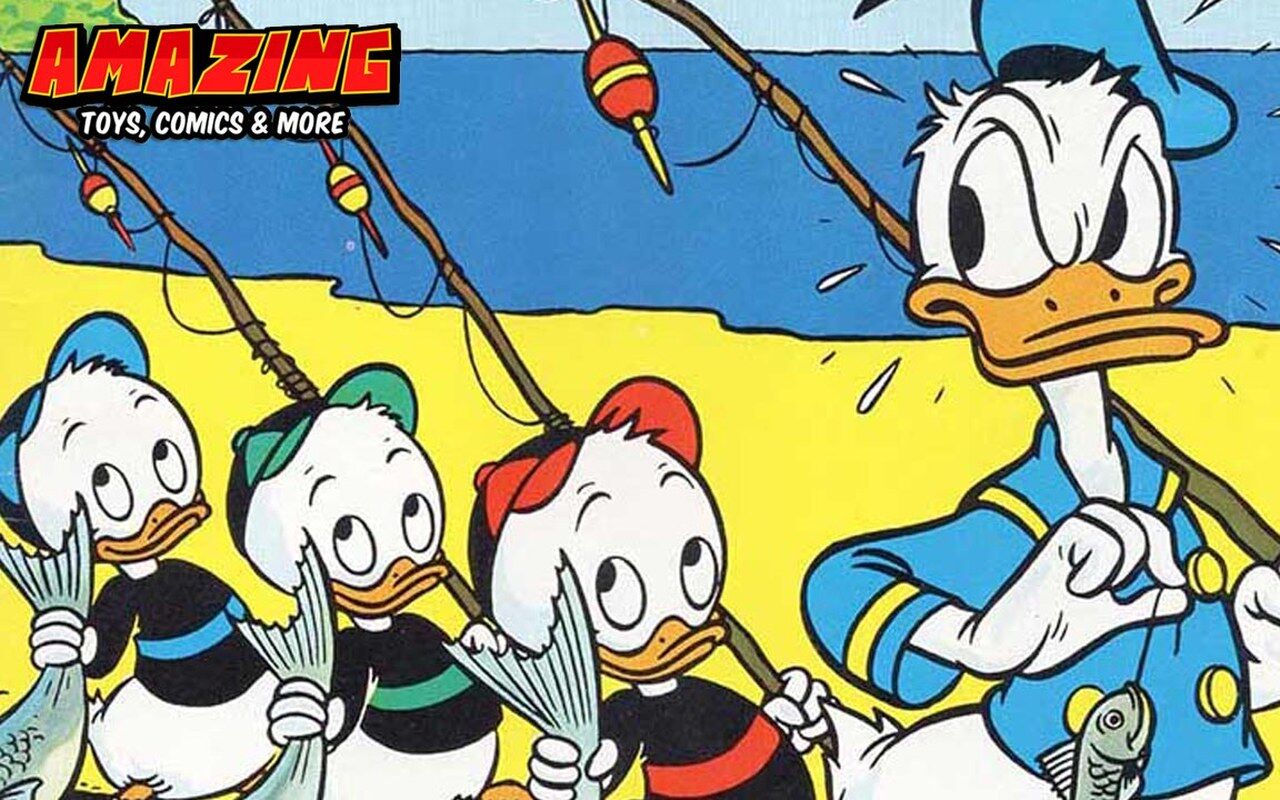
50 Years of Comics, Captain Collector Takes Stock
 Thomas Sr. (Captain Collector)Last updated: 8 December 2020 approx. 6 min read
Yes, you read that right. It has been 50 years since I bought my very first comic, as far as I remember a Bessy from Bastei, in what was then the sleepy little village of Neuenhof. That must have been sometime in November 1970. Half a century has passed since then, and comics have steadily and regularly kept me company on my way through all those years.
Back then, in the depths of the Seventies
I won't claim that my development as a comic reader, and practically from the start as a comic collector too, followed the one usual path. There probably isn't one anyway. But I did follow a path that, from my point of view, turned out to make perfect sense.
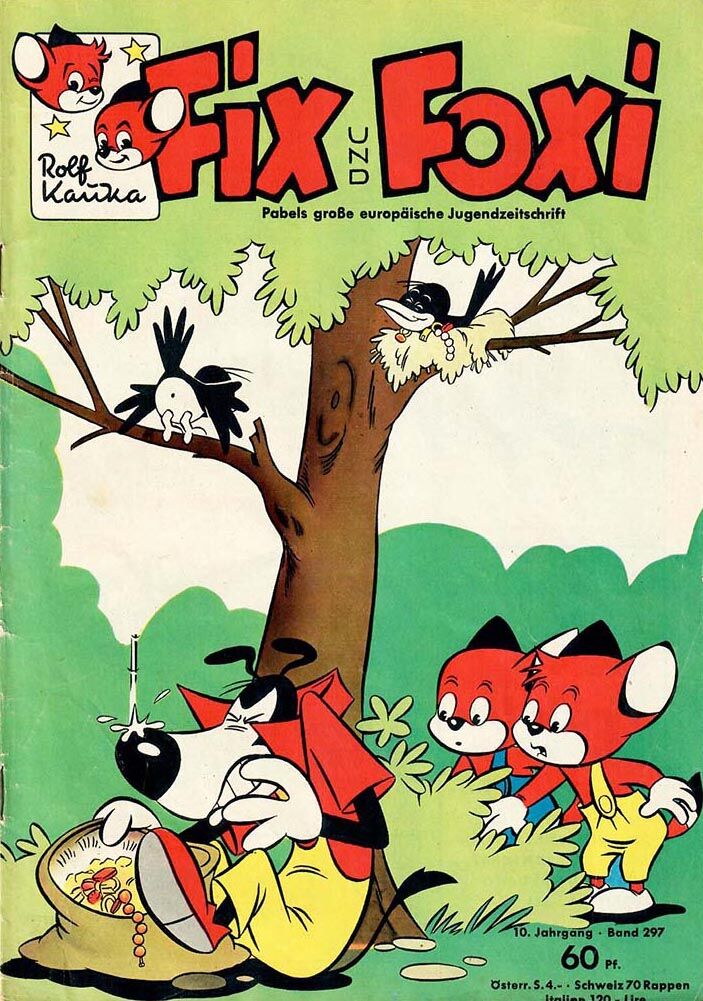
Why it all started with the Wild West, I don't know. Back then, playing cowboys and Indians was the done thing. We kids were outside a lot, playing in the fields and the woods, and everything was one big adventure. Maybe that is why comics like Bessy, Buffalo Bill and Silberpfeil had such a magical pull on me. Maybe that is also why the funnies like Fix und Foxi only came a little later.
But they didn't keep me waiting long. I'm not even sure the good old Western survived the move to Zurich at the end of 1971. In my memory, Zurich is all Fix und Foxi & Co. And of course Micky Maus. A logical progression? Yes, maybe. Artistically, at any rate, if you consider the rather inferior quality of the drawings in most of Bastei's Wild West comics.
Kauka Rules
The variety of Rolf Kauka's series opened my eyes to all the Franco-Belgian comics and, of course, to Kauka's own home-grown productions. And there was plenty to discover. I was lucky enough to dive right into the heyday of the magazine Primo and so got to know even more international comic series, such as Prinz Eisenherz.
This early phase was crucial for me and, in a way, «calibrated» me as a comic fan and comic collector. It was like a solid foundation stone that anchored me firmly to the medium of comics. At the same time, the early Seventies shaped me as a rather «conservative» comic reader. What do I mean by that? Well, had I been just five years older, I would probably have found my way to alternative and somewhat more unconventional comics. Just think of all the underground comix, Robert Crumb first and foremost.
But I was where I was, reading and collecting the comics that suited my childlike mind and satisfied my hunger for comics. And so the next step was once again a logical one: straight to the superheroes.
Kirby Kills Kauka
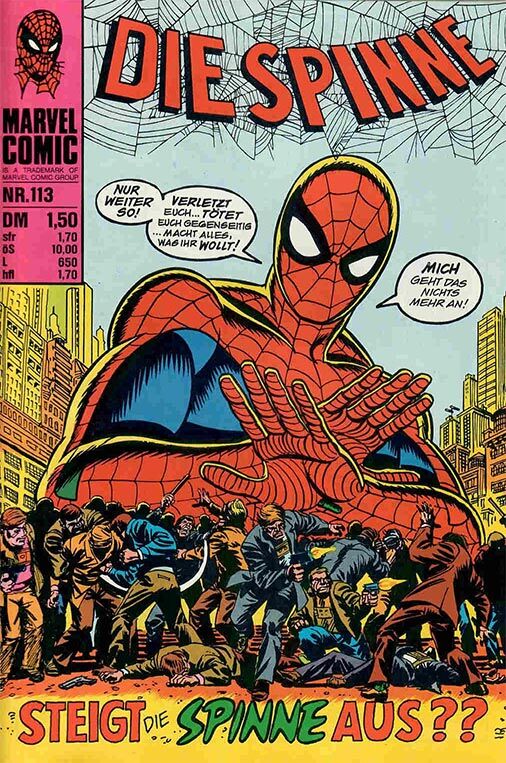
From 1974, invincible superheroes ruled the newsstands of my Zurich hunting grounds! I caught the Marvel virus, which from then on would remain a permanent part of my very being. Of course, Williams was to blame for everything. The design of the Marvel comics published by Williams from 1974 was, to put it mildly, breathtaking. Not just the colours and the attention to detail, but the medium itself, that is, the paper, was simply perfect. Everything was just right. This is where my eye was calibrated, as anyone who was there live will understand.
Williams eventually led me, quite logically, to the American originals, where an almost endless wealth of material opened up to me. Make Mine Marvel wasn't just an advertising slogan by Stan Lee, I lived it. At least until the end of the Seventies, when Williams slowly fizzled out and finally closed its doors for good. I won't write here about its pitiful successor, Condor. In the end, it was to blame for me putting the superheroes on ice. For the time being, at least.
Return to the roots and blinded by the light
Then came times when I partly turned back to the heroes of my early days and read and collected more Franco-Belgian series. Tim und Struppi, Spirou und Fantasio, the Marsupilami and others. I didn't want to be completely comic-less after all.
It was only in the mid-Eighties that I turned my attention back to the superheroes, when Frank Miller's groundbreaking epic The Dark Knight Returns came out. That comic got everything rolling again and gave the then ailing medium the kick up the backside it needed.
To my regret, I have to admit that in the Nineties, like many other comic collectors, I fell for the so-called Image craze. When Spawn #1 hit the market in 1992, it dazzled above all with its tremendously impressive (literally) print quality and its fabulous colours.
With many comic series at the newly founded Image, it was the same story: more style than substance, but it worked. I was, again like many other comic collectors, blinded and stuck with it for a while, until I too realised that I was in an eye-candy bubble that was bound to burst sooner or later.
Some 600 comics later, my time had come: I stopped buying Image comics. At the same time, though, I had been concentrating more on buying vintage Marvel comics from the Silver Age and the Bronze Age, expanding the collection of American originals I had started in the Seventies. Those were solid bricks, unlike the sandcastle that was Image.
End times
The new millennium then brought many of my heroes to the cinema screen, sometimes particularly well done, sometimes rather less so. The fact is that, by the turn of the millennium at the latest, superheroes had become respectable. Suddenly everyone knew who Thanos or Black Panther was. Only a few years earlier, that knowledge had been reserved for the comic nerds everyone looked down on.
Although, after the huge success of the films at the latest, the comics had been demoted to incidental advertising vehicles, I kept trying to read the odd storyline now and then. Even in the new millennium there were writers and artists who had something to contribute to the Marvel universe. Sometimes I liked what I read, sometimes rather less. But the latter outnumbered the former. Sadly.
Back to the roots. The only logical way out. And it works. It's not the comic industry's problem that most of what it produces today doesn't put a blissful smile on my face. It's my problem. In the end, it's a matter of personal taste. That's why today I mainly enjoy the classics of the Sixties and Seventies. The entire comic industry of today is built on their shoulders, and yet it has moved infinitely far away from them. And only in very, very rare cases for the better.
The words of a bitter old comic fan? Certainly not. Rather the sober, or nostalgic, take your pick, view of a comic veteran who can make the concrete comparison because he was there. For 50 long years.
I wonder where the journey is heading. I probably won't be around for the next 50 years, but with a little luck for a few more decades …
Thomas Sr. (Captain Collector)Captain Collector's Profound Comic WisdomBessy, Fix und Foxi and more
You'll find many of the series from this look back at AMAZINGTOYS® under Bessy and Kauka Comics.

Superboy #100 Comic: Superboy #100 Language: English Publisher: DC Comics Year: October 1962 Condition: Fine Plus, FN+, 6.5 Superboy #100 once again brings us the origin story of Kal-El. This anniversary issue is in good used condition. Tags: superman, superboy, dc comics

Batman/Tarzan Claws of the Cat-Woman #2 Comic: Batman/Tarzan Claws of the Cat-Woman #2 Language: English Publisher: Dark Horse Comics Year: October 1999 Condition: Very Fine, VF, 8.0 Batman/Tarzan Claws of the Cat-Woman #2 is a comic from Dark Horse and DC, with striking artwork by Igor Kordey. It is the second issue of a four-part mini-series. The comic booklet is in very good condition. Tags: tarzan, batman, dark horse comics

The Avengers #88 Comic: The Avengers #88 Language: German Publisher: Williams Year: 1978 Condition: 1 (One) Very Good The Avengers #88 from the legendary Williams publishing house. The comic booklet is in very good condition. Tags: die rächer, avengers, marvels avengers, williams verlag
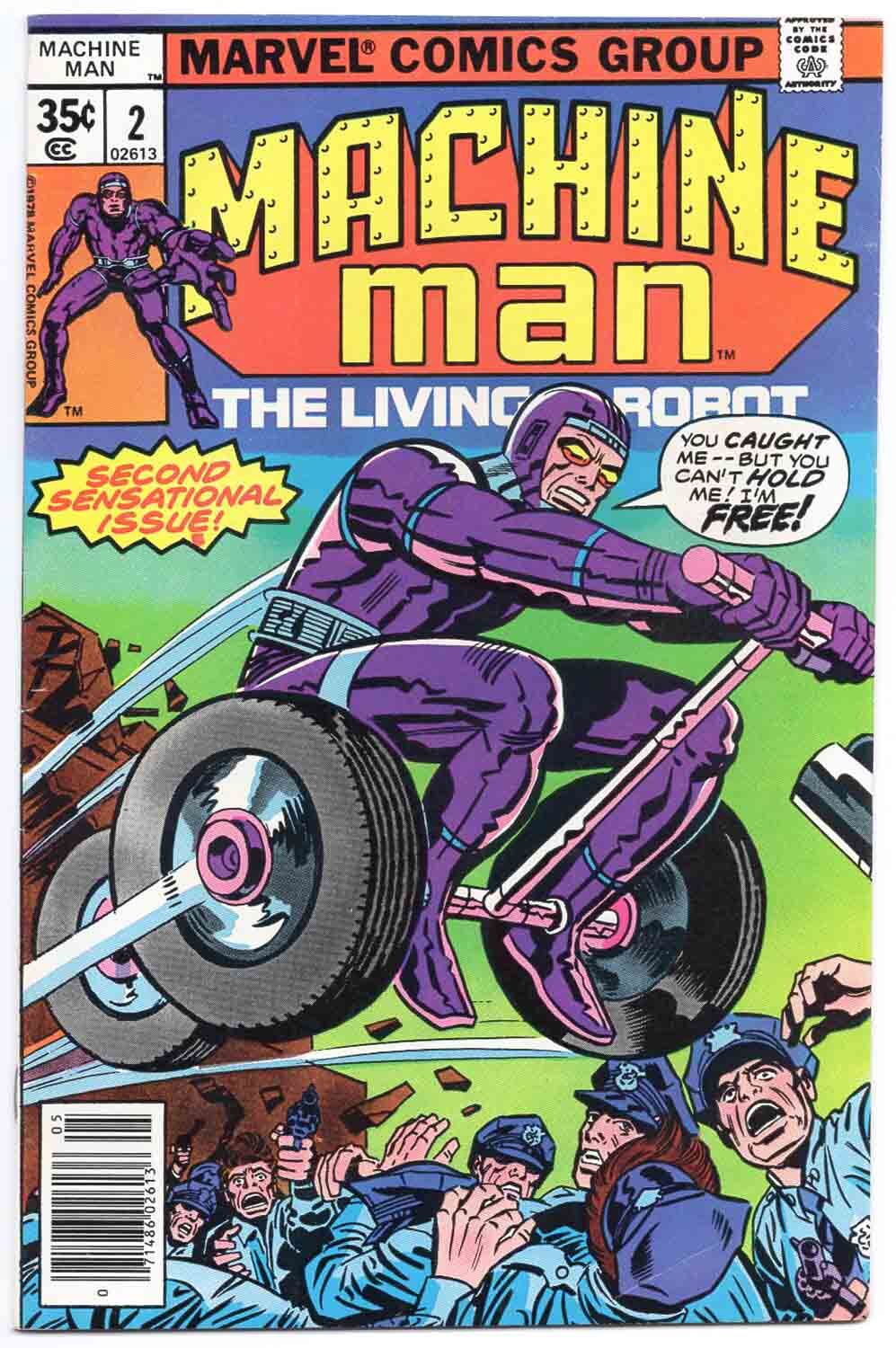
Machine Man #2 Comic: Machine Man #2 Language: English Publisher: Marvel Comics Year: May 1978 Condition: Fine/Very Fine, FN/VF, 7.0 Machine Man #2 brings a classic Kirby story from the late 1970s. Story, script, artwork and cover are all by Kirby. The comic is in good condition. Tags: machine man, mister machine, jack kirby, king kirby, marvel comics
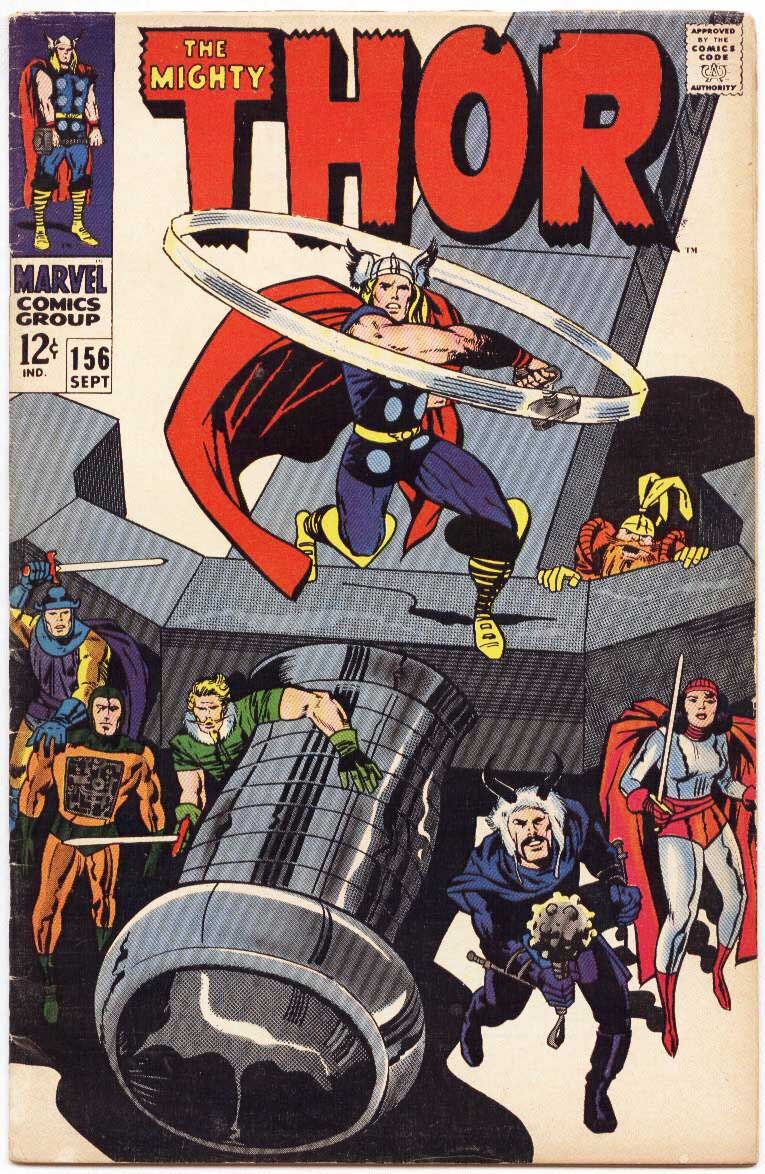
Thor #156 Comic: Thor #156 Language: English Publisher: Marvel Comics Year: September 1968 Condition: Fine, FN, 6.0 Thor #156 brings the battle of the God of Thunder against the overpowering Mangog. The story is by Lee & Kirby, with artwork and cover by Kirby. A classic Silver Age story from the 1960s. The comic booklet is in a good, used condition. Tags: thor, mjolnir, jack kirby, loki, mangog, ulik, marvel comics


Publisher: Marvel Comics Year: October 1974


Publisher: Marvel Comics Year: October 1976


100 high-quality and resealable protective sleeves for manga with a size up to 15 x 21.8 cm.– Suitable for most manga and graphic novels– Extremely high transparency– Resealable closure flap– PVC-free, acid-free– Archival safe