
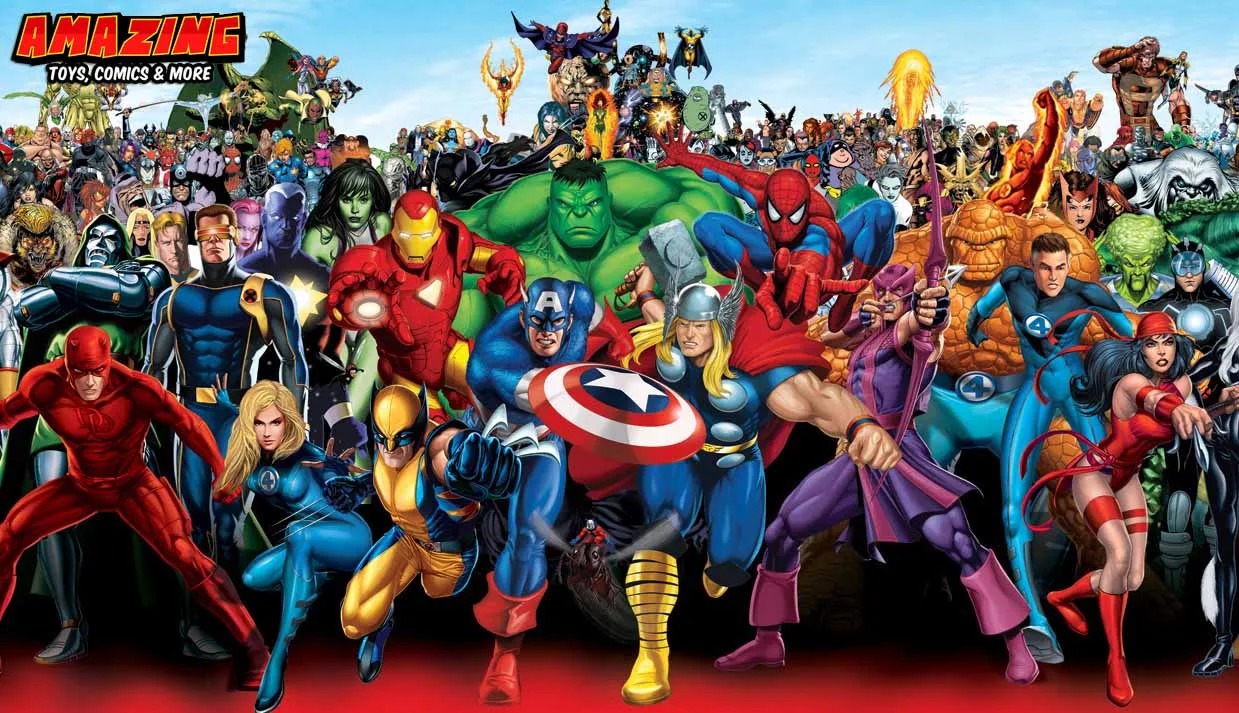
A few thoughts on the MARVEL universe
 Thomas Sr. (Captain Collector)Last updated: 11 May 2019 approx. 4 min read
I am a Marvel Zombie, as the old fans are called who have been there almost since the big bang. For me the zero hour was 1973, so I probably qualify for the Zombie criterion. Back then the superhero world was still in order, when an excursion into the Negative Zone was still the greatest of all feelings where parallel universes were concerned. It was also unthinkable that a superhero would die. Conflicts between heroes and villains were still fought out trivially and bloodlessly with fists.
Quo Vadis, Marvel?
A small aside: I wrote this article about 6 years ago, but I think it is worth presenting here once more in a slightly revised form, because it has lost none of its relevance. The events mentioned may belong to the past, yet they clearly show the influence of the Marvel comics on the Marvel Cinematic Universe and vice versa.
The Marvel universe is caught in a Final Crisis (may DC forgive me this expression) and we are on the brink of a new big bang, of the new birth, or rather the rebirth, of a completely changed Marvel universe.
The events of Age of Ultron (2013) clearly showed that over the past decades Marvel’s superheroes have meddled too often in the affairs of parallel universes and other dimensions and have made too many changes to the most varied timelines for all of it to have passed without noticeable consequences for the entire fabric of space and time. The Marvel multiverse is shaken by crises, cracks in the space-time continuum are the result. Galactus, the eternally hungry devourer of worlds, sees this as a welcome opportunity to cross over from the real Marvel universe into the Ultimate universe.
Ultimates, the real superheroes
Let us turn the wheel of time back to 2002, when the Englishmen Mark Millar and Bryan Hitch devised an interesting concept and gave us the Ultimates, in a parallel universe that could well be our own real universe. The basic idea was as simple as it was compelling: what if the superheroes really existed here and now? Following this motto, the two created a scenario with well-known icons of the Marvel universe, but changed them in character, appearance and private life in such a way that everything seemed many times more realistic, so that the reader really did get the impression that it could work!
Costumes were redesigned, tight-fitting spandex pyjamas (with the underpants over them) were discarded and realistic combat suits were called for, their design recalling a mixture of military outfits and ultra-modern sportswear. The Ultimates were a great success from the very start and were essentially variations on Marvel’s classic Avengers Captain America, Thor, Iron Man, Hulk, Giant-Man, Wasp and Hawkeye under the leadership of Nick Fury. Just as Frank Miller’s Dark Knight paved the way in 1986 for Tim Burton’s Batman film of 1989, the Ultimates are directly co-responsible for Marvel’s film successes today.
Nick Fury in the Ultimate universe looks like Samuel Jackson
In the Ultimate universe Nick Fury is black. And he looks like the actor Samuel L. Jackson. What probably began as a gag by artist Bryan Hitch (Mark Millar was certainly not entirely innocent here either) very soon developed a momentum of its own with far-reaching consequences. In a rather quiet private scene in the comic, the Ultimates discuss which actor could play whom in the event of a film adaptation. And then the line really is spoken that nobody would be more suited to playing Nick Fury than Samuel Jackson! Here fiction catches up with reality, and in Iron Man (MCU film from 2008) at the latest reality catches up with fiction: Samuel Jackson plays the part of Nick Fury! The Ultimate universe thus does indeed prove to be very close to reality.
Samuel Jackson as Nick Fury in the Marvel Cinematic Universe
Over the years further Marvel films and their sequels follow (Thor, Captain America, Hulk, Iron Man), until everything finally culminates in the film adaptation of the Avengers (2012). Strictly speaking the film ought to be called Ultimates, because the design, the characters and the concept all largely follow the Ultimate universe. What was long held to be unthinkable suddenly becomes reality: the Marvel films prove so successful and so popular that their origins, the Marvel comics, are downgraded to merchandise articles.
It goes one step further. The design of the films, above all of the costumes, has a serious influence on the drawn medium. A reversal of roles takes place, now it is the comics that become adaptations of the films. This aspect, which can no longer be thought away, is more than obvious. Evidently this levelling out is a means to an end for the recognition effect and is not merely welcomed by Marvel (Disney by now), but intended. Put differently: superheroes are meant to look the same in film as in the comics and vice versa, they are meant to act in the same way in both media.
I also believe that the blurring of the boundaries between the Marvel universes will increase and that dead heroes will rise again. In the comic, in the film, whatever. It is nothing new, after all. From many years of comic experience I know that those declared dead live longer. At Marvel the reverse principle of the (real) heavyweight boxing world champions still applies: “They always come back!”
Did you know that the original Nick Fury in the Marvel comics is a gruff, cigar-smoking Clint Eastwood type?
Captain Collector’s subtle superhero trivia

The Delcatty Sitting Cuties Plush is weighted with microbeads, so it sits up when you put it on a flat surface. This palm-sized plush is a fun, charming way to show off a favourite Normal-type Pokémon originally discovered in Hoenn! Measures about 13 cm tall and 9 cm long Sits up easily on a desk, shelf, or other flat surface Where will you set Delcatty? Part of the Sitting Cuties collection—known as Pokémon fit in Japan Includes Delcatty Sitting Cuties Plush (other pictured items not included) Pokémon Center Original More Details: Item Dimensions: 13 x 9 x 10.5 cm Country Of Origin: Made in China. Materials: All new material / polyester / polyethylene / polyurethane foam / nylon Care Instructions: Surface wash only. Recommended Age: 4+ Years Item Weight: 56 g

The Castform (Snowy Form) Sitting Cuties Plush is weighted with microbeads, so it sits up when you put it on a flat surface. This palm-sized plush is a fun, charming way to show off a favorite Ice-type Pokémon originally discovered in Hoenn! Measures about 14 cm tall and 12 cm Sits up easily on a desk, shelf, or other flat surface Where will you set Castform? Part of the Sitting Cuties collection—known as Pokémon fit in Japan Includes Castform (Snowy Form) Sitting Cuties Plush (other pictured items not included) Pokémon Center Original More Details: Item Dimensions: 14 x 12 x 12 cm Country Of Origin: Made in China Materials: All new material / polyester / polyethylene / SBS Care Instructions: Surface wash only. Recommended Age: 4+ Years Item Weight: 51 g

The Tauros Sitting Cuties Plush is weighted with microbeads, so it sits up when you put it on a flat surface. This palm-sized plush is a fun, charming way to show off a favourite Normal-type Pokémon originally discovered in Kanto! Measures about 7.5 cm tall and 12 cm wide Sits up easily on a desk, shelf, or other flat surface Where will you set Tauros? Part of the Sitting Cuties collection—known as Pokémon fit in Japan Includes Tauros Sitting Cuties Plush (other pictured items not included) Pokémon Center Original More Details: Item Dimensions: 7.5 x 12 x 13 cm Country Of Origin: Made in China Materials: All new material / polyester fiber / polyethylene Care Instructions: Surface Wash Only Recommended Age: 4+ Years Item Weight: 67 g

The Unown H Sitting Cuties Plush is weighted with microbeads, so it sits up when you prop it against a flat surface. This palm-sized plush is a fun, charming way to show off a favourite Psychic-type Pokémon originally discovered in Johto! Measures about 11.5 cm tall and 11.5 cm long, Weighted with microbeads Where will you set Unown? Includes Unown H Sitting Cuties Plush (other pictured items not included) Part of the Sitting Cuties collection—known as Pokémon fit in Japan Pokémon Center Original More details: Item Dimensions: 11.5 x 11.5 x 4 cm Country Of Origin: Made in China Materials: All new material / polyester fiber / polyethylene Care Instructions: Surface Wash Only Recommended Age: 4+ Years Item Weight: 29 g Official Pokémon Center Japan Import - Collect all Pokémon fit plush toys.
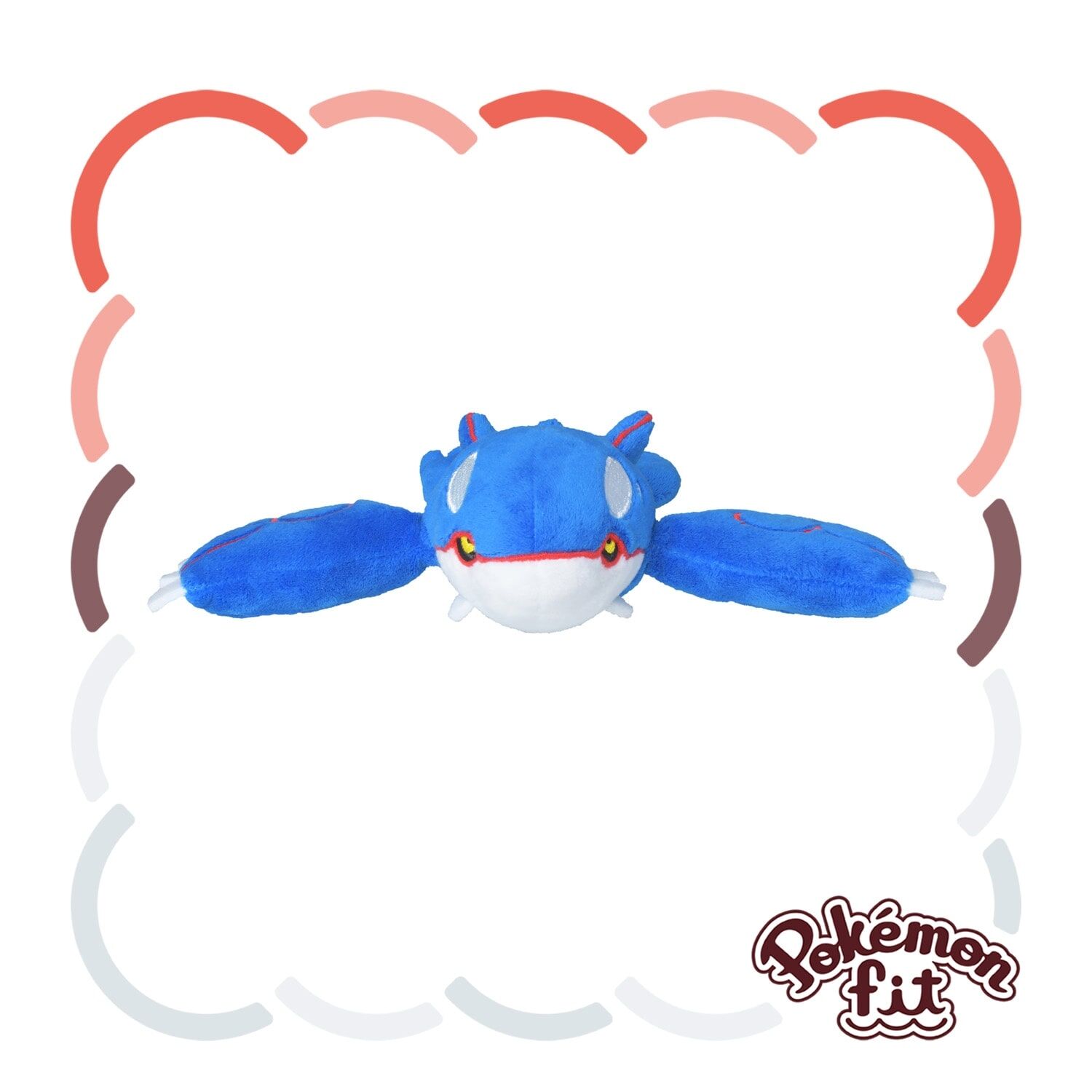
The Kyogre Sitting Cuties Plush is weighted with microbeads, so it sits up when you put it on a flat surface. This palm-sized plush is a fun, charming way to show off a favorite Water-type Legendary Pokémon originally discovered in Hoenn! Measures about 6.5 cm tall and 21.5 cm wide Sits up easily on a desk, shelf, or other flat surface Where will you set Kyogre? Part of the Sitting Cuties collection—known as Pokémon fit in Japan Includes Kyogre Sitting Cuties Plush (other pictured items not included) Pokémon Center Original More Details: Item Dimensions: 6.5 x 21.5 x 17 cm Country Of Origin: Made in China Materials: All new material / polyester / polyethylene / polypropylene Care Instructions: Surface wash only. Recommended Age: 4+ Years Item Weight: 62 g

The Kangaskhan Sitting Cuties Plush is weighted with microbeads, so it sits up when you put it on a flat surface. This palm-sized plush is a fun, charming way to show off a favorite Normal-type Pokémon originally discovered in Kanto! Measures about 13 cm tall and 14 cm long Sits up easily on a desk, shelf, or other flat surface Where will you set Kangaskhan? Part of the Sitting Cuties collection—known as Pokémon fit in Japan Includes Kangaskhan Sitting Cuties Plush (other pictured items not included) Pokémon Center Original More Details: Item Dimensions: 13 x 14 x 12 cm Country Of Origin: Made in China Materials: All new material / polyester / polyethylene Care Instructions: Surface Wash Only Recommended Age: 4+ Years Item Weight: 72 g

The Castform (Rainy Form) Sitting Cuties Plush is weighted with microbeads, so it sits up when you put it on a flat surface. This palm-sized plush is a fun, charming way to show off a favourite Water-type Pokémon originally discovered in Hoenn! Measures about 12 cm tall and 8 cm wide Sits up easily on a desk, shelf, or other flat surface Where will you set Castform? Part of the Sitting Cuties collection—known as Pokémon fit in Japan Includes Castform (Rainy Form) Sitting Cuties Plush (other pictured items not included) Pokémon Center Original More Details: Item Dimensions: 12 x 8 x 7 cm Country Of Origin: Made in China Materials: All new material / polyester / polyethylene Care Instructions: Surface wash only. Recommended Age: 4+ Years Item Weight: 63 g

The Unown Z Sitting Cuties Plush is weighted with microbeads, so it sits up when you prop it against a flat surface. This palm-sized plush is a fun, charming way to show off a favourite Psychic-type Pokémon originally discovered in Johto! Measures about 14 cm tall and 8.5 cm long, Weighted with microbeads Where will you set Unown? Includes Unown Z Sitting Cuties Plush (other pictured items not included) Part of the Sitting Cuties collection—known as Pokémon fit in Japan Pokémon Center Original More Details: Item Dimensions: 14 x 8.5 x 5 cm Country Of Origin: Made in China Materials: All new material / polyester fibre / polyethylene Care Instructions: Surface Wash Only Recommended Age: 4+ Years Item Weight: 28 g

The Plusle Sitting Cuties Plush is weighted with microbeads, so it sits up when you put it on a flat surface. This palm-sized plush is a fun, charming way to show off a favorite Electric-type Pokémon originally discovered in Hoenn! Measures about 15.5 cm tall and 13 cm wide Sits up easily on a desk, shelf, or other flat surface Where will you set Plusle? Part of the Sitting Cuties collection—known as Pokémon fit in Japan Includes Plusle Sitting Cuties Plush (other pictured items not included) Pokémon Center Original More Details: Item Dimensions: 15.5 x 13 x 8.5 cm Country Of Origin: Made in China. Materials: All new material / polyester / polyethylene / polyurethane foam / polypropylene Care Instructions: Surface wash only. Recommended Age: 4+ Years Item Weight: 53 g

The Hariyama Sitting Cuties Plush is weighted with microbeads, so it sits up when you put it on a flat surface. This palm-sized plush is a fun, charming way to show off a favourite Fighting-type Pokémon originally discovered in Hoenn! Measures about 13 cm tall and 16.5 cm wide Sits up easily on a desk, shelf, or other flat surface Where will you set Hariyama? Part of the Sitting Cuties collection—known as Pokémon fit in Japan Includes Hariyama Sitting Cuties Plush (other pictured items not included) Pokémon Centre Original More Details: Item Dimensions: 13 x 16.5 x 9.5 cm Country Of Origin: Made in China. Materials: All new material / polyester / polyethylene / polyurethane foam / polypropylene Care Instructions: Surface wash only. Recommended Age: 4+ Years Item Weight: 89 g

The Spiritomb Sitting Cuties Plush is weighted with microbeads, so it sits up when you put it on a flat surface. This palm-sized plush is a fun, charming way to show off a favourite Ghost- and Dark-type Pokémon originally discovered in Sinnoh! Measures about 16 cm tall and 13 cm wide Sits up easily on a desk, shelf, or other flat surface Where will you set Spiritomb? Part of the Sitting Cuties collection—known as Pokémon fit in Japan Includes Spiritomb Sitting Cuties Plush (other pictured items not included) Pokémon Center Original More Details: Item Dimensions: 16 x 13 x 8 cm Country Of Origin: Made in China Materials: All new material / polyester / polyethylene Care Instructions: Hand Wash Only. Line Dry. Recommended Age: 4+ Years Item Weight: 64.6 g

The Magmortar Sitting Cuties Plush is weighted with microbeads, so it sits up when you put it on a flat surface. This palm-sized plush is a fun, charming way to show off a favorite Fire-type Pokémon originally discovered in Sinnoh! Measures about 14.5 cm tall and 15 cm wide Sits up easily on a desk, shelf, or other flat surface Where will you set Magmortar? Part of the Sitting Cuties collection—known as Pokémon fit in Japan Includes Magmortar Sitting Cuties Plush (other pictured items not included) Pokémon Center Original More Details: Item Dimensions: 14.5 x15 x 16 cm Country Of Origin: Made in China Materials: All new material / polyester / polyethylene Care Instructions: Hand Wash Only. Line Dry. Recommended Age: 4+ Years Item Weight: 66 g