

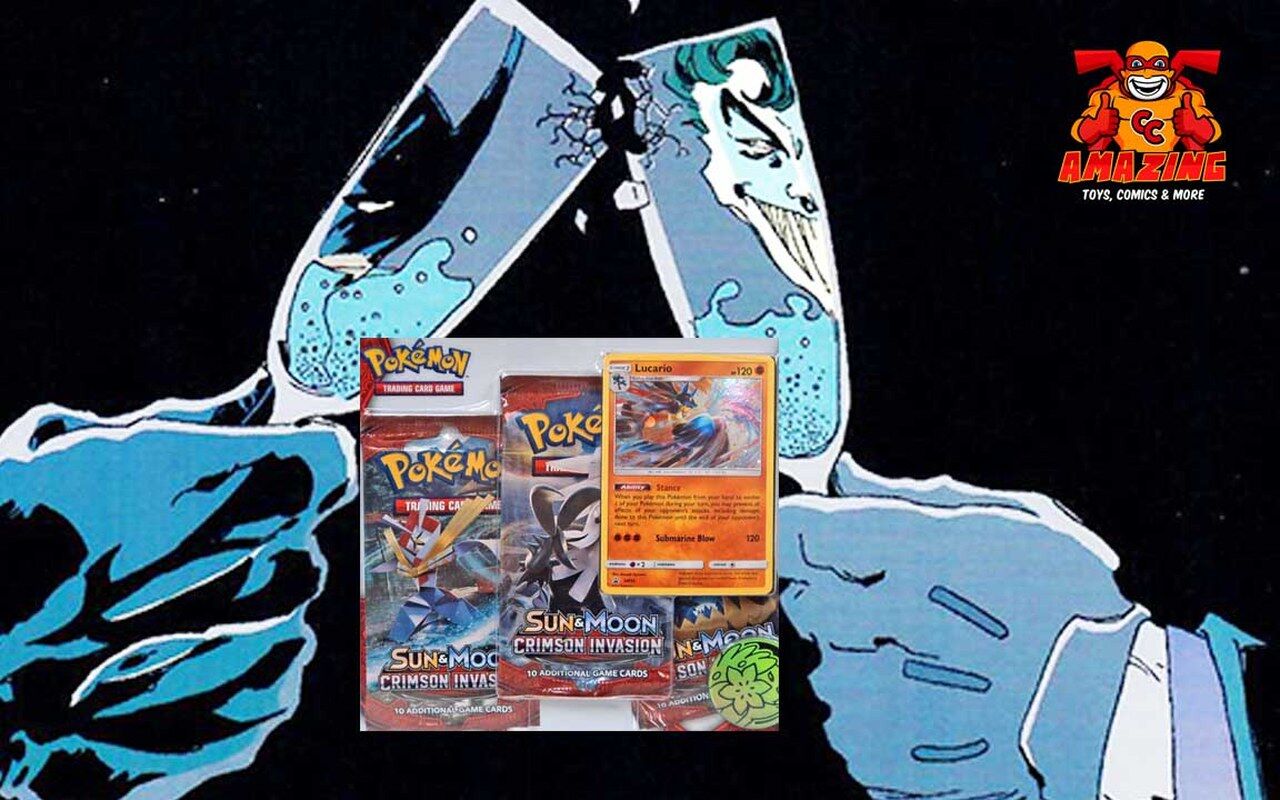
Trading Cards vs. Comic Books
 Thomas Sr. (Captain Collector)Last updated: 22 August 2021 approx. 3 min read
Do you collect comics, or trading cards? Does it even matter what you collect? From a collector's point of view it does, insofar as it is almost certainly a hobby you pursue out of interest and nostalgia. But what does it look like fundamentally?
Comics or trading cards?
Fundamentally it doesn't matter whether we're talking about comics or trading cards. Whether you're a Spider-Man fan or love Pokémon cards makes no difference. From the perspective of the activity itself, you're a paper collector. It makes no difference.
Comics and trading cards are objects you can buy, swap and put together in order. You can sort them, stack them, stand them up, lay them down and even smell them. Yes, you heard right: smell them. For a paper collector there's nothing nicer than sniffing his paper treasures every now and then. The sense of smell is closely linked to memory, and smells are associated with past events.
So when a trading card collector breathes in the distinctive smell created by the chemical composition of the ink and the paper, he is transported back to a cosy past when he played with these cards as a child. The same goes for the comic collector. The smell of old newsprint mixed with the typical aroma of printer's ink will trigger pleasant childhood memories.
Clear cases and certificates
But those are by no means all the things they have in common. As the current crazy trend shows, both comics and trading cards can be graded and certified by qualified companies. Sealed in protective clear cases, they can then be worth a whole lot of money. Because in and of themselves, neither comics nor trading cards have any monetary value. The value is only grafted onto them artificially by the collector community, when demand for certain objects vastly outstrips supply.
So where are the real differences? I see only a few. A trading card has the advantage of being relatively small, with only a front and a back. A comic consists of several pages and, once certified and slabbed, can no longer be read. Only the cover and the back are visible then. A trading card, on the other hand, slabbed or not, always shows both sides and hides nothing.
Another advantage of the trading card is its small size. Comics need much more space than trading cards, slabbed or not. Depending on their interests, both comic collectors and trading card collectors collect either raw objects or certified/slabbed ones. Or both.
There may be one more essential difference between comics and trading cards. New comics are almost always sold loose, whereas trading cards are always packed and sealed, because they come in packages: displays, decks, tins, collector boxes, etc. This also makes many collectors want to collect these “sealed products“ as such. In concrete terms: the packaging never gets opened at all.
But in the end, both comic collectors and trading card collectors are paper lovers. Both collect colourfully printed paper of different sizes, shapes and colours. And both delight, visually and olfactorily, in the objects of their desire!
What do you prefer? Comics or cards? Raw or slabbed? Personally, I prefer my comics raw, meaning not certified.
Thomas Sr. (Captain Collector)Captain Collector's Crazy Collector WisdomGraded and slabbed
You'll find certified comics under CGC Graded Comics and graded cards under PSA Graded Cards.

Grader Notes: spine stress lines cover breaks colorKey Comments: Art Comments: Alyssa Wong, Peach Momoko & DJ Bryant | stories, Ken Niimura, Peach Momoko & | Alvaro Lopez art, Peach Momoko coverComics can be a very valuable investment. CGC graded comics are particularly interesting for collectors. The Gem Mint 10.0 grade is the best a comic can receive, but this grade is extremely rare. In practice, comics with a grade of 9.8 are already considered outstanding and represent the best possible condition for most collectors. The higher the grade, the more valuable the respective issues.CGC (Certified Guaranty Company) is an independent company that grades comics, magazines and other collectibles based on their condition and quality, then encases them in a protective hard plastic holder. CGC graded comics provide collectors with security regarding authenticity and preservation, which greatly facilitates trading and investment in valuable comics.

Grader Notes: Key Comments: Embossed silver foil cover. | Image Comics #0 coupon included.Art Comments: Jim Valentino story & art | Jim Valentino & Rob Liefeld coverComics can be a very valuable investment. CGC graded comics are particularly interesting for collectors. The Gem Mint 10.0 grade is the best a comic can receive, but this grade is extremely rare. In practice, comics with a grade of 9.8 are already considered outstanding and represent the best possible condition for most collectors. The higher the grade, the more valuable the respective issues.CGC (Certified Guaranty Company) is an independent company that grades comics, magazines and other collectibles based on their condition and quality, then encases them in a protective hard plastic holder. CGC graded comics provide collectors with security regarding authenticity and preservation, which greatly facilitates trading and investment in valuable comics.

Grader Notes: Key Comments: Spider-Gwen #65Art Comments: Stephanie Phillips story | Paolo Villaneli art | Rian Gonzales coverComics can be a very valuable investment. CGC graded comics are particularly interesting for collectors. The Gem Mint 10.0 grade is the best a comic can receive, but this grade is extremely rare. In practice, comics with a grade of 9.8 are already considered outstanding and represent the best possible condition for most collectors. The higher the grade, the more valuable the respective issues.CGC (Certified Guaranty Company) is an independent company that grades comics, magazines and other collectibles based on their condition and quality, then encases them in a protective hard plastic holder. CGC graded comics provide collectors with security regarding authenticity and preservation, which greatly facilitates trading and investment in valuable comics.

Grader Notes: spine stress lines cover breaks color | finger bend left center of back cover breaks colorKey Comments: Art Comments: Kurt Busiek story | Norm Breyfogle & Richard Howell art | Carlos Pacheco & Jesus Merino coverComics can be a very valuable investment. CGC graded comics are particularly interesting for collectors. The Gem Mint 10.0 grade is the best a comic can receive, but this grade is extremely rare. In practice, comics with a grade of 9.8 are already considered outstanding and represent the best possible condition for most collectors. The higher the grade, the more valuable the respective issues.CGC (Certified Guaranty Company) is an independent company that grades comics, magazines and other collectibles based on their condition and quality, then encases them in a protective hard plastic holder. CGC graded comics provide collectors with security regarding authenticity and preservation, which greatly facilitates trading and investment in valuable comics.

Grader Notes: Key Comments: Embossed cover.Art Comments: Carl Potts story | Liam Sharp & Bill Reinhold art | Liam Sharp coverComics can be a very valuable investment. CGC graded comics are particularly interesting for collectors. The grade Gem Mint 10.0 is the best a comic can receive, but this grade is extremely rare. In practice, comics with a grade of 9.8 are already considered excellent and represent the best possible condition for most collectors. The higher the grade, the more valuable the respective issue becomes.CGC (Certified Guaranty Company) is an independent company that grades comics, magazines and other collectibles according to their condition and quality, then encases them in a protective hard plastic holder. CGC graded comics provide collectors with security regarding authenticity and condition, which greatly facilitates trading and investing in valuable comics.

Grader Notes: crease bottom of front coverKey Comments: Art Comments: Cavan Scott story | Nico Leon art | Phil Noto coverComics can be a very valuable investment. CGC graded comics are particularly interesting for collectors. The grade Gem Mint 10.0 is the best a comic can receive, but this grade is extremely rare. In practice, comics with a grade of 9.8 are already considered excellent and represent the best possible condition for most collectors. The higher the grade, the more valuable the respective issue becomes.CGC (Certified Guaranty Company) is an independent company that grades comics, magazines and other collectibles according to their condition and quality, then encases them in a protective hard plastic holder. CGC graded comics provide collectors with security regarding authenticity and condition, which greatly facilitates trading and investing in valuable comics.

Grader Notes: Key Comments: Art Comments: Erica Schultz story | Luciano Vecchio art | David Lopez coverComics can be a very valuable investment. CGC graded comics are particularly interesting for collectors. The grade Gem Mint 10.0 is the best a comic can receive, but this grade is extremely rare. In practice, comics with a grade of 9.8 are already considered excellent and represent the best possible condition for most collectors. The higher the grade, the more valuable the respective issue becomes.CGC (Certified Guaranty Company) is an independent company that grades comics, magazines and other collectibles according to their condition and quality, then encases them in a protective hard plastic holder. CGC graded comics provide collectors with security regarding authenticity and condition, which greatly facilitates trading and investing in valuable comics.

Grader Notes: Key Comments: Art Comments: Cavan Scott story | Juan José Ryp art | Juan Ferreyra coverComics can be a very valuable investment. CGC graded comics are particularly interesting for collectors. The grade Gem Mint 10.0 is the best a comic can receive, but this grade is extremely rare. In practice, comics with a grade of 9.8 are already considered excellent and represent the best possible condition for most collectors. The higher the grade, the more valuable the respective issue becomes.CGC (Certified Guaranty Company) is an independent company that grades comics, magazines and other collectibles according to their condition and quality, then encases them in a protective hard plastic holder. CGC graded comics provide collectors with security regarding authenticity and condition, which greatly facilitates trading and investing in valuable comics.

Grader Notes: Key Comments: Acetate cover.Art Comments: Tom King story | Mikel Janín art | David Finch coverComics can be a very valuable investment. CGC graded comics are particularly interesting for collectors. The grade Gem Mint 10.0 is the best a comic can receive, but this grade is extremely rare. In practice, comics with a grade of 9.8 are already considered excellent and represent the best possible condition for most collectors. The higher the grade, the more valuable the respective issue becomes.CGC (Certified Guaranty Company) is an independent company that grades comics, magazines and other collectibles according to their condition and quality, then encases them in a protective hard plastic holder. CGC graded comics provide collectors with security regarding authenticity and condition, which greatly facilitates trading and investing in valuable comics.

Grader Notes: crease left top of back coverKey Comments: Art Comments: Tini Howard story | Ivan Shavrin art | Rachta Lin coverComics can be a highly valuable investment. CGC graded comics are particularly interesting for collectors. The Gem Mint 10.0 grade is the highest a comic can receive, but this rating is extremely rare. In practice, comics with a grade of 9.8 are already considered outstanding and represent the best possible condition for most collectors. The higher the grade, the more valuable the respective issue becomes.CGC (Certified Guaranty Company) is an independent company that evaluates comics, magazines and other collectibles based on their condition and quality, then encases them in a protective hard plastic holder. CGC graded comics provide collectors with confidence regarding authenticity and preservation condition, which greatly facilitates trading and investment in valuable comics.

Grader Notes: spine stress lines cover breaks color | multiple finger bend cover breaks colorKey Comments: Captain America #765Art Comments: J. Michael Straczynski story | Jesús Saiz art | Taurin Clarke coverComics can be a highly valuable investment. CGC graded comics are particularly interesting for collectors. The Gem Mint 10.0 grade is the highest a comic can receive, but this rating is extremely rare. In practice, comics with a grade of 9.8 are already considered outstanding and represent the best possible condition for most collectors. The higher the grade, the more valuable the respective issue becomes.CGC (Certified Guaranty Company) is an independent company that evaluates comics, magazines and other collectibles based on their condition and quality, then encases them in a protective hard plastic holder. CGC graded comics provide collectors with confidence regarding authenticity and preservation condition, which greatly facilitates trading and investment in valuable comics.

Grader Notes: spine stress lines cover breaks colorKey Comments: Art Comments: Alex Segura story | Ruairi Coleman art | Pete Woods coverComics can be a highly valuable investment. CGC graded comics are particularly interesting for collectors. The Gem Mint 10.0 grade is the highest a comic can receive, but this rating is extremely rare. In practice, comics with a grade of 9.8 are already considered outstanding and represent the best possible condition for most collectors. The higher the grade, the more valuable the respective issue becomes.CGC (Certified Guaranty Company) is an independent company that evaluates comics, magazines and other collectibles based on their condition and quality, then encases them in a protective hard plastic holder. CGC graded comics provide collectors with confidence regarding authenticity and preservation condition, which greatly facilitates trading and investment in valuable comics.